EV Car Guide and the new E Vitara
What is the difference between Electric and Fuel Cars
Electric cars produce zero tailpipe emissions and reduce urban air pollution compared with petrol or diesel models.
Electric vehicles typically have lower running costs per kilometre due to cheaper electricity and fewer moving parts. But as with everything the price of electricity is subject to increases, especially with the current volatility in the energy sector and geo-political status in the Middle East. Shopping around for plans is always advised.
EV owners can avail of government grants towards the cost of installing a charge point at their home to charge their cars. More information can be found on the SEAI website here.
Types Of Electric Vehicles: Electric Car, Plug In Hybrid, And More
Battery electric vehicles (BEVs) run solely on electricity and require regular charging from mains either at your home or public stations which are growing in numbers and locations Nationwide.
Plug in hybrid vehicles combine an electric motor and internal combustion engine for flexible short electric-only trips.
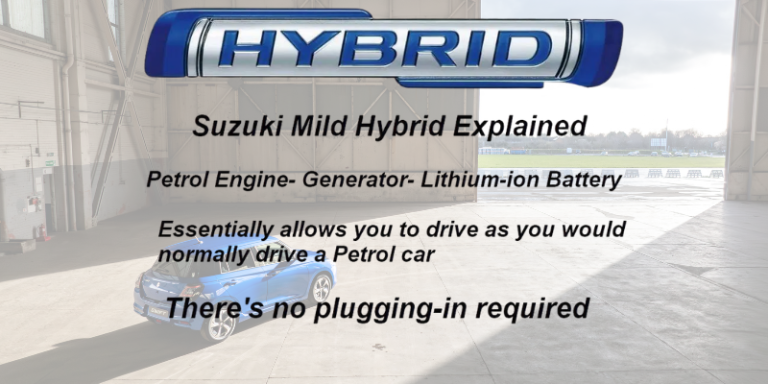
Mild hybrids and full hybrids differ from plug in hybrids by having smaller batteries and no external charging capability. So the current Suzuki range of Swift, Vitara and S-Scross are mild hybrids but the launch of the new eVitara in April will bring the first of a new range to customers looking to stay with the reliable Suzuki model but with an all electric model. More information can be found here.
Plug In Hybrids Explained
- Plug in hybrids offer electric-only range typically between 20–60 km, reducing city fuel use for short commutes.
- PHEV owners may avoid range anxiety on long trips thanks to the onboard petrol or diesel engine.
Battery Electric Cars (BEVs)
- BEV range varies widely; WLTP figures are for comparability but real-world range depends on temperature and driving style.
- BEVs benefit from instant torque from the electric motor, improving urban acceleration and responsiveness.
Electric Motor And Range Basics
- An electric motor delivers near-instant torque, eliminating gear-shift delays found in many combustion vehicles.
- Battery capacity (kWh) is the primary determinant of range; greater capacity usually yields longer electric range.
- Regenerative braking recovers energy during deceleration, extending practical driving range in stop-start traffic.
Charging Stations, Home Charger Options, And Costs
Public charging stations vary by power rating: slow (AC), fast (AC 7–22 kW), and rapid/ultra-rapid (DC 50kW+).
Charging speed depends on vehicle onboard charger capacity, charger power rating, and battery state of charge.
Home charger installation offers convenience and lower per-kilometre charging costs compared with many public rapid chargers.
Public Charging Stations
National networks provide roaming access; charging tariffs differ by operator and connection type.
Rapid DC chargers can replenish most BEV range within 20–40 minutes depending on battery and power output.
Some shopping centres provide on site free charging for customers shopping in the centre but these may slow chargers, require an app sign up and are limited so a free spot might be hard to find during peak shopping times (or if someone in an non EV has taken the opportunity of a parking spot!)
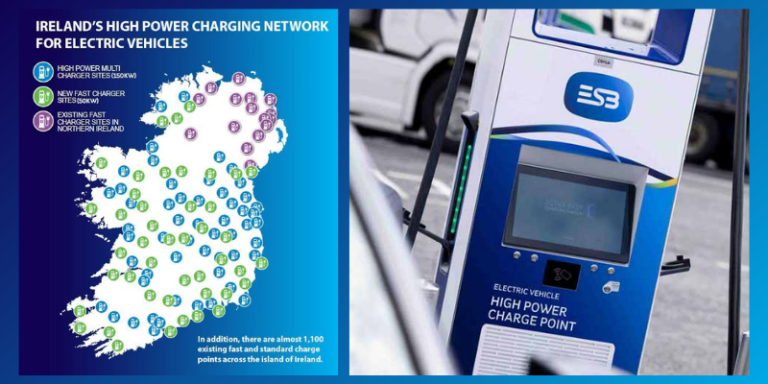
ESB Networks also provide a range of charging stations all over Ireland, Northern Ireland and some locations in the UK, these can be found often roadside with designated parking bays marked for EV cars only. You can find a map hereand more information on this scheme and charges here and a broader overview of the scheme here.
EPower also provide public charging points, more information on the scheme, their background, the funding they were given and also a map of stations can be found here.
EZO (formally EasyGo) are another option for EV owners looking to charge their cars while travelling around Ireland. They are an app based service and more information on their locations, cost, app and more can be found here.
Weev are yet another option for drivers, with locations all over Ireland and an interactive map showing locations both existing and upcoming for Irish EV users allowing them to plan journeys and charging locations. More information can be found here, along with details on locations via an interactive map, information not their app and also more information about the company.
Another company familiar to drivers is Circle K. So you may have moved away from visiting the garage forecourt only to find that you are still going there with your new car! Along with the regular fuel options they are expanding their EV network around Ireland providing drivers looking to charge while on the way to Galway or on their commute easy to find locations. More information on their locations, network and charges can be found here.
These are just some of the options for charging your New E Vitara (other makes and models available, but we are Suzuki!!) We would always recommend looking at the cost, charge facilities and power options available and any annual costs involved with an account or app based service.
Charging at Home
This is an option most people opt for. Install a charging point on your house, garage or specifically designated point at home. These chargers can be locked sometimes remotely via an app or by requiring a PIN code to start the charging process. This keeps your charging point secure and stops anyone you don't know or have given your permission from using it.
When it comes to home charging the costs can be cheaper than using on on the road option. Power suppliers in Ireland offer different price plans to entice the growing EV market to join their service. But research is key, you don't want to be paying over the odds for a service that offers a lower rate at a time you won't be able to use or is means that you are paying more for your day to day needs to have a lower rate for charging your car, this could lead to an increase in energy bills and end up costing you the same as a petrol or diesel car. So shopping around or using a comparison company to find the right plan is a good way to start your EV journey.
Night Time tariffs are the norm when it comes to EV at home charging, these are normally the cheapest option for consumersSo tariffs normally start for home EV charging in Ireland is cheapest using specialised night-rate tariffs, often costing around 7c - 10c kWH between the hours of 2am and 6am.
Energy Supplier Plan Options:
Electric Ireland offer plans for both regular and smart meters along with their Night Boost designed for EV charging. More information can be found here.
Energia offer 2 different plans for EV charging, one with a nightly rate and also a 4 hour charge window. More information on these plans can be found here.
Bord Gáis Energy also offer a variety of plans for EV charging and also a signing up reward. But again, research the plans even with a signing up bonus its the long term cost rather than upfront. More information on their plans can be found here.
There are more plans and offers out there to be found and this is only a brief snap shot of what's available. It is always advisable to look at multiple plans and find the best fit not only for charging your car but one that will suit your power needs for everything else.
Charge Points @ Home
Also some EV only car companies offer their own charging point installed at your home, its a good idea to look into any offers that come with your EV, not all car manufacturers will offer this, it is normally EV only companies that will, but you may not want to be tied to one particular charger type in case you need to change your car in the future.
It is also good to avail of the SEAI grant (link above) when installing your charge point at home, this helps reduce some of the upfront cost. There are multiple options for charges in terms of looks as well as charge options. Some are locked via an app, some locked out from your switch board and some require a pin. Here at Gerry Caffrey Motors we have charge points installed that can do a fast or slow charge and we have used the service Electric Car Charger Ireland Ltdwho offer a range of different options such as Zappi (the brand we have installed onsite) EVBOX, and EO. They also have a commercial range to fit at your business for staff or guest charging.
Low Down on The Types of Chargers
Standard AC Chargers (Up to 22kW):
Found typically on-street or in public car parks, these chargers can charge your car in approximately between 1 to 6 hours.
Fast DC chargers (22-100kW):
Usually found in motorway service stations and selected car parks, these chargers can charge your car up to 80% in as little as 30 minutes.
High-power chargers (Over 150kW):
These are designed for ultra-fast top-ups, often located along motorways and national road sites. These can provide your car up to 100km of driving range in as little as 6 minutes.
So what is the type you have fitted at home? Normally the charger installed in most Irish homes is a Type 2 AC Standard charger. These allow for charging between 7kWh and 22kWh.
Home Charger Installation And Grants
All home charger installers must meet electrical safety regulations and often require a dedicated circuit and smart meter to avail of the SEAI grant, this ensures work has been carried out to a safe and regulatory standard to ensure that the power that flows through does not place you, your home or your car in danger of power surges leading to dangerous situations.
SEAI and local schemes sometimes offer grants or rebates for home charger installation for qualifying buyers.
Suzuki eVitara
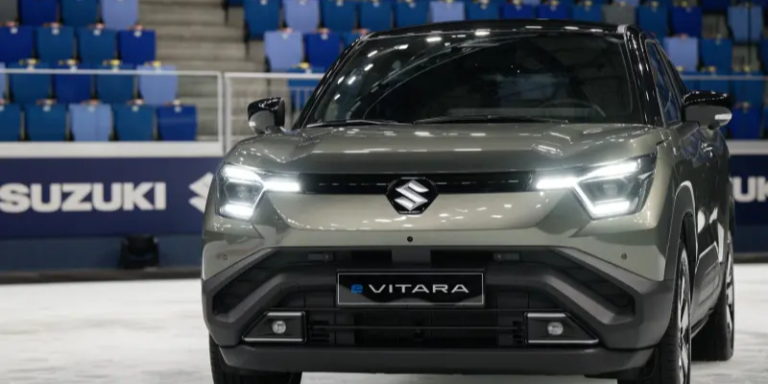
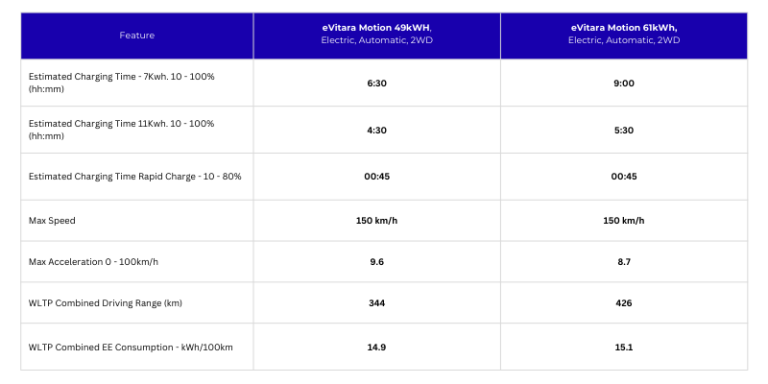
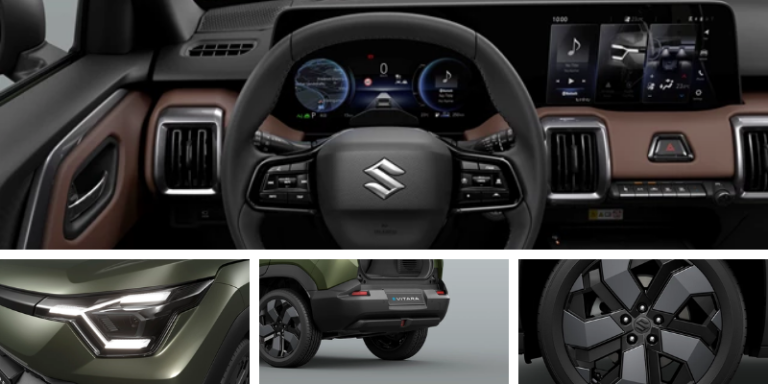
Coming soon it is the all new, first fully electric of the Suzuki Range. The eVitara is Suzuki's newest Vitara model. Available in 49kWh and a 61kWh models. Both are 2WD, automatic gearbox with the usual Suzuki safety feature and more!
Lets look at just a few of the specs on this new Vitara -
he safety features are what you would expect from Suzuki, ABS with EBD Function, Lane Departure, Dual Sensor Brake Support, ESP, Lane Assist, TPMS System, Traffic Sign Recognition and airbags front and rear along with curtain airbags, driver knee airbags, side airbags and a lot more. You can find more information on the specs here.
It's also available in a range of stylish colours from Pearl White to Celestial Blue Pearl, both in single or dual tone along with interior mood lightening and a whole new grill look. The new eVitara is a stylish EV option and one that will turn heads. You can check out all the colour options here.
Plug In Hybrid Vs All-Electric: Which Should I Choose?
This all comes down to a few different factors, but the main one is cost. Look at the cost of running your current Petrol or Diesel, how much does it cost at the pumps, especially now? What is your current electric plan? Does switching plans make the cost to you beneficial? Next comes your commute type, how far do you drive? Where do you live? Are there charge points available nearby if you have no garden or assigned parking bay?
Choose a plug in hybrid if you regularly do long trips without reliable charging access but want short electric commutes.
Choose a full electric car if your daily mileage fits BEV range and you have access to home or workplace charging.
You also want to factor in costs for tax and insurance. EV cars get better motor tax rates that the standard engine because there are no emissions so a year motor tax in an EV is €120. And there are some grants available to purchase some models of fully EV cars. More information on all this can be found here
Costs, Grants, And Running Savings - Summary
SEAI grants in recent years have lowered purchase costs for qualifying battery electric cars within specified price bands.
Electricity cost per kilometre is generally lower than petrol or diesel, but household tariffs and charging times affect savings.
Consider residual values and warranty coverage for battery degradation when calculating five-year ownership costs.
The SEAI's electric car grant value depends on the vehicle's full, non-discounted price excluding VRT relief or grant support.
Aftersales, Servicing, And Diagnostics For Electric Vehicles At Gerry Caffrey Motors
Certified servicing includes high-voltage system inspections, battery diagnostics, and software update capabilities.
Routine maintenance intervals for EVs focus more on brakes, tyres and software than on engine oil or exhaust systems. All our mechanics have undergone more training with Suzuki in preparation for the new Electric Vitara and are also well versed and trained in servicing other EV cars. So not only do we provide excellent aftercare and service to our customers in their petrol and diesel cars we are also providing the same excellent care and service for the growing EV community.
And of course as with all new Suzuki's the new eVitara comes with Suzuki's 10 Year Warranty.
Next Steps: Test Drive Booking, Home Charger, And Trade-In
Keep an eye on Suzuki.ie to find out more about our new Vitara and you can register your interest. Or even better you can drop in and see us in our Terenure showroom to look at the new Vitara when it comes in, arrange a test drive and discuss different options to have you behind the wheel of our exciting new eVitara. You can sit inside all all new cab, see the new features for yourself and even better, once its here you can arrange a test drive*, so you can see how this new Suzuki family member handles on the roads. All with the familiar, award winning service from the Gerry Caffrey Motors staff. We can discuss all the details, specs and financing options** over some coffee and make sure you have all the details and hands on experience you were looking for but never got anywhere else.
*Please ensure for a test drive on all our New, Used and Premium Used cars that your car insurance policy has Open Drive. Always have your drivers licence with you for a test drive.
**Electric vehicle financing options are available for individuals over 18 in the Republic of Ireland only.
Electrifying Ending!
There are lots of benefits to driving a full electric car, but there is a lot of research to do before you commit. For some it's a no brainer but for others there is a little weighing up of options.
Look at the overall cost. Car, Charging Point, Charging Costs, Insurance and ongoing maintenance. Know your driving and where there are charge points near you. Can you install a charge point at home, in the drive way, on your house, in your assigned parking bay? If none of these are an option is there somewhere close by that you can do a rapid charge or a charging station that you can visit? What are the costs involved for this? Also are they accessible and do they have the capacity that you will be able to reliably visit when you need to? Do you have charging in the staff areas in work?
There is a lot to consider but there are also lots of benefits. And we are here to help you, we can discuss all this and provide you with more information on our new eVitara, other EV's and our full range of mild hybrids to make sure you can get the car that suits you the best.