Why Wheel Alignment Saves More Than Just Your Tyres
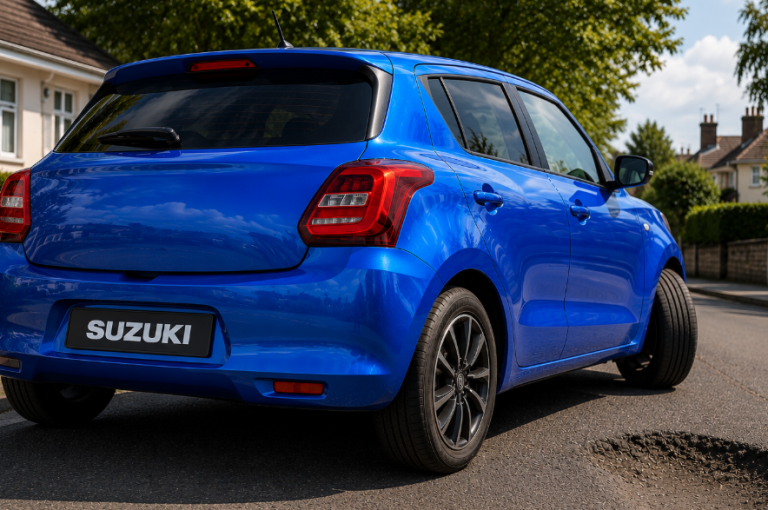
A proper wheel alignment does much more than help a set of tyres last longer. It can improve how your car steers, reduce unnecessary strain on the suspension system, including elements like the steering rack and shock absorbers, and help protect your fuel economy. This is especially important with modern technologies such as steer by wire, which rely on precise wheel positioning to function efficiently.
That matters on Dublin roads. Between potholes, raised kerbs, speed ramps, and the constant stop-start of South Dublin traffic, it doesn’t take much to knock a car’s wheel angles out of specification. Misalignment can also affect the axle and brakes, causing uneven wear and potential safety issues at higher speeds. It makes a significant contribution to overall vehicle wear if left unaddressed.
In our experience at Gerry Caffrey Motors, drivers often notice the problem gradually. The car still moves, so they compensate for a slight pull or an off-centre steering wheel without realising that the tyres and other equipment may be wearing faster on every journey. This can cause additional tear on mechanical connections within the chassis and steering mechanisms, affecting the protection of your vehicle’s components.
What Is Wheel Alignment?
Wheel alignment is the adjustment of the angles at which your wheels sit relative to the car and the road. A technician checks measurements such as toe, camber, and caster against the manufacturer’s specifications, taking into account the entire suspension system: toe is the direction the tyres point relative to each other when viewed from above, camber is the tyre’s tilt when viewed from the front, and caster is the steering axis angle that helps balance steering feel and straight-line stability. Set correctly, these angles keep the tyres in proper contact with the road for accurate handling.
Put simply, all four wheels should be pointing and sitting as they were designed to. When they aren’t, the tyres can scrub across the road instead of rolling cleanly, reducing efficiency and longevity. Proper alignment helps the engine’s effort transfer more efficiently through the drivetrain and suspension, improving handling and safety. The adjustment is usually carried out using a screw mechanism on the suspension components, suitable for the vehicle model.
Alignment isn’t the same as wheel balancing. Balancing corrects uneven weight around a wheel and tyre assembly, while alignment corrects the direction and angle of the wheels. Both can affect driving comfort, but they solve different problems in the same way.
How Wheel Alignment Saves You Money
1. It Prevents Uneven Tyre Wear
Tyres are usually the first place misalignment shows itself. One shoulder may wear much faster than the rest of the tread, or the tread blocks may develop a feathered edge, wearing unevenly on one side.
That uneven tyre wear can shorten the useful life of an otherwise good tyre. You may find yourself replacing two or four tyres earlier than expected, even though plenty of tread remains in other areas. Under-inflated tyres wear faster on the edges, while over-inflated tyres wear faster in the centre of the tread, compounding the problem.
AA Ireland’s tyre guide notes that incorrect alignment causes rapid and uneven wear. It also confirms that the legal minimum tread depth in Ireland is 1.6mm, although wet-weather performance reduces as tread wears.
Driving habits can also accelerate uneven tyre wear. Aggressive driving styles with rapid acceleration, sharp cornering, and hard braking put extra stress on tyres, causing them to wear unevenly and more quickly.
For anyone driving through a typical Irish winter, that wet grip matters. Heavy rain, standing water, and greasy road surfaces leave less margin for a badly worn tyre, which can compromise safety and violate road safety laws.
2. It Can Protect Fuel Economy
When wheels are out of line, the engine may have to work harder to move the car forward. The extra rolling resistance can use more fuel than necessary, reducing efficiency.
You probably won’t see a dramatic change after one short trip. Over months of commuting from Rathfarnham, Tallaght, Templeogue, or Dundrum, however, small losses in fuel economy can add up. Proper alignment helps maintain the mechanical connection between the wheels and the road, reducing effort and energy loss.
Correct tyre pressures still matter, as do driving style, vehicle load, and regular servicing. Alignment is one part of the process, but it’s an important one when you’re trying to keep running costs under control.
3. It Reduces Strain on Steering and Suspension Parts
Misalignment can place extra load on parts designed to work within a specific range. Over time, that may contribute to wear in steering joints, bushes, shock absorbers, and other suspension components.
There’s an important distinction here: poor alignment can sometimes be the result of an existing suspension problem rather than its cause. A worn joint, damaged spring, or tired bush may prevent the car from holding the correct geometry, and on some vehicles the same can be true if a drive half-shaft has play. Suspension geometry also affects how loads transfer through the chassis, so worn parts can upset handling as well as alignment.
That’s why a proper inspection matters. Simply adjusting the wheel angles without checking the underlying components may only provide a temporary improvement.
We often see this after a hard pothole impact or repeated contact with kerbs. The driver asks for an alignment, but the first job is to make sure the tyres, wheels, steering rack, and suspension system are sound enough to align correctly.
4. It Makes the Car Easier and Less Tiring to Drive
A correctly aligned car should track predictably on a level road, which also helps it feel more settled when body weight begins to transfer in a bend. You shouldn’t need to keep correcting the steering just to hold a straight line.
That’s especially valuable on longer trips along the M50, N7, or M1. Constantly applying pressure to the wheel is tiring, and vague steering or excess body lean in turns can reduce your confidence when the weather turns, though alignment is not always the only cause.
Road camber and crosswinds can cause a temporary pull, so one small movement doesn’t automatically mean there’s a fault. A persistent pull, an off-centre steering wheel, or a noticeable change after hitting a pothole deserves attention.
5. It Helps Preserve Trade-In and Resale Value
Tyres tell a story. When a dealer sees badly worn inner or outer edges, it can raise questions about accident damage, neglected maintenance, or worn suspension parts.
By contrast, even tyre wear and a straight, settled test drive help show that a car has been looked after. A documented service history, clean NCT record, and timely maintenance can all support a stronger trade-in conversation.
For an imported used car, VRT and registration paperwork are also essential. However, compliance with Revenue’s VRT rules doesn’t confirm the car’s mechanical condition or wheel geometry. Those still need to be assessed on the vehicle itself.
Common Signs Your Wheel Alignment May Be Out
Book an inspection if you notice one or more of these symptoms, as alignment problems can reduce the tyre’s contact point with the road and show up in ways like these:
- New tyres begin showing unusual wear sooner than expected
- The car changed after hitting a pothole, kerb, or deep road defect
- Steering feels less precise than usual, and stability may feel less consistent as steering inputs no longer respect the car’s intended geometry
- The tread feels feathered when you run a hand carefully across it
- One edge of a tyre is wearing faster than the other
- The steering wheel sits off-centre while you’re travelling straight
- The car consistently pulls to the left or right on a level road
Vibration through the steering wheel is often associated with wheel balance, tyre damage, or another mechanical issue rather than alignment alone. It’s still worth having it checked instead of guessing.
When Should You Get Wheel Alignment Checked?
There’s no single interval that suits every driver and every road. As a practical rule, have the alignment inspected when symptoms appear and consider including a check in your regular maintenance routine.
It’s particularly sensible:
- Before a long trip if the car feels unsettled
- When tyre wear becomes uneven
- If the steering wheel is no longer centred
- After steering or suspension work
- When fitting a new set of tyres
- After a heavy pothole or kerb impact
Experts recommend a wheel alignment check every 18,000 to 20,000 km to maintain optimal vehicle performance. An annual check can be worthwhile for cars doing plenty of urban mileage, but driving conditions matter more than the calendar. A Suzuki Swift used mainly around Dublin may encounter frequent ramps and kerbs, while a Vitara or S-Cross covering rural roads may face rough edges and deep surface damage.
Wheel Alignment and the NCT
The NCT doesn’t replace routine maintenance, and it shouldn’t be treated as a once-every-few-years service.
Tyres are checked for tread depth, condition, and correct type approval. If misalignment has worn one section below the legal limit, the tyre can become an NCT issue even if the rest of the tread looks healthy.
Check across the full tread rather than looking only at the easy-to-see outer edge. Inner-edge wear can be difficult to spot when the car is sitting on the ground.
Does a New Car Need Alignment Checks?
New cars leave the factory set to specification, but they aren’t immune to Dublin roads. A single hard impact can affect alignment on a new Suzuki just as it can on an older vehicle.
The difference between new and used is usually the amount of history you know. With a quality used car, tyre condition, suspension checks, and a proper road test are especially important because they help reveal how the vehicle was maintained before you owned it.
At Gerry Caffrey Motors, our curated premium stock includes new and used options for different needs and budgets. You can browse our current new and used Suzuki stock, including the Swift, Vitara, and S-Cross.
Protect More Than the Tread
Wheel alignment is a relatively small part of car care, but ignoring it can affect tyres, fuel use, steering feel, suspension wear, and future value. On rough Irish roads, early attention is usually cheaper than waiting for a visibly damaged tyre or a failed component.
If your Suzuki is pulling, the steering wheel has moved off-centre, or the tyres are wearing unevenly, you can book a service with Gerry Caffrey Motors in Terenure and ask our team to inspect it.
Thinking about upgrading to a Suzuki? Explore our latest Suzuki offers and finance options, or visit Gerry Caffrey Motors in Terenure, Dublin 6W for a friendly chat about the Swift, Vitara, S-Cross, and trade-in options.