When to Trade In a Car: Trade Before Christmas or Wait Until January? What to Consider



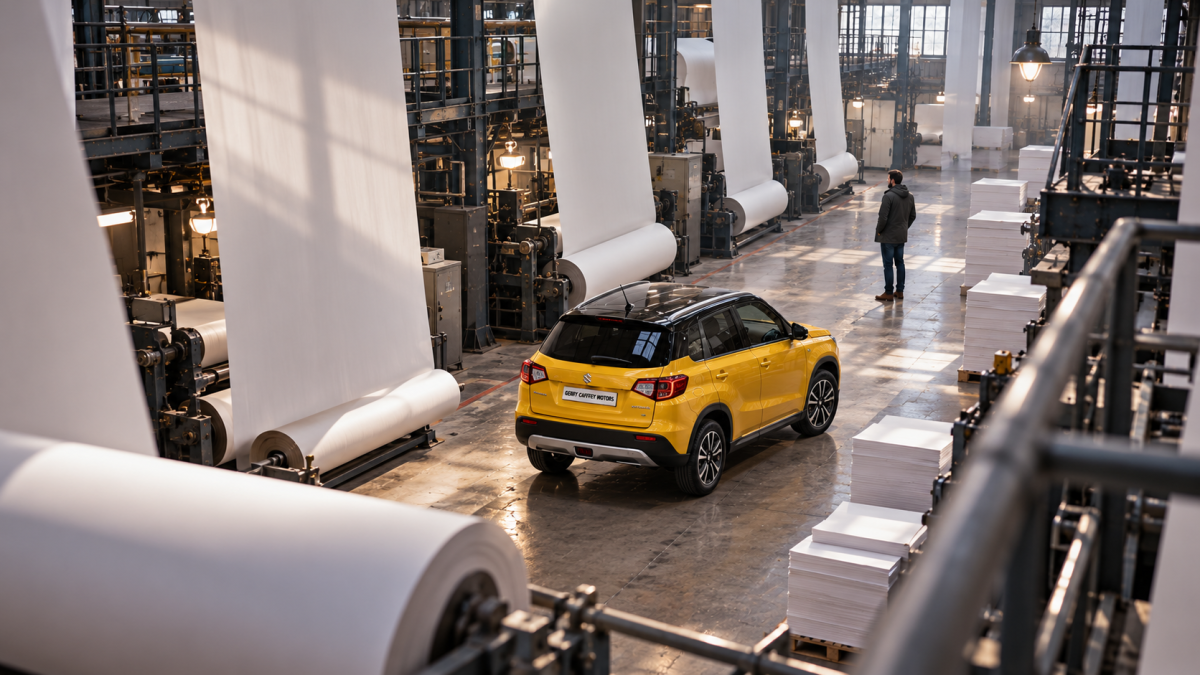
If you’re thinking about when to trade in a car towards the end of the year, one question tends to come up quickly: should you trade in before Christmas or wait until January?
There isn’t one answer that suits every driver.
For some motorists in Dublin, December can be a good time to agree a trade-in, secure the right car from an extensive range of Suzuki models, and avoid the January rush. For others, waiting for the new registration year may be more important.
The key is to look beyond the registration plate and consider your car’s current value, the replacement vehicle you want, finance, mileage, and how quickly your existing car is depreciating.
At Gerry Caffrey Motors in Terenure, we see both approaches every year. Our committed specialists are equipped to provide guidance and support through the entire trade-in process, ensuring a hassle-free experience. Here’s what Irish drivers should consider before making the call.
Is It Better to Sell or Trade In a Car Before Christmas?
There can be good reasons to sell a car before Christmas, particularly if you already know you want to upgrade.
Dealership activity doesn’t simply stop in December. Drivers are still changing cars, dealers are preparing stock for the new year, and suitable used vehicles remain in demand.
If your current car is desirable, well maintained, and has a clean history, getting a valuation before Christmas gives you something particularly useful: certainty.
You know what your car is worth now rather than estimating what it might be worth several weeks later.
That can make it much easier to plan your next purchase and achieve the best deal, saving you money.
Your Current Car Is Still Depreciating
Waiting until January doesn’t freeze the value of your existing car.
Vehicles retain solid market value before steep depreciation curves flatten, but your car gets older, mileage continues to increase, and the market moves.
A car with 79,000 km in early December may look slightly different to a buyer once it has passed 82,000 or 83,000 km after Christmas driving.
The difference won’t always be dramatic, but when you’re looking for an accurate car valuation in Ireland, mileage, condition, age, service history, and market demand all matter.
In our experience, drivers sometimes concentrate so heavily on getting a newer registration that they overlook what is happening to the value of the car they already own.
Outstanding mechanical issues or an approaching NCT date can also lower your car’s trade-in value, so providing full details to our specialists helps ensure you get the most accurate valuation.
A valid National Car Test can positively influence dealer confidence and valuation.
Buyers and dealerships prefer cars that still carry some level of manufacturer warranty, which can increase trade-in values.
Ensure your vehicle's trade-in value exceeds any remaining finance balance to avoid negative equity when trading in, as trading in with negative equity rolls old debt into a new car loan.
Why Do So Many Irish Drivers Wait Until January?
January has traditionally been a major car-change month in Ireland.
Part of the attraction is psychological. A new calendar year means a new registration period, and plenty of buyers like the idea of starting the year in a newer car.
That makes a January car change in Ireland an obvious option for many motorists considering an upgrade in November or December.
There’s nothing wrong with waiting, especially if getting the newest possible registration is important to you.
However, it’s worth comparing the full deal rather than the registration alone.
A Newer Registration Doesn't Automatically Mean a Better Deal
The number plate is only one part of a car’s value.
Specification, condition, drivetrain, mileage, finance rate, trade-in allowance, and the actual purchase price can have a much greater effect on what you ultimately pay.
For example, securing the right Suzuki Vitara in December with the specification you want may suit you better than waiting until January and discovering that your preferred colour, transmission, or trim isn’t immediately available.
The same applies to used cars.
A particularly clean, low-mileage premium used car won’t necessarily still be sitting on the forecourt several weeks later.
Our lot is equipped with an extensive range of vehicles, and once a particular car is sold, finding another with exactly the same specification, mileage, and condition isn’t always easy.
Market conditions, including vehicle type and fuel efficiency, can affect trade-in values.
Seasonal demand affects trade-in values; convertibles and sports cars are more valued in spring, and seasonal spikes in used-car demand often coincide with economic trends and new model releases.
Get Your Trade-In and Service History Valued Before You Make the Decision
One of the simplest ways to decide whether to wait is to find out what your current car is actually worth.
A professional trade-in valuation can take into account:
- Similar cars currently available in Ireland
- Market demand
- Fuel type or hybrid drivetrain
- Make, model, and specification
- Tyres and maintenance requirements
- NCT status and upcoming dates
- Service history
- Overall mechanical and cosmetic condition
- Current mileage
If you’re planning to trade in a car in Dublin, getting a valuation before Christmas doesn’t mean you’re obliged to change immediately.
It simply gives you better information and guidance.
We often see motorists come in assuming their car is worth one figure based on an online advertisement. But an advertised retail price and an actual trade-in value aren’t the same thing.
A dealer has to account for preparation, servicing, warranty, potential repairs, stock costs, and resale conditions.
Active warranties increase dealer resale confidence and leverage, often resulting in a higher trade-in value.
Completing routine maintenance can yield a higher valuation than the repair cost, so it’s wise to keep your car well maintained.
Clear vehicle history and proper maintenance can support a better trade-in valuation.
Evaluate the cost of maintenance against the additional value from trading in before repairs.
A full-service history increases a car's value.
Outstanding mechanical issues lower a car's resale price.
Fewer previous owners can enhance a car's resale value.
Optional extras can increase a car's overall value.
The sharpest cumulative drop in car value happens within the first three years.
New cars lose 15% to 25% of their value in the first year.
Values hold reasonably stable between 40,000 and 70,000 miles.
The ideal time for a trade-in is typically within the three to five-year range.
Trade-in values can drop significantly after 100,000 km.
Trading before major mileage milestones can maximize trade-in offers.
Trading during periods of low inventory can maximize trade-in offers.
Timing your trade-in around new registration plate changes can influence dealership traffic.
Check multiple dealerships for trade-in offers to maximize value.
Most trade-in applications surge in the second half of the year.
Cars registered before January 2014 qualify for scrappage bonuses, which can provide additional financial incentives.
Consider Your NCT Timing Too
Your NCT can influence both your planning and the presentation of your trade-in.
A car with a long NCT remaining can be more straightforward for the next owner, while a test that’s approaching may raise questions about what maintenance or repairs could soon be required.
That doesn’t mean you always need to put a fresh NCT on a car before trading it.
Speak to the dealer first.
In some cases, spending several hundred euro preparing a car for an NCT immediately before a trade-in may not return the same amount in additional value.
What About VRT and Revenue Rules?
VRT is most relevant when a vehicle is first registered in Ireland or when an imported used vehicle enters the State.
Vehicle Registration Tax is generally payable when a vehicle is first registered in Ireland. With a new Irish-market vehicle bought through a dealer, registration is normally handled as part of the sale.
Imported used vehicles have separate registration and VRT requirements.
If you’re comparing an Irish-supplied car with an imported alternative, it’s important to compare the complete cost rather than simply looking at the advertised purchase price.
Current Revenue requirements should always be checked if you’re considering importing a vehicle, as rules and charges can change.
Cars registered before January 2014 qualify for scrappage bonuses, which can provide additional financial incentives.
The scrappage fund may close when the budget runs out, so start trade-in paperwork early to avoid missing bonuses.
Most trade-in applications surge in the second half of the year, reflecting increased buyer activity.
Should You Buy a New Car Before Christmas or Wait for January?
It depends on what matters most to you.
Buying Before Christmas Can Make Sense When
You’ve found exactly the car you want.
You’re happy with the current trade-in valuation.
There’s an attractive finance or manufacturer offer available.
Your existing car is accumulating significant mileage.
You have an NCT, service, or repair bill approaching.
You want the convenience of having the change completed before the January rush.
Waiting Until January Can Make Sense When
Having the new year's registration is particularly important to you.
Your preferred model won’t be available until January anyway.
Your mileage over Christmas will be minimal.
You aren’t yet sure which car, finance structure, or specification you want.
The important point is to compare the complete cost of changing rather than focusing on one factor.
Think About Finance, Not Just the Sticker Price
Finance can change the calculation significantly.
Two cars with similar advertised prices can have quite different monthly repayments depending on the deposit, trade-in, APR, term, and finance structure.
If your trade-in forms part of your deposit, getting its value confirmed can give you a much clearer picture of your monthly budget.
In our experience, this is often more useful than deciding on a car purely from its headline price.
Which Suzuki from the Extensive Range Might Suit Your Upgrade?
If you’re planning to upgrade your car in Ireland, the best time to change also depends on what you’re moving into.
Suzuki Swift
The Suzuki Swift is particularly well suited to Dublin driving.
Its compact dimensions make everyday parking easier around Terenure, Rathgar, Rathfarnham, and the city, while its efficient drivetrain can make it an appealing option for motorists trying to keep everyday running costs manageable.
It’s a strong choice for commuting, first-time new-car buyers, and households that don’t need a larger SUV.
Suzuki Vitara
For drivers wanting more space and a higher driving position, the Suzuki Vitara is an attractive step up.
It combines compact SUV dimensions with useful practicality for Irish roads, making it suitable for everything from South Dublin school runs to longer motorway journeys.
Selected versions are also available with Suzuki’s ALLGRIP system, which may appeal to drivers regularly dealing with wet roads, rural routes, and more challenging winter conditions.
Suzuki S-Cross
The Suzuki S-Cross offers additional family-friendly space while remaining manageable around Dublin.
It can be particularly attractive if your current hatchback or compact crossover is starting to feel too small for children, luggage, or longer trips around Ireland.
When choosing between the Swift, Vitara, and S-Cross, we’d suggest starting with how you actually use your car rather than simply moving into the next size category.
New vs Used: Does December Change the Equation?
Potentially.
If you’re buying new, registration timing may naturally play a larger part in the decision.
With used cars, condition, mileage, history, specification, and overall value tend to matter far more than whether you purchase on 20 December or 10 January.
A premium used car with the right mileage, history, and specification can represent strong value regardless of the month.
That’s why waiting purely because January feels like the traditional time to change can sometimes mean missing a particularly suitable car.
Used stock is individual. Once a particular car is sold, finding another with exactly the same specification, mileage, and condition isn’t always easy.
Don't Forget Irish Winter Driving
December and January bring the kind of conditions Irish motorists know well: rain, dark evenings, standing water, low temperatures, and occasionally frost or snow.
If your existing tyres are approaching replacement, your battery is becoming unreliable, or you have significant maintenance due shortly, those costs should form part of your decision.
Spending €800 or €1,000 maintaining a car you intend to trade a few weeks later may not always make financial sense.
Equally, essential maintenance shouldn’t be ignored simply because you’re considering changing.
If you’re unsure, ask for a trade-in assessment first and work from real numbers.
Don't Choose Based on Registration Alone
A January registration has obvious appeal, but the strongest car-changing decision is usually based on the complete package.
Ask yourself what your current car is genuinely worth. Consider whether its mileage or value could change meaningfully if you wait.
Then look at the replacement car. Is the model and specification you want available now? Are there finance or trade-in offers worth considering? Do you have servicing, tyres, NCT work, or other costs approaching?
And finally, decide how important that January registration is to you personally.
Once you have those answers, deciding whether to trade before Christmas or wait until January becomes much easier.
Thinking About Changing Your Car?
You don’t have to decide based on guesswork.
A current trade-in valuation can help you compare the cost of changing before Christmas against waiting until January, while giving you a clearer idea of what you can comfortably spend on your next car.
Whether you’re considering a Suzuki Swift for Dublin commuting, a Vitara for extra versatility, an S-Cross for family space, or one of our premium used cars, the Gerry Caffrey Motors team can talk you through the options.
Thinking about upgrading to a Suzuki? Visit Gerry Caffrey Motors in Terenure, Dublin 6W, to discuss your trade-in, finance options, and available new and used cars.