What Your Suzuki Dashboard Warning Lights Actually Mean (And When to Stop Driving)
Modern Suzuki dashboards are clever, but they can still cause a moment of panic when a warning light suddenly pops up on the M50 or a wet Dublin morning. These blissfully grey symbols might look harmless at first, but understanding what each indicator light means is crucial for your vehicle safety.
Some lights are harmless reminders or normal indicators. Others mean you need to stop driving immediately. Knowing the difference can save you money, stress, and a failed NCT.
Here’s a clear, no-nonsense guide to the most common Suzuki warning lights explained, what they mean, and when it’s safe to continue driving or when you need to contact a service appointment.
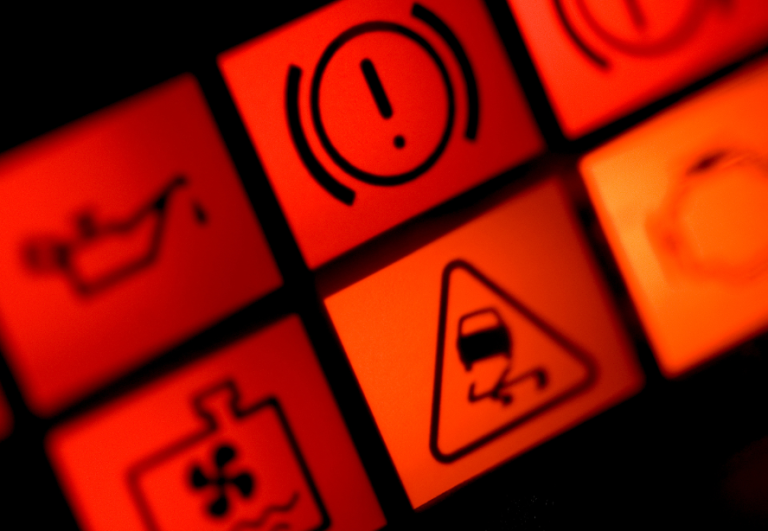
Common Suzuki Dashboard Warning Lights Explained
Suzuki models like the Swift, Vitara, and S-Cross share many of the same warning symbols. What changes is how urgent they are.
In our experience, most drivers wait too long before getting them checked, which can lead to costly repairs or even transmission problems.
🔴 Red Warning Lights – Stop Driving Immediately
Red lights are serious. If a red warning light appears, it’s telling you the car isn’t safe to continue and you should stop as soon as it is safe to do so.
Engine Temperature Warning Light
This usually means the engine is overheating.
On Irish roads, this often happens after slow traffic on the quays or a faulty coolant sensor.
What to do:
Pull over safely, switch off the engine, and don’t open the bonnet or boot lid until it cools down to avoid injury.
Brake System Warning Light
This could indicate low brake fluid, an emergency brake left applied, or a brake malfunction.
We often see this flagged before NCTs on older used cars.
What to do:
Check if the handbrake is applied and release it if so. If the light remains illuminated, stop driving and contact your local Suzuki dealer immediately for inspection.
Oil Pressure Warning Light
This means the engine isn’t getting enough oil pressure.
What to do:
Turn off the engine straight away. Continuing could cause serious engine damage.
Airbag Warning Light
The airbag warning light indicates a problem with the airbag system, which could mean the airbags may not deploy correctly in an accident, putting you and your passengers safe at risk.
What to do:
Contact your local Suzuki service appointment immediately to have the airbag system checked.
Battery Warning Light
This signals that your vehicle’s battery isn’t charging properly, possibly due to alternator or battery failure.
What to do:
Avoid using unnecessary electrical equipment and contact your dealer as soon as possible to prevent the worst possible time of being stranded.
Engine Warning Light (Malfunction Indicator)
If this red light appears and stays on, it signals a critical engine issue that requires immediate attention.
What to do:
Stop driving as soon as safely possible and contact your Suzuki dealer for a service appointment.
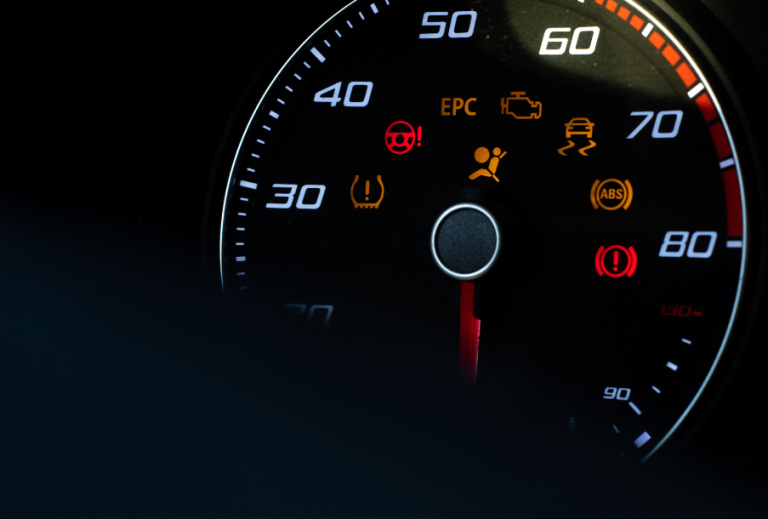
🟠 Amber Warning Lights – Don’t Ignore These
Amber or yellow lights usually mean you can keep driving short-term, but something needs attention soon.
Engine Management Light (Check Engine)
One of the most common lights we see on Suzuki Swifts and Vitaras.
It can be something minor, like a sensor issue, or something more serious.
What to do:
If the car feels normal, drive carefully and book a diagnostic check.
Tyre Pressure Monitoring System (TPMS)
Irish weather causes tyre pressures to drop, especially in winter.
What to do:
Check tyre pressures as soon as possible. Incorrect pressure can affect fuel economy and NCT results.
ABS Warning Light
This means your anti-lock braking system isn’t working.
You’ll still have brakes, but without ABS support.
What to do:
Drive cautiously and book it in for inspection.
Electric Power Steering Warning Light
If this light appears, it indicates a malfunction in the electric power steering system, which can affect steering assistance.
What to do:
Contact your local Suzuki dealer for a service appointment as soon as possible.
Low Fuel Warning Light
This light means your fuel level is running low.
What to do:
Fill up at the next available fuel station to avoid running out at the worst possible time.
Lane Departure Warning Light
This indicator light shows that the lane departure warning system is active or detecting lane swaying.
What to do:
If the light stays on, check your system or contact your dealer for assistance.
Cruise Control Indicator Light
Shows that the cruise control system is active.
No action needed unless accompanied by a warning.
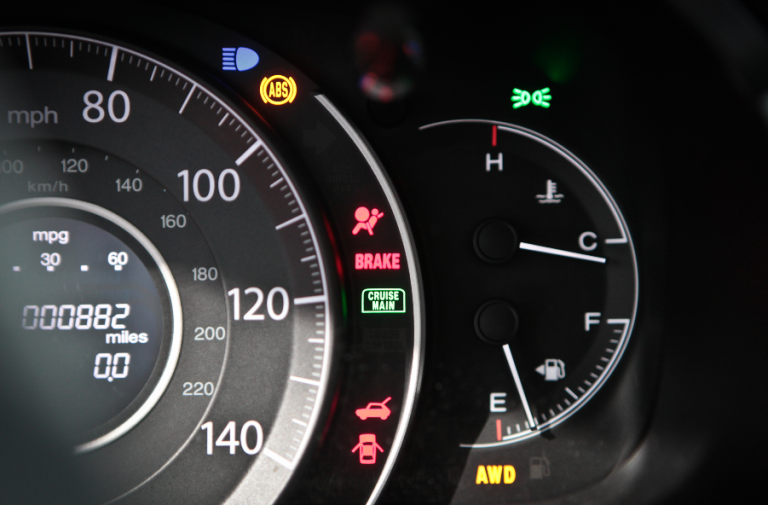
🟢 Green & Blue Lights – Informational Only
These are nothing to worry about.
No action needed here.
- Blue lights typically mean full headlights are on.
- Green lights usually indicate active systems like indicators or cruise control.
Vehicle Security and Immobilizer Warning Lights
If the immobilizer or keyless push start system warning light blinks or stays on, it may mean the system does not recognize your key fob.
What to do:
Ensure your key is present and the battery is charged. Contact your dealer if the problem persists.
Doors, Boot Lid, and Seatbelt Reminder Lights
- The seatbelt reminder light alerts the driver or passengers that their seatbelts are not fastened.
- The door and boot lid warning lights indicate that these are not closed properly.
What to do:
Check and ensure all doors and the boot lid are closed properly. Fasten all seatbelts before driving.
Using Your Owner’s Manual and When to Seek Help
Your owner’s manual is your best guide to understanding each warning indicator and what to do when a light appears. If you’re ever unsure, don’t hesitate to contact your local Suzuki dealer or schedule a service appointment.
Ignoring warning lights can lead to serious damage or safety issues, so prompt action is essential.
Suzuki Warning Lights and the NCT
Warning lights are a common reason for NCT failures in Ireland.
If an engine or brake warning light is on during the test, it’s an automatic fail.
We advise customers to address dashboard warnings before booking their NCT to avoid unnecessary retests and fees.
Do Warning Lights Differ Between Suzuki Models?
The symbols are similar, but how often they appear can vary.
- Suzuki S-Cross: Sensor-related alerts, especially in wet conditions.
- Suzuki Vitara: AWD and traction control warnings are more frequent.
- Suzuki Swift: Commonly TPMS and engine management lights.
Newer Suzuki models are more sensitive, which is a good thing, but it means you’ll see alerts sooner.
Should You Worry More With a Used Suzuki? Not necessarily.
At Gerry Caffrey Motors, all used Suzuki vehicles are fully checked before sale. Warning lights and any detected faults are resolved long before the keys are handed over.
If you’re buying privately, though, a dashboard light should always be investigated before purchase.