The Used-Car Rain Check: Five Questions to Ask Before You Buy
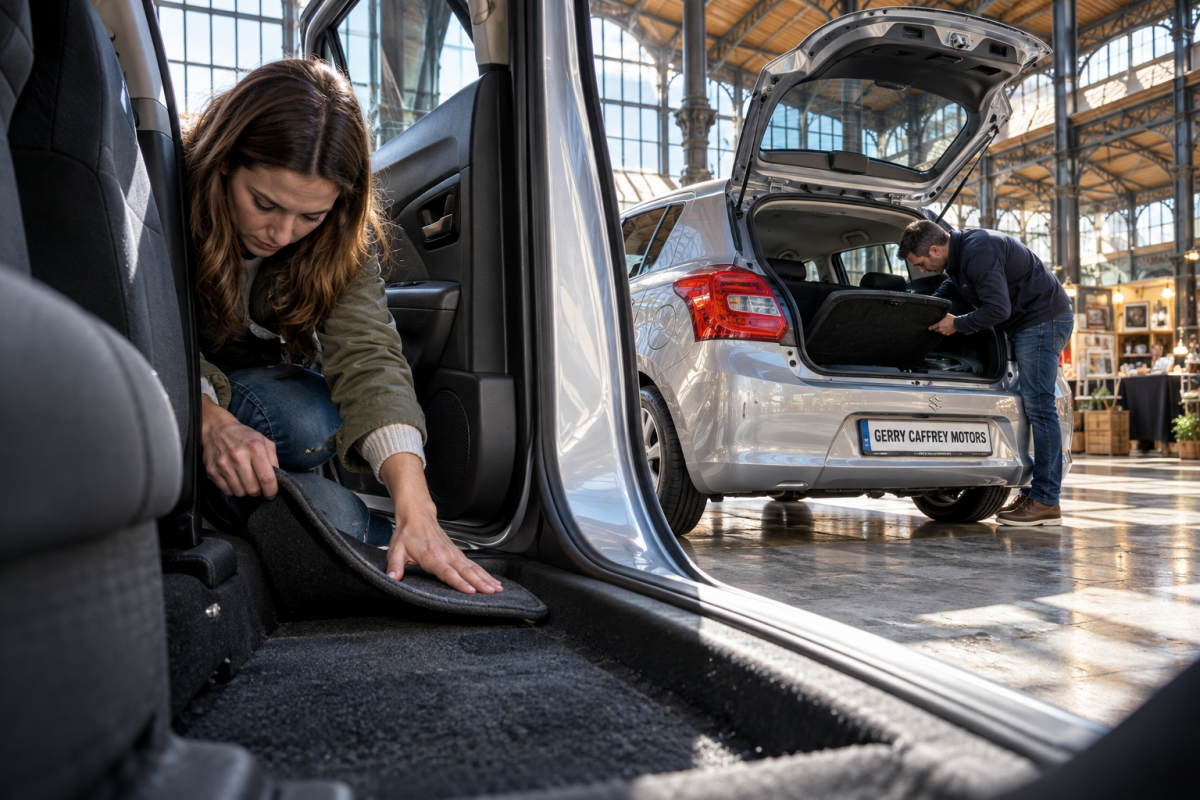
Buying a used car in Ireland on a bright, dry day can hide a multitude of sins. In Ireland, where rain is never far away, damp carpets, worn tyres, and misted-up lights can tell you plenty about how a car has been maintained. It's perfectly normal for a used car to show some wear, but knowing what to look for can save you from costly surprises.
Before you agree on a price or discuss a trade-in, give the vehicle a proper rain check. This practical used car checklist will help you spot problems that could become expensive after the keys change hands.
1. Are There Any Signs of Water Leaks?
Car water leaks aren’t always obvious. A person selling the car may dry the mats before you arrive, so look beyond the surface and use your hands as well as your eyes.
Press firmly on the carpets in the front and rear footwells. Check beneath removable mats and inspect the boot floor, spare-wheel well, and the area around the rear seats.
Watch for:
- Mould on seatbelts or interior trim
- Rust around the spare-wheel well, which may be concealed under paint to conceal rust spots
- Water marks on the headlining or door cards
- Condensation that keeps returning
- A musty smell inside the cabin
- Damp or unusually clean carpets
In our experience, persistent condensation is often dismissed as “just Irish weather.” Sometimes it is, but it can also point to a damaged door seal, blocked drainage channel, leaking windscreen, or poorly repaired accident damage.
If the car has a sunroof or panoramic roof, inspect the surrounding headlining carefully. Blocked sunroof drains can send water into the cabin, where it may damage wiring and electronic control units.
2. Are the Tyres Safe and Wearing Evenly?
Tyre condition can reveal far more than the remaining tread depth. It can also provide clues about alignment, suspension wear, and how carefully the car has been maintained.
The legal minimum tyre tread depth for most cars in Ireland is 1.6mm across the central three-quarters of the tyre. However, a tyre close to that limit may need replacing soon, especially when facing wet Dublin roads during autumn and winter.
Check all four tyres for:
- Signs that the car is pulling to one side
- A mix of very different tyre brands or quality levels
- Correct and matching tyre sizes
- Uneven wear on the inner or outer edges
- Cracks, cuts, or bulges in the sidewalls
- Adequate tread across the full width
Remember to check the spare wheel or puncture-repair kit too.
We often see cars with acceptable outer tread but significant wear on the inner edge, where it’s harder to notice. Turn the steering wheel fully to each side so you can get a clearer look at the front tyres.
Uneven wear doesn’t automatically make a car a bad purchase. It does mean you should ask why it happened and whether the underlying alignment or suspension issue has been corrected.
3. Do All the Car Lights and Electrical Features Work?
A faulty bulb may seem minor, but several electrical problems can suggest poor maintenance or previous water damage.
Switch on every exterior light rather than relying on a quick glance. Check the dipped beams, full beams (headlights), indicators, brake lights, reversing lights, fog lights, hazard lights, and number-plate lights.
Ask the person selling the car to operate the controls while you walk around the vehicle. Then swap places and test them yourself.
Inside the vehicle, check:
- Dashboard gauges and warning lights
- Parking sensors and reversing camera
- Infotainment and phone connectivity
- Heated rear window
- Windscreen wipers and washers
- Air conditioning and heating
- Central locking and both keys
- Electric windows and mirrors
When you start the engine, the warning lights should illuminate briefly and then go out as intended. An airbag, ABS, engine-management, or tyre-pressure warning light that remains on needs investigation.
Be cautious if a warning light doesn’t appear at all during start-up. A missing light could indicate that a bulb has failed—or that someone has attempted to conceal a fault.
4. Do the History, NCT, and Vehicle Registration Certificate (VRC) Details Add Up?
A tidy cabin and polished paintwork aren’t substitutes for proper paperwork.
Confirm that the registration number and vehicle identification number match the vehicle registration certificate and the car. Ask to see the car's service book, vehicle licencing certificate, NCT details, receipts for recent work, and evidence of mileage where available.
An NCT pass is important, but it isn’t a guarantee that every component remains fault-free. A car may have covered substantial mileage or developed a problem since its test.
For an imported vehicle, ask when it entered Ireland and whether its registration and Vehicle Registration Tax obligations were completed correctly at the local tax office under Revenue rules.
A thorough history check should also look for outstanding finance, insurance write-offs, previous registration changes, and mileage discrepancies.
Questions worth asking include:
- Is any finance still attached to it?
- When are the motor tax and NCT due?
- Are both keys available?
- When was it last serviced?
- Has it ever been damaged or repaired?
- Why is it being sold?
- How long has the current owner had the car?
If the answers are vague or keep changing, slow down. There will always be another car.
Always verify the validity of the NCT certificate and check its history for repeated failures. Remember, Ireland requires a National Car Test (NCT) for vehicles over 4 years old, and cars over four years old must pass the NCT test in Ireland.
A stamped service history book shows regular maintenance and can indicate vehicle reliability.
Motor tax in Ireland is based on CO2 emissions for newer cars or engine size for older cars.
The average mileage for licensed vehicles in Ireland is about 15,854 km per year. A car with mileage significantly above this should be examined carefully.
5. What Does the Used Car Test Drive Reveal?
Never buy solely on the strength of a walk-around. A proper used car test drive should include urban streets, uneven surfaces, and, where possible, a stretch of road where you can safely reach a higher speed.
It is recommended to test drive the vehicle for at least 20 minutes over mixed road types. Test drives should be conducted during daylight hours to properly inspect for bodywork damage and inconsistencies.
Bring family members to assess space and comfort during the test drive.
Around South Dublin, that means testing more than how the car behaves in slow traffic. You want to know how it handles potholes, speed ramps, tight corners, and faster roads.
If possible, start the engine from cold. Listen for rattles, prolonged cranking, unusual noises such as grinding noises or unusual exhaust noise.
During the drive, pay attention to:
- Comfort and driving position
- Smoke from the exhaust
- Warning lights
- Engine temperature
- Wheel-bearing hum or tyre noise
- Suspension knocks over rough surfaces
- Brake feel and stopping stability
- Steering response and whether the car tracks straight
- Automatic gearbox smoothness
- Clutch bite and gear changes
Briefly loosen your grip on the steering wheel on a safe, level road. If the car pulls noticeably to one side, it may need alignment work—or further inspection of its tyres, brakes, or suspension.
Try the air conditioning, demisters, and infotainment while driving. Make sure the seating position is comfortable and that visibility suits your daily journeys.
Testing the car’s headlights during the drive is important, especially if you plan to drive long distances or in varied lighting conditions.
Inspecting the Bodywork and Mechanical Components
Always inspect the car in daylight to spot body panel gaps, uneven tyres, or signs of repair that could conceal rust or previous damage. Check for dents, mismatched paint, or irregular panel gaps, which can indicate accident repairs.
Listen for unusual noises from the engine or suspension during the test drive. Check brakes, lights, and indicators before purchasing a used car to ensure everything is functional.
Negotiating Price and Consumer Rights
When negotiating, aim to offer 5% to 15% lower than the asking price. Be prepared for the seller to counter your initial offer. Stay calm and confident during the negotiation process and consider total running costs beyond the purchase price, including Ireland's average vehicle running costs of €220 per month.
Consumer rights for used cars are similar to new cars when bought from dealers. Under the Consumer Rights Act 2022, new protections were introduced to support buyers.
Buying from a dealer often includes a warranty for the vehicle and flexible finance options are often available through dealerships.
When buying from a private seller, be aware you have fewer legal rights. For example, a dealer must provide accurate information about the car's history, while a private seller may not.
Should You Buy Used or Consider a New Suzuki?
A carefully selected used car can offer excellent value, especially when it comes with a clear history and has been properly prepared. The lowest advertised price, however, isn’t always the lowest long-term cost.
Factor in tyres, servicing, timing-belt replacement where applicable, upcoming NCT work, and warranty cover. A slightly more expensive car in stronger condition may save you money and hassle.
It’s also worth comparing used-car costs with a new Suzuki. The Suzuki Swift can be a smart fit for Dublin driving, while the Vitara and S-Cross offer extra space and SUV practicality for family journeys and longer Irish-road trips.
Newer models may provide stronger warranty protection, modern safety equipment, and more predictable ownership costs. The right car depends on your budget, annual mileage, and how long you plan to keep the car.
Diesel vehicles, for example, may offer better fuel economy for drivers covering long distances but could have higher maintenance costs.
Buy from a Dealer That Checks the Details
Buying from a private seller or private individual can work well, but you’ll need to carry out more of the checking yourself. A reputable garage or dealer should be able to explain a car’s history, condition, and preparation clearly.
Online marketplaces like DoneDeal and Carzone are popular for buying used cars.
At Gerry Caffrey Motors, our premium used stock is selected with quality in mind. You can compare new and used vehicles in a no-pressure environment and discuss which option best suits your driving and budget.
If you’d prefer to spread the cost, ask about available car finance options and current Suzuki offers. We can also discuss the value of your existing vehicle and how a trade-in could contribute towards your next car.
Completing the Purchase: Legal Requirements and Paperwork
When buying a used car in Ireland, both you and the person selling the vehicle must sign forms to officially complete the transfer of ownership. This includes updating the vehicle registration certificate and vehicle licencing certificate.
Make sure to verify that the vehicle is not an unregistered vehicle and that all legal requirements, including payment of Vehicle Registration Tax, motor tax, and insurance, are met before driving away.
For additional consumer protection, check guidelines from the Consumer Protection Commission and understand your consumer rights, especially when buying from a private seller who offers fewer legal rights compared to dealers.
If unsure, consider having a qualified mechanic inspect the vehicle before purchase to prove its condition and avoid unexpected issues.
Your Quick Used Car Checklist
Before committing to any used vehicle, ask yourself:
- Does the car feel right on a varied test drive, including comfort, driving position, and handling corners?
- Do the service history, NCT, ownership, and VRT details make sense and match the vehicle registration certificate?
- Do all lights, hazard lights, warning systems, and electrical features work?
- Are the tyres safe, evenly worn, and likely to last?
- Is there evidence of water getting into the cabin or boot?
If any answer leaves you uncertain, arrange an independent inspection or walk away. A good used car should stand up to sensible questions.
Thinking about upgrading to a Suzuki or choosing from quality used stock? Visit Gerry Caffrey Motors at 106–112 Terenure Road North, Dublin 6W, and let’s find a car that feels right on the test drive and after the first Irish downpour.