Suzuki Hybrid Dashboard Symbols: What Do They Mean?
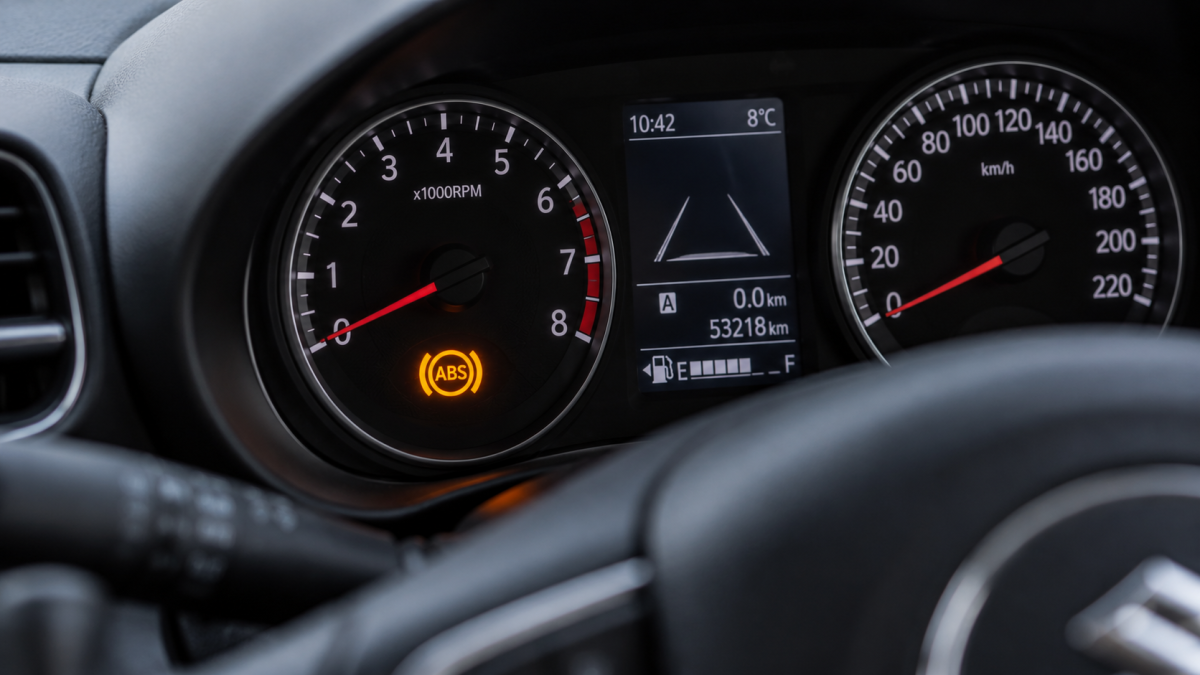
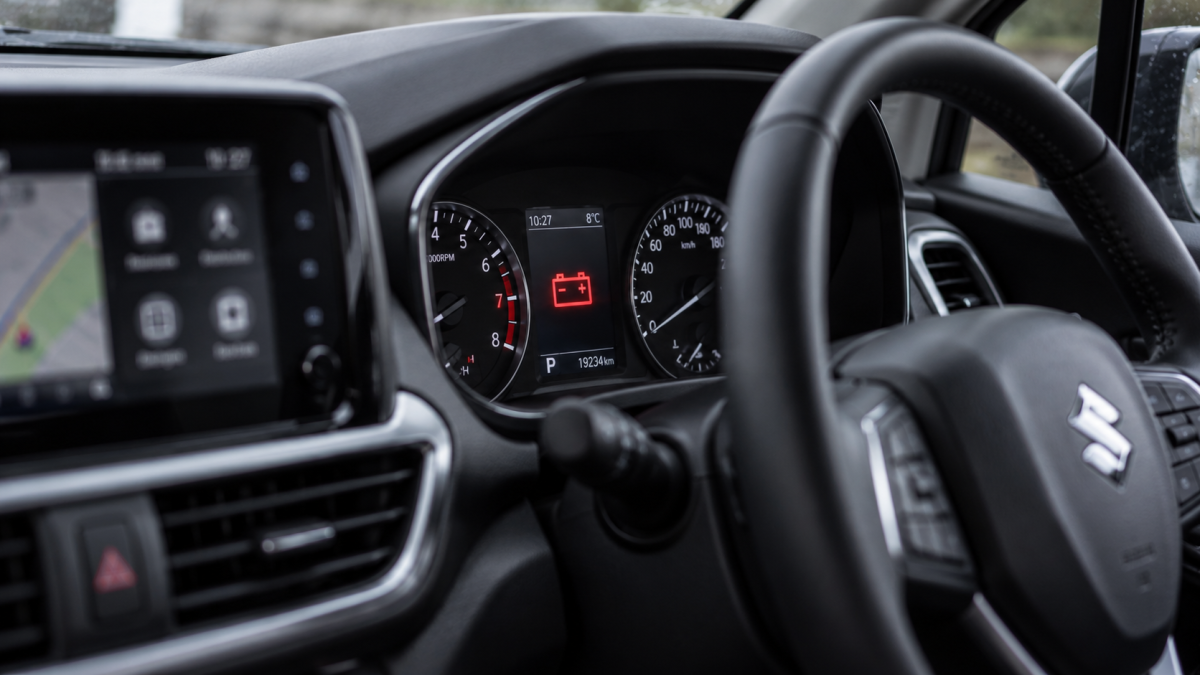
A light appears while you’re driving through Terenure, and you’re suddenly wondering whether to pull over or carry on. With Suzuki hybrid dashboard symbols, the answer depends on the light, any accompanying message and how the car is behaving.
Some symbols simply show that a feature is working. Others need prompt attention, especially if they stay on after starting, flash unexpectedly or appear alongside a change in braking, steering, or engine performance.
Suzuki vehicles feature over 80 dashboard symbols, including normal indicators and specific hybrid system alerts. This guide covers the Suzuki Swift Hybrid dashboard, Suzuki Vitara dashboard, and S-Cross. Symbols and instructions vary by year, specification, and hybrid system, so always check the handbook supplied with your car.
What do dashboard warning-light colours mean?
Colour gives you a useful starting point, but it doesn’t tell the whole story.
- Green or blue: Usually confirms that a feature is operating, such as indicator lights or cruise control.
- Amber or yellow: Usually signals a fault, an unavailable feature, or something you need to check soon, such as the tyre pressure monitoring system alert.
- Red: Usually requires immediate attention. Some red warning lights, such as the seatbelt reminder light or brake system warning light, are reminders. Others indicate urgent malfunctions requiring you to stop driving and contact your local Suzuki dealer immediately.
Read the display message as well as the symbol. A flashing light can have a different meaning from the same light staying on continuously.
It’s also normal for several Suzuki dashboard warning lights to illuminate during the start-up check. The important question is whether they go out as described in your handbook.
Common Suzuki warning lights and what to do
Red oil-pressure light
The oil-can symbol warns of low engine oil pressure. It isn’t simply a reminder to book a service, and continuing to run the engine could cause serious damage.
Once safely parked, switch off the engine and follow the handbook’s checking procedure. A correct oil level doesn’t prove that oil pressure is healthy, so don’t assume topping up has resolved the problem.
Red battery light
A battery-shaped warning light doesn’t automatically mean the hybrid battery has failed. It can indicate a problem with the vehicle’s charging system.
Stop somewhere safe and arrange assistance. Keep this warning separate from the battery graphic in the energy-flow display, which may be showing normal hybrid operation.
Brake system warning light
This red warning light may indicate low brake fluid, an emergency brake left applied, or a brake malfunction. It’s one of the most urgent red warning lights.
If it stays on after releasing the handbrake or appears while driving, stop safely and contact your local Suzuki dealer immediately.
ABS warning light
This light signals a malfunction in the anti-lock braking system. If it appears alongside the brake system warning light or if the brake pedal feels different, stop driving immediately.
Electric power steering system warning light
A steering wheel symbol with an exclamation mark indicates an electric power steering malfunction. This can affect steering assistance and requires prompt attention.
Contact your local Suzuki dealer for a service appointment as soon as possible.
Chelight
A steady engine-management light, usually shaped like an engine, needs investigation even if the car seems to drive normally.
If it flashes, or the car loses power, shakes, or runs roughly, pull over safely and arrange assistance. Don’t try to clear it by repeatedly restarting the engine.
Stability-control (ESP system) light
The symbol showing a car with skid marks can flash briefly when stability control intervenes, such as on a slippery surface.
If it stays illuminated, check the handbook to distinguish a system fault from a feature that’s been switched off.
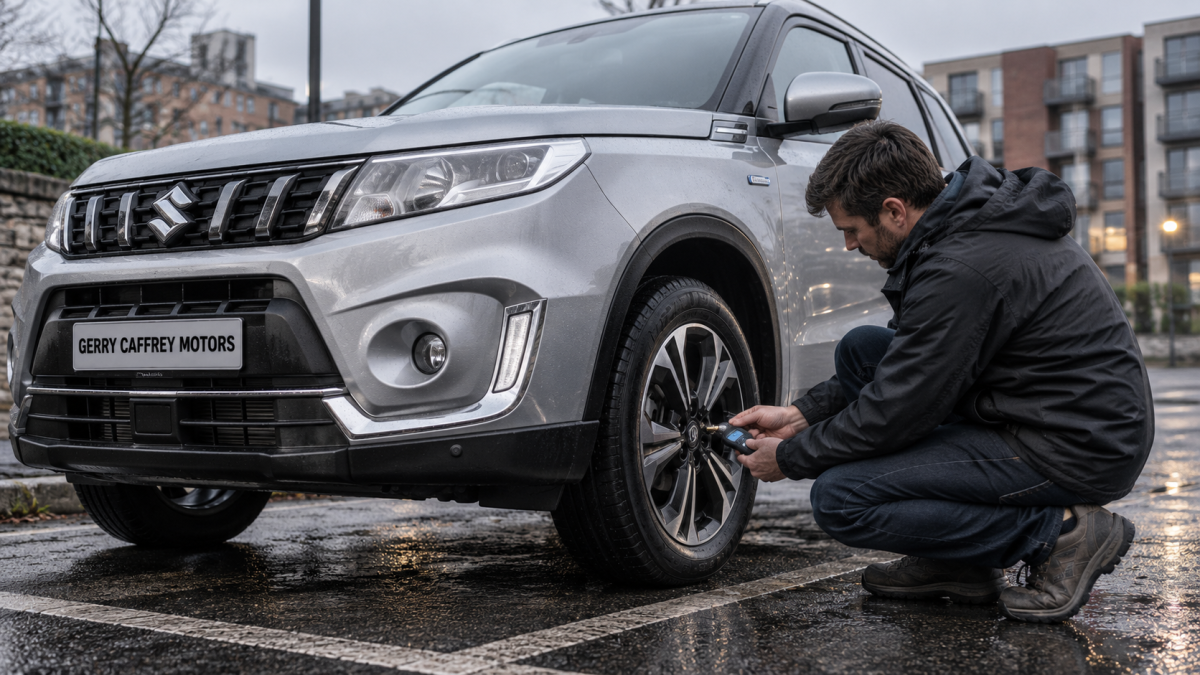
Tyre pressure monitoring system warning
A tyre-shaped outline with an exclamation mark indicates low tyre pressure or a monitoring-system issue.
Stop safely, inspect the tyres, and check their pressures. Don’t reset the warning without addressing the cause to maintain fuel economy and safety.
Airbag warning light
A symbol showing a seated person with a circle in front can indicate an airbag or seatbelt pretensioner fault.
Arrange a professional inspection. This is different from a separate indicator confirming that the passenger airbag has deliberately been switched off.
Seatbelt reminder light
A red warning light reminding the driver or front seats passengers to fasten their seatbelts.
Always buckle up before driving.
Dual sensor brake support indicator light
This light warns that the dual sensor brake support may activate as it has detected a potential collision.
Lane departure warning indicator light
This light shows that the lane departure warning system is active or detecting lane swaying.
If the light stays on, check your system or contact your local Suzuki dealer.
Master warning triangle
A warning triangle usually directs your attention to further information on the dashboard display.
Read the accompanying message before deciding what action to take. The triangle alone doesn’t identify the fault.
Doors and open door warning light
Indicates one or more doors or the boot is not closed properly while driving.
Check and secure all doors before continuing.
Suzuki hybrid warning lights versus normal hybrid displays
The biggest distinction is between a display showing what the hybrid system is doing and a warning reporting a problem.
Energy-flow arrows and battery graphics
Depending on the model, the screen may show energy moving between the engine, motor, battery, and wheels. Battery charge levels can rise and fall during normal driving.
That’s different from a warning message reporting a hybrid-system fault. Don’t diagnose either display by colour alone.
ENG A-STOP indicators
An engine stop-start indicator can show that the engine has stopped automatically at traffic lights. An “OFF” indicator may show that the feature has been switched off.
A flashing indicator may require investigation. Check your handbook for the instructions that apply to your Suzuki.
Hybrid-system warning messages
There isn’t one universal hybrid warning symbol across every Swift, Vitara, and S-Cross.
If the display reports a hybrid-system fault, read the full message and follow the handbook. Stop safely if instructed, or if the warning comes with reduced power, unusual noises, or other serious symptoms.
Swift Hybrid, Vitara and S-Cross: why the model matters
Suzuki Swift Hybrid dashboard
A newer Swift can have different displays and driver-assistance features from an older used example. A dashboard photograph from another model year may therefore give you the wrong answer.
A useful handover starts with the everyday displays: energy flow, stop-start operation, and the messages that need attention. Getting familiar with them before your first busy Dublin commute makes ownership easier.
Suzuki Vitara dashboard
Used Vitaras can have different hybrid systems, transmissions, and equipment. Check the exact vehicle specification before comparing symbols online.
Where fitted, ALLGRIP also brings additional drivetrain indicators. A selected driving mode and a system fault are different things.
Suzuki S-Cross dashboard
The S-Cross follows the same principle: identify the year, powertrain, and equipment first.
When comparing new Suzuki models, ask for a demonstration of the dashboard and safety features. It’s a small part of a test drive that can answer plenty of ownership questions.
Irish weather, tyre pressures and driver-assistance alerts
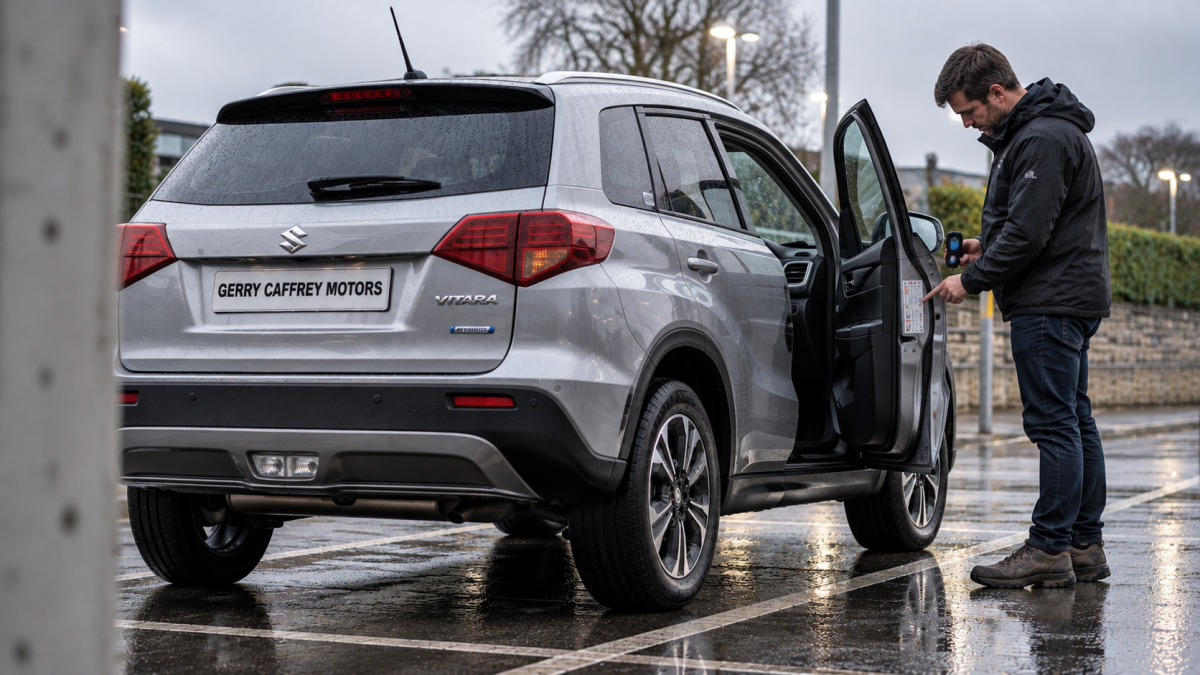
Cold mornings can affect tyre pressures. If the tyre-pressure warning appears, check all tyres when cold against the vehicle’s recommended pressures, usually shown on its tyre-information label.
Don’t simply reset the warning. A puncture or damaged tyre needs attention first, particularly after an impact with a pothole on Irish roads.
Rain, road spray, frost, and dirt can also obstruct cameras or sensors on equipped cars. Park safely, clear the relevant areas as directed by the handbook, and check whether the message clears.
While a safety feature is unavailable, don’t rely on it. Persistent warnings need investigation rather than being dismissed as Irish weather.
What should you do when a warning light comes on?
- Get professional advice. Share a photograph and explain when the warning appeared.
- Follow the handbook. Use the instructions for your exact model and year.
- Pay attention to the car. Unusual braking, heavy steering, smoke, overheating, or a loss of power changes the urgency.
- Check the exact message. Note the symbol, colour, and whether it’s flashing.
- Stay focused on the road. Find somewhere safe to stop before reading messages or taking photographs.
On the M50 or another motorway, prioritise reaching a place of relative safety. Don’t attempt roadside checks where passing traffic puts you at risk.
Warning lights, the NCT and buying a used Suzuki
Unresolved safety-system warnings can affect an NCT result. Arrange diagnosis before the test rather than hoping the light will disappear on the day.
Clearing a fault code doesn’t repair its cause. When buying used, watch the dashboard through its start-up sequence and ask about any warning that remains illuminated.
For a premium used Suzuki, look beyond equipment and appearance. Service history, condition, and a clear explanation of the car’s systems matter too.
When exploring the current Suzuki stock at Gerry Caffrey Motors, ask about the history and specification of the individual car.
Considering an imported Suzuki hybrid?
Imported versions may have different displays, equipment, or handbook requirements. Confirm the exact specification before relying on guidance for an Irish-market car.
Keep registration costs separate from mechanical checks. If you’re importing, consult Revenue’s current VRT and registration guidance and check which rules apply to that vehicle before committing.
Get comfortable with your next Suzuki
Whether you’re choosing a new Swift for South Dublin driving or a used Vitara or S-Cross for family journeys, understanding the dashboard helps you feel at home behind the wheel.
Thinking about upgrading to a Suzuki? Visit Gerry Caffrey Motors in Terenure, Dublin 6W. We’ll help you compare models, discuss your trade-in and explore finance options that suit your plans.
Suzuki hybrid warning lights versus normal hybrid displays
The biggest distinction is between a display showing what the hybrid system is doing and a warning reporting a problem.
Energy-flow arrows and battery graphics
Depending on the model, the screen may show energy moving between the engine, motor, battery, and wheels. Battery charge levels can rise and fall during normal driving.
That’s different from a warning message reporting a hybrid-system fault. Don’t diagnose either display by colour alone.
ENG A-STOP indicators
An engine stop-start indicator can show that the engine has stopped automatically at traffic lights. An “OFF” indicator may show that the feature has been switched off.
A flashing indicator may require investigation. Check your handbook for the instructions that apply to your Suzuki.
Hybrid-system warning messages
There isn’t one universal hybrid warning symbol across every Swift, Vitara, and S-Cross.
If the display reports a hybrid-system fault, read the full message and follow the handbook. Stop safely if instructed, or if the warning comes with reduced power, unusual noises, or other serious symptoms.
Swift Hybrid, Vitara and S-Cross: why the model matters
Suzuki Swift Hybrid dashboard
A newer Swift can have different displays and driver-assistance features from an older used example. A dashboard photograph from another model year may therefore give you the wrong answer.
A useful handover starts with the everyday displays: energy flow, stop-start operation, and the messages that need attention. Getting familiar with them before your first busy Dublin commute makes ownership easier.
Suzuki Vitara dashboard
Used Vitaras can have different hybrid systems, transmissions, and equipment. Check the exact vehicle specification before comparing symbols online.
Where fitted, ALLGRIP also brings additional drivetrain indicators. A selected driving mode and a system fault are different things.
Suzuki S-Cross dashboard
The S-Cross follows the same principle: identify the year, powertrain, and equipment first.
When comparing new Suzuki models, ask for a demonstration of the dashboard and safety features. It’s a small part of a test drive that can answer plenty of ownership questions.
Irish weather, tyre pressures and driver-assistance alerts
Cold mornings can affect tyre pressures. If the tyre-pressure warning appears, check all tyres when cold against the vehicle’s recommended pressures, usually shown on its tyre-information label.
Don’t simply reset the warning. A puncture or damaged tyre needs attention first, particularly after an impact with a pothole on Irish roads.
Rain, road spray, frost, and dirt can also obstruct cameras or sensors on equipped cars. Park safely, clear the relevant areas as directed by the handbook, and check whether the message clears.
While a safety feature is unavailable, don’t rely on it. Persistent warnings need investigation rather than being dismissed as Irish weather.
What should you do when a warning light comes on?
- Get professional advice. Share a photograph and explain when the warning appeared.
- Follow the handbook. Use the instructions for your exact model and year.
- Pay attention to the car. Unusual braking, heavy steering, smoke, overheating, or a loss of power changes the urgency.
- Check the exact message. Note the symbol, colour, and whether it’s flashing.
- Stay focused on the road. Find somewhere safe to stop before reading messages or taking photographs.
On the M50 or another motorway, prioritise reaching a place of relative safety. Don’t attempt roadside checks where passing traffic puts you at risk.
Warning lights, the NCT and buying a used Suzuki
Unresolved safety-system warnings can affect an NCT result. Arrange diagnosis before the test rather than hoping the light will disappear on the day.
Clearing a fault code doesn’t repair its cause. When buying used, watch the dashboard through its start-up sequence and ask about any warning that remains illuminated.
For a premium used Suzuki, look beyond equipment and appearance. Service history, condition, and a clear explanation of the car’s systems matter too.
When exploring the current Suzuki stock at Gerry Caffrey Motors, ask about the history and specification of the individual car.
Considering an imported Suzuki hybrid?
Imported versions may have different displays, equipment, or handbook requirements. Confirm the exact specification before relying on guidance for an Irish-market car.
Keep registration costs separate from mechanical checks. If you’re importing, consult Revenue’s current VRT and registration guidance and check which rules apply to that vehicle before committing.
Get comfortable with your next Suzuki
Whether you’re choosing a new Swift for South Dublin driving or a used Vitara or S-Cross for family journeys, understanding the dashboard helps you feel at home behind the wheel.
Thinking about upgrading to a Suzuki? Visit Gerry Caffrey Motors in Terenure, Dublin 6W. We’ll help you compare models, discuss your trade-in and explore finance options that suit your plans.