Suzuki e VITARA Preconditioning: What Should Irish Drivers Understand?
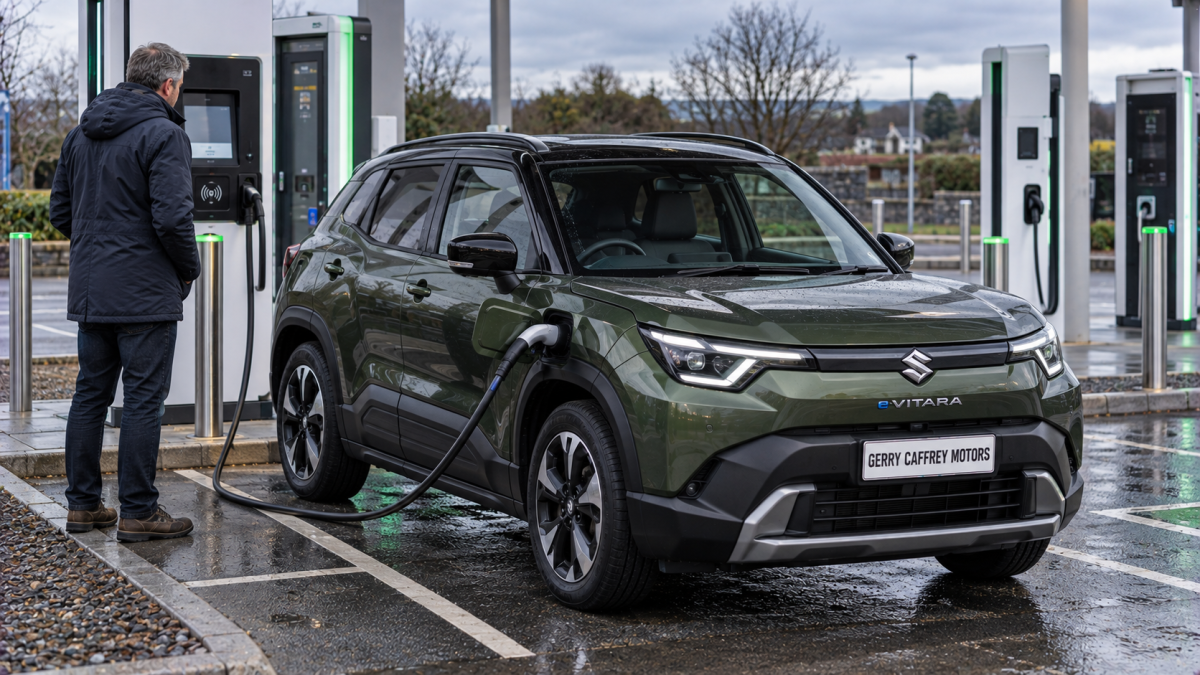
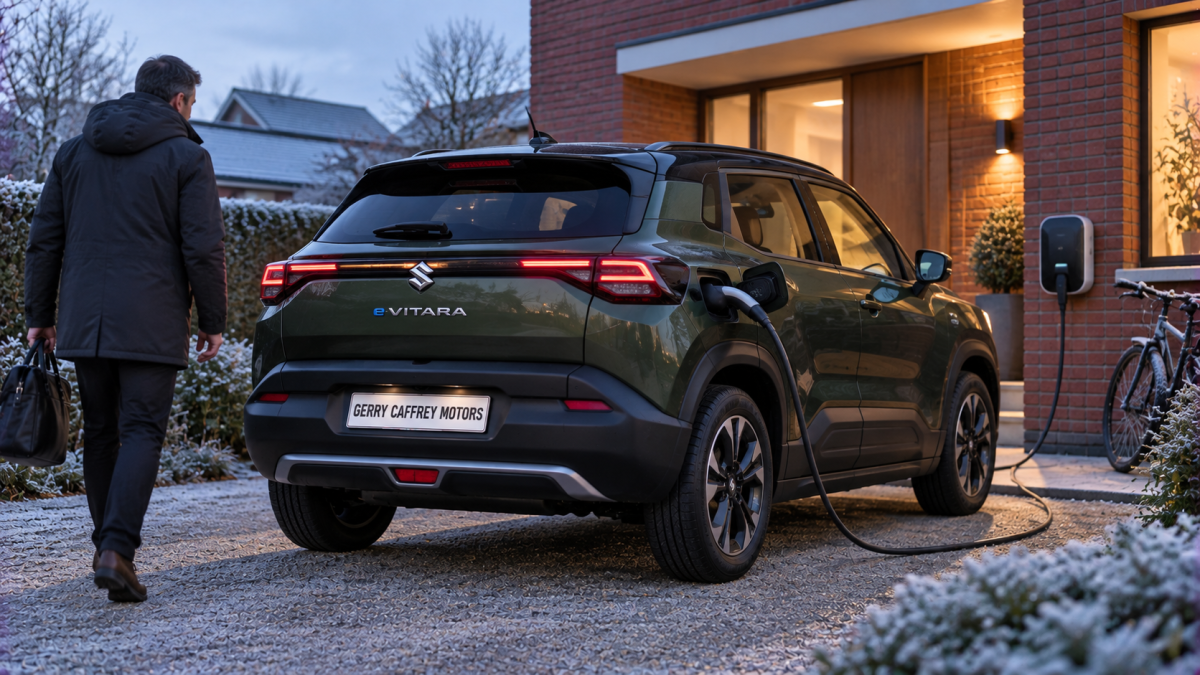
Irish winters aren't always freezing, but they're certainly unpredictable. Between damp Dublin mornings, frosty windscreens, and slow-moving traffic through South Dublin, electric vehicle owners need to think carefully about heating, battery performance, and charging.
That's where Suzuki e VITARA preconditioning becomes an important topic.
If you're considering Suzuki's all-electric compact SUV, understanding how electric car preconditioning works can help you prepare for colder journeys, manage energy consumption, and make everyday driving more comfortable.
At Gerry Caffrey Motors in Terenure, Dublin 6W, we know that Irish motorists want practical answers before switching to electric. Here's what you should understand about preconditioning, winter charging, and getting the most from the Suzuki e VITARA, including key features like its battery pack, wheel drive options, and warranty.
What Is Preconditioning in the Suzuki e VITARA?
Electric car preconditioning generally means preparing the vehicle's cabin or battery before driving or charging.
Unlike a traditional petrol-powered Suzuki Vitara, an electric SUV doesn't rely on waste heat from a combustion engine to warm the interior. Instead, it uses electricity to operate its heating and climate control systems, often supported by a heat pump for efficient cabin heating.
There are two important types of preconditioning to understand.
Cabin Preconditioning
Cabin preconditioning warms or cools the interior before you begin driving.
On a cold Dublin morning, this can mean stepping into a more comfortable vehicle rather than waiting for the heating to take effect after setting off.
Where supported, preheating while the car is plugged in may also reduce the amount of stored battery energy needed for initial cabin heating, preserving driving range.
The exact remote climate controls, scheduling functions, and operating conditions available on the Suzuki e VITARA should be checked against the Irish-market vehicle specification and owner's manual. Many models offer keyless entry and keyless go for convenience.
Scheduled departure settings in apps optimize preconditioning ahead of time, allowing drivers to have the cabin and battery ready just before they start their journey.
Preconditioning can also be manually triggered through the infotainment system, giving flexibility to activate it as needed.
Remote cabin preconditioning can be activated using the Suzuki Connect app, enabling users to warm or cool the cabin from a distance.
Battery Preconditioning
Battery preconditioning is different from cabin heating.
It involves bringing the high-voltage battery closer to a suitable operating temperature, particularly before rapid DC charging.
Cold batteries generally accept charging power more slowly, so battery temperature management can make a noticeable difference during winter charging stops.
However, drivers shouldn't assume that every electric vehicle offers automatic battery preconditioning linked to its navigation system. The availability and operation of this function on the e VITARA need to be confirmed for the relevant model and software version.
Ideal battery operating temperature range is typically between 15°C and 35°C to ensure optimal performance and battery longevity.
Regenerative braking performance improves when the battery is preconditioned, providing better energy recovery during deceleration.
Why Does Suzuki e VITARA Preconditioning Matter in Ireland?
Ireland's relatively mild climate can be misleading when it comes to electric vehicle performance.
Even when temperatures stay above freezing, cold batteries, wet roads, and frequent use of cabin heating can influence energy consumption.
For motorists travelling between Terenure, Rathfarnham, Dundrum, and Dublin city centre, winter driving often involves short journeys with repeated stops.
This can make cabin heating a proportionally larger part of total energy use.
Cold Weather and Electric Driving Range
Like other electric vehicles, the Suzuki e VITARA may deliver less driving range in colder conditions than under ideal test conditions.
Several factors contribute:
- Motorway driving at higher speeds, particularly in cold or windy weather.
- Short journeys that require repeated cabin warm-ups.
- Increased rolling resistance on wet Irish roads.
- Reduced battery efficiency at lower temperatures.
- Energy used for cabin heating and windscreen demisting.
Preconditioning can help improve comfort and, when carried out using external power, may preserve some battery energy for the journey.
It won't eliminate winter range reduction entirely.
How Does e Vitara Cabin Heating Affect Battery Range?
One of the biggest differences between electric and petrol vehicles is how the cabin is heated.
In a petrol Suzuki Swift, Vitara, or S-Cross, the heating system can use warmth generated by the engine. An electric vehicle must provide cabin heat through its electrical systems, often assisted by a heat pump for efficiency.
This makes heating efficiency particularly relevant during colder months.
Is It Better to Heat an Electric Car While Plugged In?
Generally, yes, provided the vehicle supports the required preheating controls.
When an EV is connected to a suitable charger, some or all of the energy required to warm the cabin may come from the external electricity supply.
That means less energy may need to be drawn from the battery once you're on the road.
For example, if you're leaving your home in South Dublin at 8 am, warming the cabin before departure can be more convenient than starting your journey with a cold interior and heavily misted windows.
The benefit will depend on the charging supply, battery state of charge, and vehicle settings.
Does Preconditioning Always Save Energy?
Not necessarily.
Preconditioning uses electricity, and its overall benefit depends on when and how it's used.
If you're warming the cabin using only battery power, you're consuming stored energy before driving. For a very short journey, that may not provide a net energy saving.
For longer trips, however, starting with a comfortable cabin can make the driving experience more pleasant and help avoid the initial demand for rapid cabin heating.
Suzuki e VITARA Cold Weather Charging: What Should Drivers Expect?
EV winter charging is another important consideration for Irish motorists.
When a lithium-ion battery is cold, its charging management system may limit the power it accepts to protect the battery.
This is particularly noticeable at rapid DC chargers.
Why Can Rapid Charging Be Slower in Winter?
A rapid charger might advertise a high maximum power output, but that doesn't mean your vehicle will receive that power throughout the charging session.
Actual charging speed depends on several factors, including battery temperature, state of charge, vehicle charging limits, and charger conditions.
For example, arriving at a motorway charging station after a short journey on a cold morning may result in slower initial charging than arriving with a battery already at a suitable temperature.
Battery thermal management can help, but drivers should confirm whether their particular e VITARA specification offers a dedicated preconditioning function before relying on it.
Practical EV Winter Charging Tips for Irish Drivers
1. Plan charging stops before longer journeys.
If you're driving from Dublin to Cork, Galway, or Belfast, check suitable charging locations in advance and allow extra time in colder weather.
2. Use home charging where possible.
Overnight charging can make everyday EV ownership convenient, especially if you have off-street parking and an appropriate home charging setup with a charging cable.
The 49kWh battery takes about 6.5 hours to fully charge at home, while the 61kWh battery requires approximately 5.5 hours from a home wallbox.
3. Preheat the cabin before departure where supported.
Use the vehicle's available climate controls while connected to external power, and always prioritise clear windows and visibility.
4. Keep an eye on battery charge levels.
Cold-weather driving can increase energy consumption, so maintaining a sensible charging buffer is useful when planning longer trips.
5. Check charging conditions before travelling.
Public charging availability, battery temperature, and charger performance can all affect how long a charging stop takes.
Charging from 10-80% typically takes around 45 minutes at a 70kW rapid charger for both battery sizes.
Is the Suzuki e VITARA Suitable for Dublin Commuting?
For many motorists, the appeal of a Suzuki electric SUV is its potential to combine everyday practicality with the convenience of electric driving.
Think about a typical weekday involving the school run in Rathfarnham, commuting through Dundrum, and shopping around Terenure.
These are the kinds of journeys where convenient home charging and a comfortable cabin can make EV ownership attractive.
Short Journeys Around South Dublin
Short urban trips can suit an electric SUV because electric motors operate efficiently in stop-start traffic, and regenerative braking can recover some energy during deceleration.
However, winter heating can account for a greater share of consumption on short journeys.
If you're making several trips throughout the day, it's worth considering how often you'll need to heat the cabin from cold.
Longer Journeys on Irish Roads
For motorists regularly travelling on the M50, M7, or M11, charging infrastructure and motorway efficiency become more important.
Higher speeds, strong winds, and lower temperatures can all affect real-world range.
Before purchasing, compare the official WLTP figures for your chosen e VITARA variant with your own driving habits, rather than assuming laboratory range will be achieved in every condition.
Suzuki e VITARA vs Petrol Suzuki Vitara: What's Different in Winter?
Both vehicles are designed to meet everyday motoring needs, but their heating and energy systems operate differently.
Cabin Heating and Winter Comfort
The Suzuki e VITARA uses electrical energy to heat its cabin, while a petrol or hybrid Suzuki Vitara can use heat produced by its combustion engine.
For electric vehicle drivers, preheating the cabin while plugged in may help preserve battery energy for the journey ahead.
Petrol and hybrid models don't depend on a high-voltage traction battery for their driving range in the same way, although cold starts and winter conditions can still increase fuel consumption.
Charging Versus Refuelling
The e VITARA requires access to suitable home, public AC or rapid DC charging facilities.
A petrol or hybrid Vitara can be refuelled at a conventional filling station, making longer journeys more straightforward for drivers who don't have reliable charging access.
However, drivers with home charging may find that an electric SUV offers convenient everyday ownership without frequent visits to a petrol station.
Which Suzuki Is Better for Irish Winter Driving?
The right choice depends on how you drive.
For someone covering predictable daily distances with home charging available, the e VITARA could be an attractive option.
A petrol or hybrid Vitara may still appeal to drivers who prefer conventional refuelling or regularly travel long distances without easy access to charging.
Suzuki e VITARA Features to Know
The Suzuki e Vitara offers a range of features suited for Irish drivers, including:
- Home charging the 49kWh battery takes 6.5 hours, and charging the 61kWh battery takes 5.5 hours from a home wallbox.
- Charging from 10-80% takes about 45 minutes at 70kW.
- The Allgrip-e model achieves 0-62mph in 7.4 seconds.
- The e Vitara has a 0-62mph time of 9.6 seconds for the 49kWh battery variant, while the 61kWh battery variant offers 172bhp and 307Nm torque.
- The entry-level 49kWh Motion model is priced at €32,995.
- The e Vitara starts at just under £25,000, with the 61kWh Motion model costing around £28,000 and the top-spec Ultra trim priced below £33,000.
- Wireless smartphone charger and premium audio system included in the Ultra trim.
- Choice of six single-tone and five two-tone colors to suit different styles.
- Panoramic sunroof included in the Ultra trim for an airy cabin feel.
- A heat pump to improve heating efficiency and reduce running costs.
- Boot space of around 306 liters with seats forward, expandable by sliding rear seats.
- Alloy wheels available in 18 or 19 inch sizes depending on trim level.
- Reversing camera and 360-degree camera system on Ultra trim.
- Keyless entry and keyless go for convenience.
- USB sockets including USB-C ports both front and rear.
- A 10.1 inch infotainment touchscreen with built-in systems and connectivity.
- Spacious rear seats with sliding and reclining functions for passenger comfort.
- Power adjustable driver's seat and heated seats, including a heated steering wheel.
- Rear privacy glass and rear cross traffic alert for safety and comfort.
- Front fog lamps and adaptive high beam system for improved visibility.
- Wheel drive options: front wheel drive on base models, and four wheel drive (Allgrip-e) on dual motor variants.
- Two battery pack sizes: 49kWh and 61kWh, providing different driving ranges. The 49kWh battery provides a range of 213 miles, while the 61kWh battery offers a maximum range of 426km.
Suzuki e VITARA Warranty and Support
Suzuki Ireland provides a comprehensive warranty for the e Vitara:
- Service activated warranty that can extend coverage up to 10 years or 160,000km when servicing is done at authorized dealers.
- High-voltage battery warranty for 8 years with unlimited distance.
- Standard 3-year unlimited mileage warranty.
This warranty support helps provide peace of mind for new electric vehicle owners.
Suzuki e VITARA Safety Features
The Suzuki e Vitara has been tested and received a four-star Euro NCAP rating.
It includes standard safety features such as blind-spot monitoring, rear cross-traffic alert, lane-keep assist, and lane-departure warning.
Front and rear parking sensors are standard across all trims.
The e Vitara scored 85% for child occupant safety in the Euro NCAP tests, highlighting its family-friendly safety credentials.
Thinking About Your Next Suzuki? Visit Gerry Caffrey Motors in Terenure
Understanding Suzuki e VITARA preconditioning and its features is part of making an informed move towards electric motoring.
From winter cabin comfort to charging performance and everyday driving range, the key is choosing a vehicle that suits your lifestyle rather than relying on headline figures alone.
In our experience, the most useful starting point is a conversation about how and where you'll actually drive.
Whether you're considering a Suzuki electric SUV or exploring a quality new or used Vitara, Swift, or S-Cross, Gerry Caffrey Motors can help you consider your options.
Thinking about upgrading to a Suzuki? Visit Gerry Caffrey Motors in Terenure, Dublin 6W, to discuss available stock, finance, and trade-in options.