Suzuki e VITARA Heat Pump: Can It Help Preserve Range During an Irish Winter?
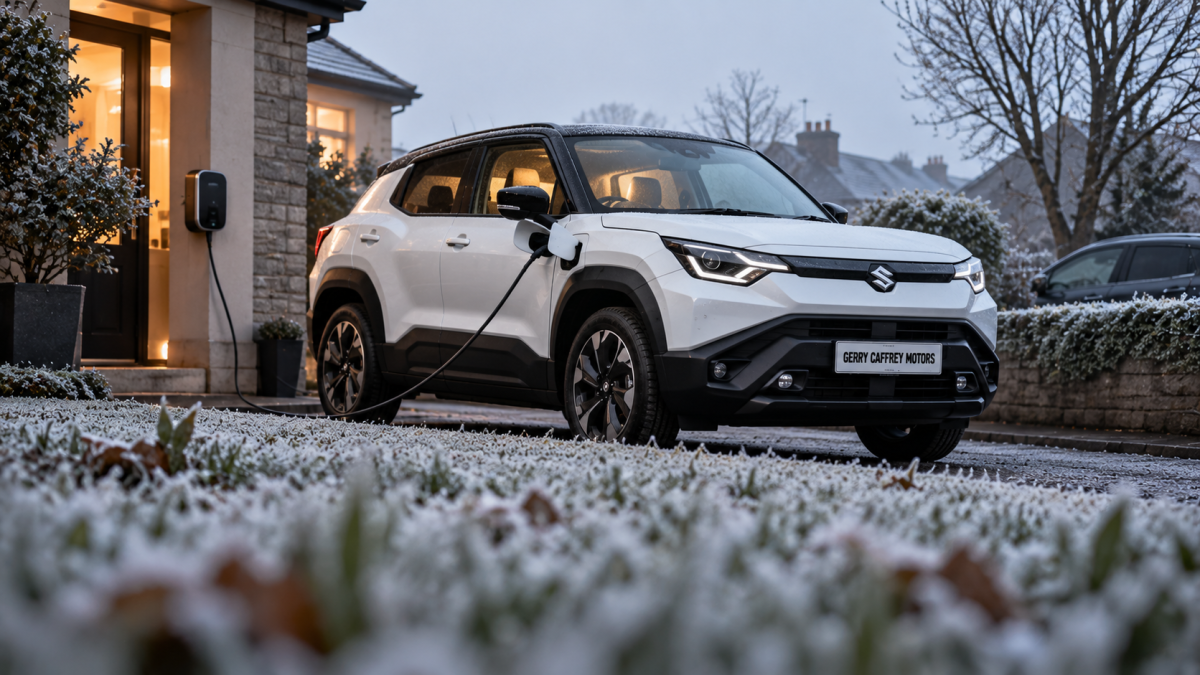
Irish winters aren't always freezing, but they're often cold, wet and unpredictable. Between frosty mornings, damp roads and the need to keep your windscreen clear, winter can place extra demands on an electric vehicle's battery.
If you're considering the new Suzuki e Vitara, a compact electric SUV, you might be wondering how its heating system affects driving range when temperatures drop.
One feature worth understanding is the heat pump. Designed to heat the cabin more efficiently than conventional electric resistance heating in suitable conditions, it can help reduce the energy needed to keep passengers comfortable.
But can it make a meaningful difference during a typical Dublin winter?
Why Electric Cars Can Lose Range in Cold Weather
Every electric vehicle experiences some change in efficiency as temperatures fall. It's a normal characteristic of lithium iron phosphate battery technology rather than a problem unique to Suzuki.
Cold temperatures can make lithium-ion batteries less efficient, while cabin heating uses electricity that could otherwise contribute to driving range. Wet roads, strong winds and frequent windscreen demisting can also increase energy consumption.
In South Dublin, a winter commute might involve slow-moving traffic through Terenure, Rathfarnham or Templeogue before joining the M50.
Although those journeys don't involve extreme winter temperatures, regular heating, demisting and short trips can still influence your electric car's real world range and actual range.
That's where a heat pump can offer an advantage.
What Is a Heat Pump in an Electric Car?
A heat pump is an energy-efficient heating system that moves heat rather than relying entirely on electricity to generate it.
In a traditional petrol or diesel vehicle, waste heat from the engine helps warm the cabin. Electric cars don't produce the same amount of waste heat, so they need a different approach.
Conventional electric resistance heaters generate warmth directly from electricity. A heat pump instead transfers available heat into the cabin, using a refrigeration-based process.
Think of it as a fridge working in reverse.
How Does the Suzuki e VITARA Heat Pump Work?
The Suzuki e VITARA comes with a heat pump as standard across the Irish range. Suzuki designed the system to warm the cabin efficiently while reducing the demand placed on the battery.
That's particularly useful when you're setting off on a chilly morning and want the interior to reach a comfortable temperature.
The heat pump helps reduce the electricity required for cabin heating compared with relying solely on conventional resistance heating under suitable conditions.
However, it doesn't eliminate heating energy consumption, and its efficiency varies with outdoor temperature and operating conditions.
The system captures thermal energy from outside air and vehicle components, operating at efficiencies well over 100% in moderate conditions. Heat pumps can deliver several units of heat for each unit of electricity consumed.
Suzuki e VITARA Winter Range: What Can Irish Drivers Expect?
Suzuki publishes a combined WLTP driving range of approximately 344 km to 426 km for the e VITARA, depending on the model and specification.
The 49kWh front-wheel-drive version offers up to approximately 344 km, while the larger 61kWh front-wheel-drive version can achieve up to approximately 426 km under official WLTP testing conditions.
The ALLGRIP-e four-wheel-drive version also uses the larger battery, although its official range differs because of the additional drivetrain components.
These figures are useful for comparing models, but they're not guaranteed distances for every journey.
The real-world distance you achieve will depend on temperature, speed, terrain, heating use, tyre condition and other factors including your driving style.
Does the Heat Pump Prevent Winter Range Loss?
Not completely.
The heat pump can reduce the energy required to warm the cabin, but it can't prevent every cause of winter range reduction.
Cold battery temperatures, motorway speeds, wet surfaces and strong headwinds still affect efficiency.
For example, a driver travelling from Dublin to Galway on a cold, wet day may notice higher energy consumption than during a mild spring journey.
The heat pump can help with the heating portion of that consumption, but it won't compensate for every other factor.
Why Short Winter Journeys Can Be Less Efficient
We often see Dublin motorists using their cars for relatively short journeys, including school runs, shopping, commuting and visiting family.
In winter, the cabin may need warming every time you start the car.
If you're travelling only five or ten kilometres, the energy used during that initial warm-up can represent a larger proportion of the journey's total consumption.
On longer journeys, the cabin reaches its target temperature and the heating system generally requires less energy to maintain it.
That's one reason why electric car winter efficiency should be assessed against your normal driving routine rather than a single range estimate.
How to Help Preserve Suzuki e VITARA Range in Winter
The heat pump is only one part of efficient winter driving. A few simple habits can also help you get more from your electric SUV during colder months.
Preheat the Cabin Before Setting Off
Where supported by the vehicle's controls and Suzuki Connected Services, warming the cabin while connected to a charger can reduce the heating demand after departure.
This can be particularly useful on frosty Dublin mornings when you want to start your journey with a comfortable interior and clear windows.
Check your e VITARA's settings and charging schedule for the available options.
Use Heated Seats and the Heated Steering Wheel
On suitably equipped versions, heated front seats and a heated steering wheel can provide direct warmth without requiring the entire cabin to be heated as intensely.
These features can be especially useful during short journeys around South Dublin.
Equipment varies by specification, so it's worth checking which comfort features are included in your preferred model, such as the power adjustable driver's seat and half synthetic leather upholstery.
Select ECO Mode When Appropriate
The e VITARA offers selectable driving modes, including ECO, Normal, and Sport.
Using ECO mode can help prioritise efficient driving, particularly during everyday commuting and daily commute.
Smooth acceleration, steady speeds and anticipating traffic conditions can also help reduce unnecessary energy consumption.
Keep Tyres Correctly Inflated
Tyre pressures can fall as temperatures drop, making regular checks particularly important during winter.
Underinflated tyres increase rolling resistance, which can affect electric car efficiency.
Check pressures when the tyres are cold and follow Suzuki's recommended settings. Correct tyre maintenance also supports safe handling on wet Irish roads.
Plan Longer Journeys Around Charging Opportunities
If you're travelling beyond Dublin during winter, allow a sensible charging margin.
Rather than planning around the maximum official WLTP range, consider the likely impact of motorway speeds, weather conditions and cabin heating.
Knowing where you can charge along your route makes longer electric journeys more straightforward.
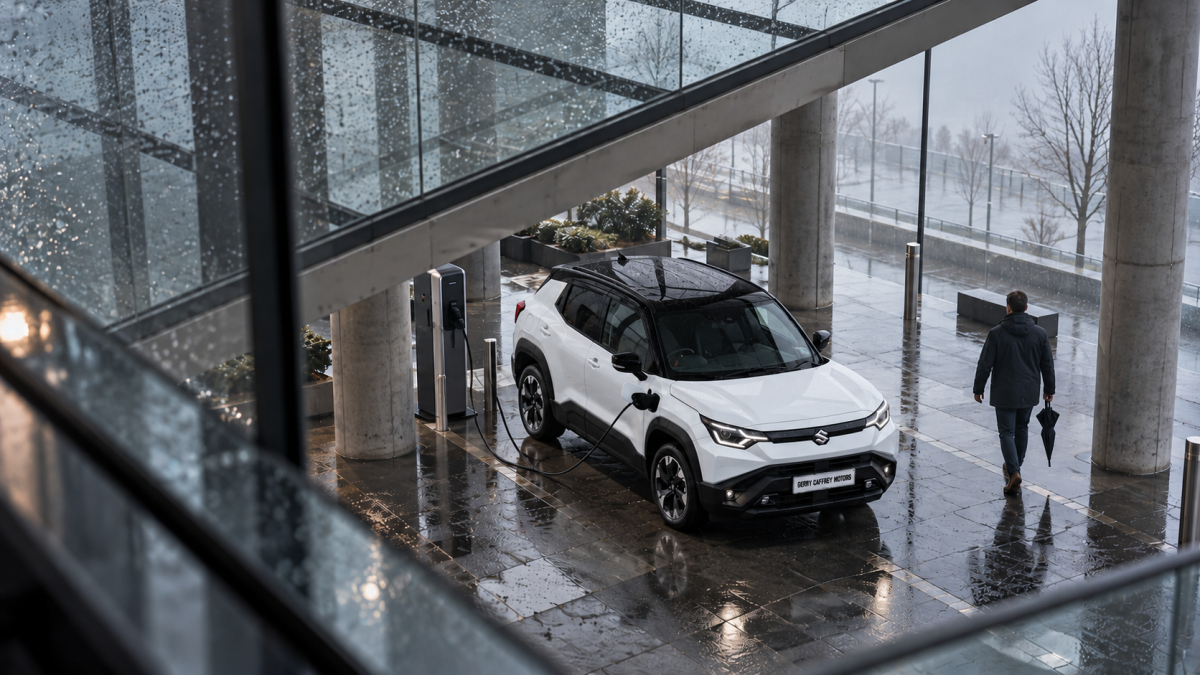
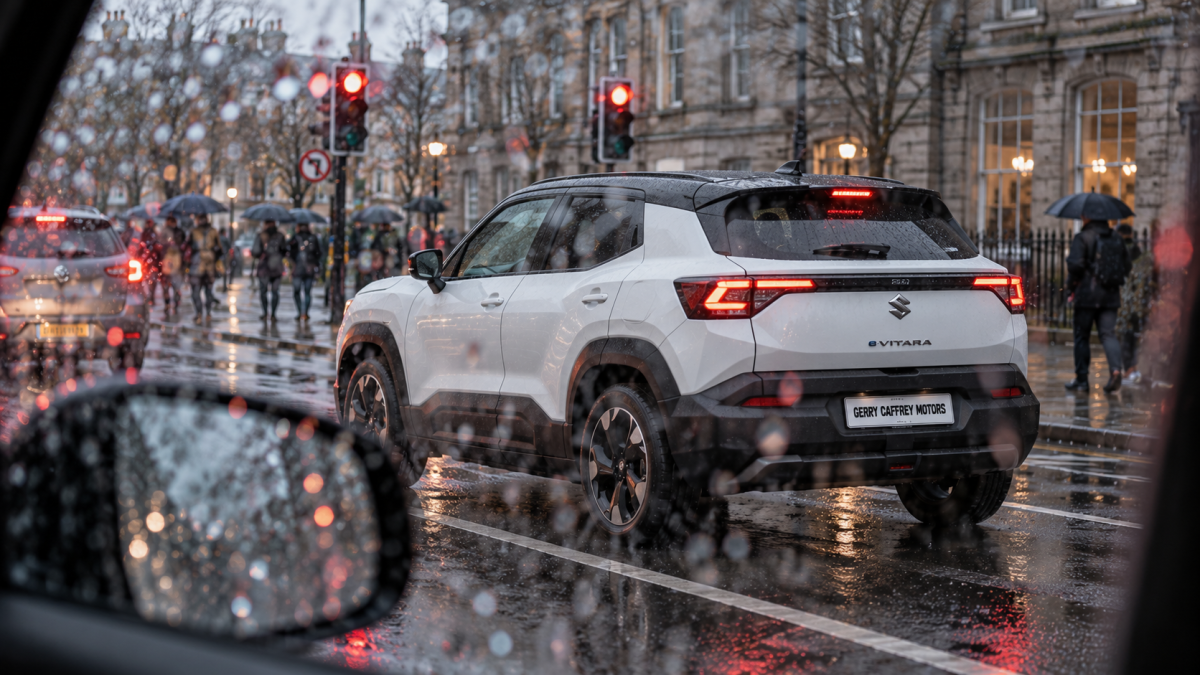
Is the Suzuki e VITARA Suitable for Irish Winter Driving?
For many Irish motorists, the e VITARA's combination of SUV practicality, electric power and efficient heating makes it worth considering.
It's designed for everyday driving, from city commuting to longer journeys across Ireland.
The availability of front-wheel drive and ALLGRIP-e four-wheel drive versions also gives buyers different options depending on their priorities.
That doesn't mean four-wheel drive is essential for Dublin winters. Good tyres, appropriate speed and careful driving remain important regardless of drivetrain.
Comfort and Visibility Still Come First
One mistake EV drivers should avoid is switching off essential heating or demisting simply to save battery power.
Irish weather can create significant windscreen condensation, particularly on damp mornings.
Keep the windows clear, use the demister whenever necessary and maintain a comfortable cabin temperature.
Saving a small amount of electricity should never come at the expense of visibility or safety.
Heat Pump vs Conventional Electric Heating: What's the Difference?
The main difference between a heat pump and conventional resistance heating is how each system produces warmth.
A conventional electric heater converts electrical energy directly into heat. It's effective, but the electricity required comes from the vehicle's battery.
A heat pump works differently by transferring available heat into the cabin. Under suitable conditions, this process can provide the same level of comfort while consuming less electricity.
That improved efficiency can help preserve driving range during colder weather.
However, heat pumps become less efficient as outdoor temperatures fall significantly. Some systems may also require supplementary heating under demanding conditions.
For Irish drivers, the benefit is particularly relevant because much of our winter weather involves cool, damp conditions rather than prolonged periods of extreme cold.
The advantage isn't that a heat pump makes winter driving effortless. It's that it can deliver the warmth you need with less energy in many everyday situations.
Choosing the Right Suzuki e VITARA for Your Driving Needs
The e VITARA is Suzuki's first fully electric SUV, but the right version depends on how you intend to use it.
For someone mainly driving around Terenure, Dundrum, Rathmines and the wider Dublin area, the 49kWh model may provide more than enough everyday range.
Drivers making frequent motorway journeys or travelling regularly outside Dublin might prefer the larger 61kWh battery.
In our experience, it's worth looking beyond the official range figure and considering how a vehicle will fit into your normal routine.
Think about your longest regular journey, your access to home or public charging using mains electricity and how much flexibility you'd like during winter.
Performance and Driving Experience
The Suzuki e Vitara accelerates from 0-100 km/h in 8.7 seconds, delivering smooth and predictable performance suitable for everyday driving.
The ALLGRIP-e model, featuring four-wheel drive, offers maximum power of 183hp and 307Nm of torque, providing enhanced traction and a 0-100 km/h time of around 7.4 seconds.
The e Vitara features three driving modes: Eco, Normal, and Sport, allowing drivers to tailor performance and efficiency to their preferences.
Regenerative braking is adjustable across three levels, helping to optimize energy recovery during deceleration.
However, the ride quality has been noted as poor on rough surfaces, with noticeable road noise and suspension noise impacting comfort on uneven roads.
Charging and Battery
The e Vitara supports up to 150kW DC fast charging, with a 10% to 80% charge taking approximately 45 minutes.
At a 50kW charger, charging from 10% to 80% takes around 51 minutes.
A full charge at home using a 7.4kW wallbox typically takes about 9 hours.
Additionally, 11kW AC charging is included as standard, offering flexible charging options.
The vehicle offers two battery options: 49kWh and 61kWh, catering to different range and usage needs.
Safety Features
The Suzuki e Vitara received a four-star Euro NCAP rating, scoring 85% for child occupant protection.
Standard safety equipment includes blind-spot monitoring, rear cross-traffic alert, lane keep assist, traffic sign recognition, and front and rear parking sensors.
These advanced driver assistance systems contribute to overall safety and driver confidence, protecting vulnerable road users.
Higher trims add an adaptive high beam system and a 360-degree camera system.
Interior and Practicality
The e Vitara offers up to 562 litres of boot space with rear seats folded down, providing practical cargo capacity.
Rear seats slide up to 160mm to balance passenger comfort and boot space.
The rear seats can also recline for added passenger comfort.
The driver's seat features manual adjustment with a good height range, with higher trims offering a power adjustable driver's seat.
Inside, 12-colour ambient interior lighting enhances the cabin atmosphere.
The cabin features a completely flat floor, improving rear passenger comfort.
The rear doors open wide, making access easier, especially for fitting child seats.
Standard convenience features include keyless entry and a rear view camera.
Higher trims add an Infinity audio system with a subwoofer and half synthetic leather upholstery.
Boot Space and Practicality
The boot floor is relatively high due to battery placement, and the boot offers between 244 litres (seats rearward) and 310 litres (seats forward) of space.
While not as large as some other cars like the Skoda Elroq, the e Vitara's flexible 40:20:40 split rear seats and trail mode enhance usability.
Pricing and Trim Levels
Pricing for the Suzuki e-Vitara starts at €32,995 for the 49kWh front-wheel-drive Motion model.
The 61kWh Motion variant costs €36,995 after SEAI grants.
The 61kWh Ultra trim is priced at €40,470, while the Allgrip-e 61kWh variant is available at €44,055.
All prices include 23% VAT and reflect VRT relief.
The SEAI grant reduces the price by €3,500, making the e Vitara more accessible.
What About Finance, Trade-Ins and Other Suzuki Models?
Switching to electric is also a financial decision.
At Gerry Caffrey Motors, we understand that buyers want to compare the complete running costs, including charging, insurance, finance and the value of their existing vehicle.
If you're considering moving from a petrol, diesel or hybrid Suzuki, it's worth exploring how the e VITARA compares with familiar models such as the Suzuki Vitara, Swift and S-Cross.
A trade-in may help reduce the cost of upgrading, while suitable finance options can make it easier to spread the purchase cost.
Our team can help you compare your options and find a Suzuki that suits your driving needs and budget.
Experience the Suzuki e VITARA at Gerry Caffrey Motors, Dublin
The Suzuki e VITARA heat pump is a practical feature for Irish motorists. It helps make cabin heating more energy-efficient when temperatures drop, without asking drivers to compromise on everyday comfort.
It won't remove every challenge associated with winter EV driving, but it can help make electric motoring more convenient throughout the colder months.
Whether you're commuting around South Dublin, travelling along the M50 or planning longer journeys across Ireland, understanding how heating affects electric car range can help you make a more informed decision.
Thinking about upgrading to a Suzuki electric SUV? Visit Gerry Caffrey Motors in Terenure, Dublin 6W. Our centre console team will be happy to discuss the e VITARA, explore finance and trade-in options, and help you decide whether electric driving suits your lifestyle.