RFID and Your Car Security: What Irish Drivers Need To Know.
Ever wondered what happens when you walk up to your car and the doors magically unlock? There’s no sorcery involved—just a clever bit of technology that’s been quietly working away in your pocket. The same invisible wizardry that opens toll barriers, lets you tap your card for a coffee, and badges you into the office is also keeping your car secure. Well, mostly secure.
So, This guide is for Irish car owners who want to understand how RFID technology affects their vehicle security and what practical steps they can take to protect themselves. In it we’ll break down what RFID actually is, how it works in modern car keys (especially Suzuki models popular here in Ireland), why some criminals have taken a keen interest in it, and, most importantly, how a simple box can help you sleep easier at night. No engineering degree required! We promise.
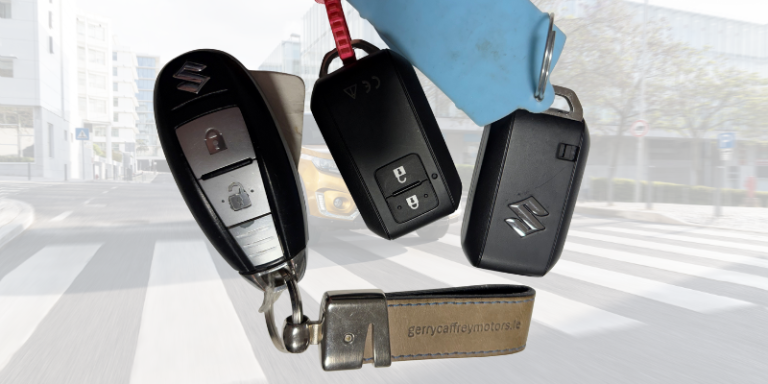
What is RFID?
RFID stands for radio frequency identification. In plain English, it’s a way of using radio waves to identify and communicate with small chips embedded in things like car keys, toll tags, and access cards. Think of it as a very short conversation between two devices that happens in milliseconds, without any wires or physical contact—unlike barcodes, which need a scanner to see them directly. Radio-frequency identification (RFID) uses electromagnetic fields to automatically identify and track tags attached to objects.
An RFID system has three main parts: a reader (the device asking “who are you?”), an antenna (the bit that sends and receives radio signals), and a tag or chip (the tiny responder that says “it’s me!”). In your car, the reader and antenna live inside the vehicle, while the tag sits inside your key fob. When they’re in close proximity, they exchange data using radio waves, and if everything matches up, you gain access.
You encounter this technology constantly in everyday life, even if you’ve never given it a second thought. Your Suzuki’s keyless entry system uses it. So does your Dublin M50 toll tag, your office access card, and the contactless payment card you tap at the shop. It’s the same invisible magic that unlocks your car when your hands are full of shopping bags and you’re trying not to drop the milk.
The key point is that RFID works without needing line-of-sight or physical contact. The reader sends out a signal, any nearby tags within range respond with their stored identifying information, and the system decides whether to grant access. Simple, fast, and—when properly secured—remarkably reliable.
How RFID Works in Modern Car Keys
Most modern cars sold in Ireland, including current Suzuki models like the Swift, Vitara and S-Cross, use some form of radio-based technology for keyless entry and engine immobilisers. Whether you call it RFID, a transponder system, or “that thing that means I don’t have to fish for my keys,” the underlying principle is similar.
Here’s how the process works step by step. When you approach your car with the key fob in your pocket or bag, the vehicle’s antennas send out a low-power radio signal asking, “Is my key nearby?” If your fob is within range—usually a metre or two—the RFID chip inside it wakes up and responds with a unique code. The car’s computer checks whether this code matches what it has stored. If there’s a match, the doors unlock. Press the start button, and a second verification happens before the engine fires up.
Think of it as your car doing a quick “who goes there?” security check every single time you touch the door handle. The key fob proves its unique identity, and only then does the car allow access.
Modern RFID systems used by Suzuki and other reputable manufacturers don’t rely on a single fixed code that could simply be recorded and replayed. Instead, they use rolling codes and strong encryption methods. Each time you unlock the car, a new code is generated based on a cryptographic algorithm. This makes life significantly harder for anyone trying to intercept and copy the signal.
According to guidance from Irish motor insurers and UK-based car security experts like Thatcham Research, keyless entry “relay” theft represents a real but relatively small percentage of overall vehicle crime. However, it’s a growing area of concern—particularly in urban and suburban areas where cars are often parked on driveways close to houses.
The good news is that the security built into these systems is genuinely robust. The challenge for thieves isn’t “hacking” the encryption—it’s finding ways to relay the authorised signal from where you’ve left your keys.
Why Car Thieves Care About RFID (and Why You Should Too)
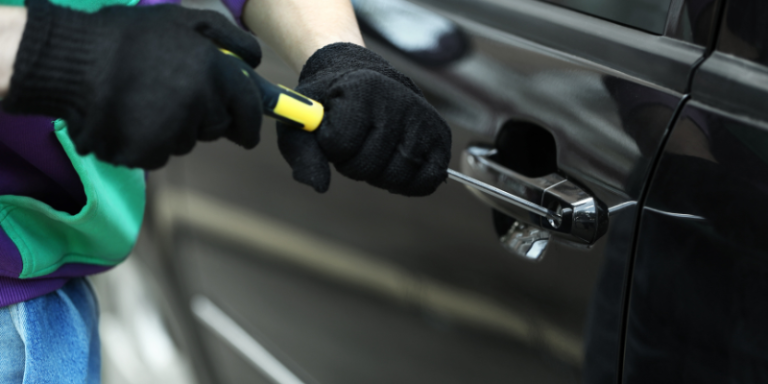
Thieves follow technology trends just like the rest of us. Back in the day, they’d smash a window and swipe your stereo. Then immobilisers made hotwiring nearly impossible, so they moved on to other methods. Now, a small but determined subset of criminals has turned their attention to keyless entry systems—not because the technology is weak, but because they’ve found a clever workaround.
The method is called a “relay attack,” and it works like this. Two criminals work together, each carrying an electronic device. One stands near your front door (where most people leave their car keys on the hall table or a hook), while the other stands near your car on the driveway. The first device picks up the radio signal from your key fob through the door or wall. It then relays—or extends—that signal to the second device beside the car. Your vehicle thinks the key is right there and unlocks. The engine starts. The car drives away. All without a single window being broken or alarm being triggered.
The Gardaí have highlighted keyless theft as an emerging risk, particularly in Dublin and its surrounding suburbs like Terenure, Rathfarnham, and Templeogue. According to motor industry data, there was a significant rise in such incidents between 2023 and 2025, with over 1,200 keyless-related thefts reported annually across Ireland.
It’s worth keeping perspective here. The encryption and security built into Suzuki and other modern vehicles remain strong. Criminals using relay attacks aren’t actually cracking codes or decrypting anything sensitive—they’re simply tricking the car into thinking a legitimate key is present. The signal is authorised; it’s just being transmitted from further away than the system expected.
Some reassurance: thieves generally prefer the “quiet electronics” approach to smashing windows and drawing attention. But this means both car owners and dealers need to stay a step ahead.
Key points to remember:
- Relay attacks extend your key’s signal, they don’t hack encryption
- Urban and suburban areas see higher risk due to cars parked near homes
- The technology itself remains secure—the vulnerability is signal range
- Simple precautions can dramatically reduce your exposure

RFID Boxes and Pouches: How a Simple Box Can Outwit a Clever Thief
An RFID box, sometimes called a Faraday box or signal blocker, is a small container lined with metalized material that blocks radio waves. When you pop your car key inside and close the lid, the fob effectively goes silent. It can’t hear any reader asking for a response, and it can’t transmit its code. To any relay device trying to pick up the signal, your key simply doesn’t exist. That's it, key in box and suddenly it turns into that parent that can't hear the baby crying at 2am, 3am, 3.30am............🤫
How to use one:
Drive home (safely, obeying all the laws!), walk in your front door, pop the key into the box and tuck it in for the night by closing the lid, walk away with peace of mind. That's it, open box, key in, close box - TADA!!!!
The science behind it is straightforward. The shielding material—usually layers of conductive fabric or thin metal mesh—absorbs or reflects the radio waves that car key fobs use to communicate. With no signal getting in or out, the RFID chip in your key never “wakes up” to respond.
Car security experts from organisations like Thatcham Research, along with many Irish motor insurers, now recommend RFID key boxes or pouches for anyone with a keyless vehicle. This is especially relevant if you park outside in residential areas across Dublin and its suburbs.
Some practical tips for getting it right:
👉🏻Store your RFID box in a location well away from your front door, the kitchen, an upstairs bedroom even.
👉🏻Use the box for both your main key and any spares
👉🏻Test that it’s working: put the key in the box, close it, then walk out to your car and try the door handle. If it doesn’t unlock, you’re sorted.
Think of it as your car key going to sleep in its little metal-lined bedroom every night. Cosy, secure, and completely invisible to passing opportunists.
| Option | Protection Level | Convenience | Cost |
|---|---|---|---|
| RFID/Faraday box | Excellent (double-lined, tested) | Keep at home, drop key in | €15–€50 |
| RFID soft pouch | Very good (portable) | Carry in pocket or handbag | €10–€30 |
| Keys on hall table | None | Very convenient | Free (and risky) |
Practical RFID Security Options for Irish Drivers
If you’re driving a keyless car in Ireland—particularly a popular model like the Suzuki Swift, Vitara, or S-Cross hybrid—it’s worth knowing your options for protecting against relay theft. Here’s a practical, Ireland-focused checklist.
RFID/Faraday Key Boxes for Home Use
These are sturdy boxes, often made with double-layer metalized lining, designed to sit on a shelf or in a drawer. They’re tested to completely block the frequencies used by car key fobs. Purpose-built options from reputable brands are available at Halfords Ireland, automotive retailers, and online, typically ranging from €15 to €50. Quality matters here—cheap single-layer products may still leak some signal.
Portable RFID Pouches for On-the-Go
If you’re out and about—at a restaurant, gym, or shopping centre—a portable pouch keeps your key signal contained even when you’re away from home. These slip easily into a handbag, jacket pocket, or glove compartment. They’re especially handy if you’re the type to leave keys sitting on a café table. (Why??? 🤔)
Metal Key Cabinets for Offices and Businesses
For companies managing multiple vehicle keys, a lockable metal cabinet serves double duty: physical security against opportunistic theft and RFID shielding against electronic scanning. If your workplace has a fleet of vehicles or staff cars, this is worth considering.
Built-in Key Deactivation Features
Some vehicles offer a “sleep mode” or motion sensor deactivation for key fobs. Check your owner’s manual or ask your dealer if your car has this option. It’s not a substitute for an RFID box, but it adds another layer.
Combining Measures for Best Results
Reputable Irish and UK car security experts generally recommend layering your protection. RFID shielding deals with the electronic side, but physical measures—steering locks, secure parking, home alarms, and vehicle tracking systems—provide additional deterrence. No single solution is fool-proof, but combining a few makes you a much less attractive target.
Owners of hybrids and low-emission models, such as the Suzuki Hybrid Swift, should pay particular attention. Strong second-hand demand for these vehicles can make them attractive to organised theft rings operating across Ireland and the UK.
Finally, it’s worth checking with your motor insurance provider. Some Irish insurers recognise approved security devices or tracking systems and may offer premium reductions of anywhere up to 10–20% for customers who can demonstrate extra protection. A quick call to your insurer could save you money while keeping your car safer.
How We at Gerry Caffrey Motors Help Keep Your Keys (and Car) Safer
At Gerry Caffrey Motors, we’ve been helping customers in Terenure and across Dublin since 1987. Over nearly four decades, we’ve seen car technology evolve dramatically—from manual locks and simple alarms to today’s sophisticated keyless entry and immobiliser systems. Keeping up with these changes is part of what we do.
When supplying new Suzuki models, whether that’s a Swift, Vitara, S-Cross, or any other vehicle in our range, our team takes time to walk customers through how the keyless entry and immobiliser systems work. That includes practical tips on storing keys safely, understanding how the technology protects your vehicle, and avoiding habits that could accidentally create vulnerabilities.
Our aftersales and service team can check your key fobs as part of routine servicing, advise on any security updates or software recalls, and discuss practical RFID protection options. Whether you’re interested in a quality Faraday pouch, an RFID blocking box, or additional security devices that complement your Suzuki’s factory systems, we’re happy to point you in the right direction.
For customers buying used or certified pre-owned vehicles from us, we ensure that all keys and immobilisers are correctly paired, any old keys from previous owners are deactivated, and you’re fully briefed on how to store your keys safely at home. It’s the kind of detail that often gets overlooked elsewhere, but it matters.
We’d much rather see you in our showroom choosing your next Suzuki than sitting in the waiting area worrying about a stolen one.
If you’re in Dublin or South Dublin and looking for advice on Suzuki models, car finance options, trade-in valuations, or practical guidance on RFID-based key security, we’re here to help. Drop into our Terenure showroom, give us a call, or visit Gerry Caffrey Motors online. Our team is always happy to chat.
Quick FAQs: RFID, Car Keys and Everyday Security
Here are answers to some of the most common questions we hear from Irish drivers about RFID and keyless car security.
Can someone steal my car just by walking past my house with a gadget?
Not quite that simple. Relay attacks require criminals to be relatively close to both your key and your car at the same time, using coordinated equipment. It’s not a casual walk-by crime. That said, if your keys are near the front door and your car is on the driveway, the risk is real. Security experts and insurers recommend keeping keys well away from external walls and doors, or better yet, in an RFID blocking box.
Do I really need an RFID box if I drive a Suzuki with modern security?
Suzuki’s factory security systems are strong, using encryption and rolling codes that can’t simply be cracked. However, relay attacks bypass the encryption by extending the authorised signal. An RFID box adds an extra layer that eliminates this method entirely. Think of it as locking the front door even though you have a good alarm. You feel reassured that it will keep you safe without having to build a moat with sharks and angry cats around your house.
Will an RFID box damage my key or drain the battery?
No. RFID boxes only block radio waves—they don’t emit anything or interfere with the electronics inside your key fob. Your key’s small battery will last just as long whether stored in a box or not.
What’s the simplest habit I can adopt tonight?
Move your car keys away from the front door. A hall table within a metre or two of the entrance is the first place relay thieves will target. Store keys in a room further inside your home, ideally in a drawer or cabinet. If you want proper protection, pick up a basic RFID pouch or box—they’re inexpensive, widely available, and genuinely effective. You can then pop this inside the drawer keeping it that little bit safer again and bonus it is also out of sight too.
Where can I get reliable advice on car security in Dublin?
Talk to your dealer. At Gerry Caffrey Motors in Terenure, we’re happy to discuss security options when you’re buying, servicing, or just curious. You can also check guidance from your motor insurer, the AA Ireland, or recognised industry bodies like Thatcham Research.
Protecting your Suzuki doesn’t require a security degree from UCD or MIT just a small metal box, some sensible habits, and a bit of awareness. The technology in your key fob is genuinely clever, and with a few simple precautions, you can make sure it keeps working for you rather than against you.
If you’re in the market for a new or used Suzuki, need servicing, or simply want a chat about keeping your car safe, drop into Gerry Caffrey Motors in Terenure. We’ve been helping Dublin drivers since 1987, and we’re not planning to stop anytime soon.