One Part, Five Questions: Your Car’s Wheel Arch Liner
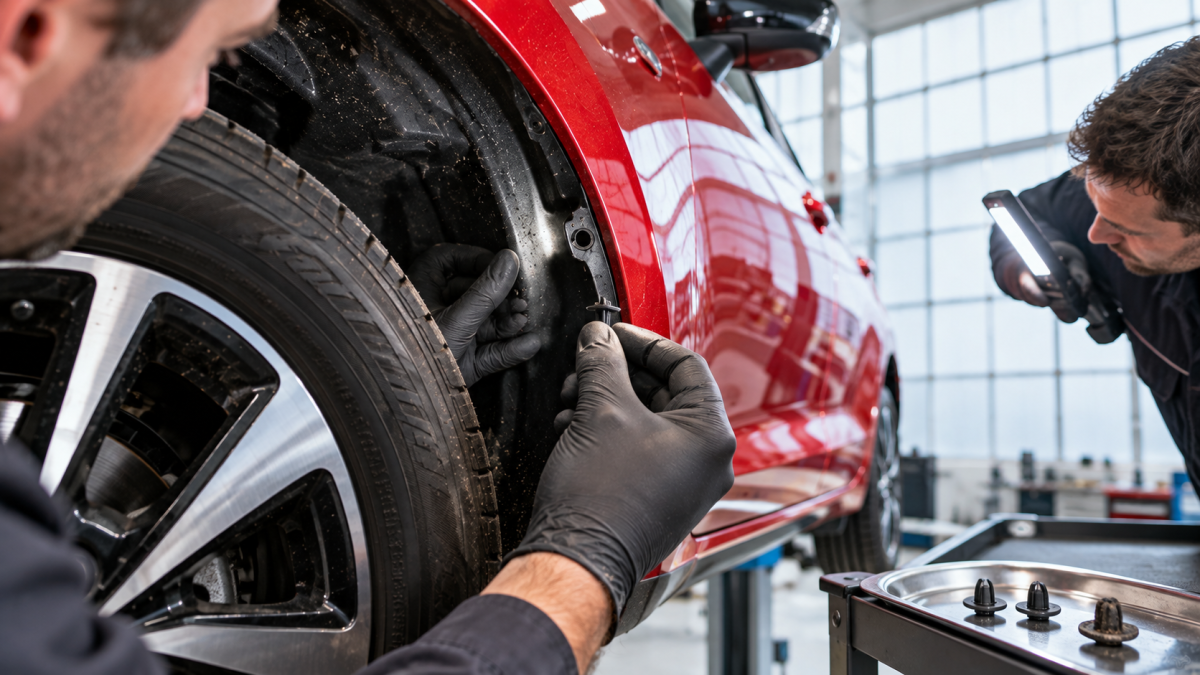
Your car’s wheel-arch liners aren’t exactly attention-grabbing. Most drivers barely notice them—until one comes loose and starts scraping against a tyre.
Yet these moulded panels provide valuable wheel arch protection with basic functionalities that go beyond just blocking debris. They help shield the car underbody, wiring and other vulnerable components from water, grit, road salt, and road debris, improving vehicle longevity and safety. Additionally, they improve aerodynamics by reducing air turbulence and drag, which can contribute to better fuel efficiency.
That matters on Irish roads, where potholes, standing water, loose stones, and salt are part of everyday driving. Here are five questions every motorist should ask about this often-overlooked car part.
1. What Is a Wheel-Arch Liner?
A wheel-arch liner is the curved protective panel fitted inside the wheel arch. It’s usually made from durable plastic or a fibre-based material and secured with screws, clips or fasteners. These parts are designed specifically for each vehicle model, identified by a part number to ensure proper fit and security features.
Its job is to create a barrier between the rotating wheel and the body of the car. As the tyre throws water, mud, stones, grit, and salt upwards, the liner helps stop that material from reaching sensitive areas, including the underside and middle sections of the wheel arch.
The design and shape vary from one vehicle to another. Liners fitted to models such as the Suzuki Vitara, Swift and S-Cross are made to match the particular contours and fixing points of each car.
That’s why a correctly specified replacement matters. A part that looks roughly right may still sit badly, rub against the tyre or leave parts of the bodywork exposed. You can easily find the correct part by using a browser to visit a reputable website or car parts category online, entering your vehicle details or part number. Many websites use cookies to enhance your access and browsing experience, so be aware of their cookie policies.
Besides protection, a wheel arch liner also provides a clean appearance by hiding raw structural welds and components from view, contributing to the vehicle's overall aesthetic.
2. Why Is Wheel Arch Protection So Important in Ireland?
Irish weather gives wheel-arch liners plenty to do.
Rainwater mixes with mud, grit, road salt, and contaminants on the road. Without an effective liner, that mixture can be thrown against metal bodywork, electrical connections and components behind the bumper.
The liner also helps protect against stones and other road debris. It won’t prevent every impact, but it reduces the repeated contact that can damage paint, protective coatings and exposed car parts over time.
Potholes add another risk. Tyres, wheels, alignment and suspension can all be damaged by a heavy impact, particularly when a pothole is hidden beneath standing water.
In our experience, a liner often becomes loose after a driver hits a pothole, clips a kerb or drives through deep water. The panel itself may survive, but one or more small fasteners such as plastic clips or self-tapping screws can break or pull free.
Note that wheel arch liners also contribute to noise reduction by dampening tyre and road noise, which improves cabin comfort. Many modern liners include soundproofing layers specifically designed to reduce these noises further.
Corrosion prevention is another primary purpose of the wheel arch liner. By blocking water, road salt, and debris, the liner helps prevent premature rusting and corrosion of the vehicle’s metal components.
3. How Can You Tell If You Have a Loose Wheel-Arch Liner?
A scraping or flapping noise is the most common warning.
You may hear it while turning, driving over a rough surface or travelling at higher speeds. If the liner has moved far enough inward, the tyre may touch it when the steering is close to full lock.
Other signs include:
- Uneven gaps between the liner and surrounding bodywork
- Mud, water, or salt appearing where it normally wouldn’t
- A rattling noise after hitting a pothole
- Fresh scrape marks inside the wheel arch
- Missing or damaged retaining clips
- A plastic panel hanging down behind a wheel
Don’t ignore a new noise simply because the car still drives normally. A loose wheel-arch liner can deteriorate quickly once air pressure, water and tyre movement begin pulling at it.
We often see a minor fastening problem become a damaged panel after years of use because the driver has continued using the car for several weeks.
If you notice something hanging near a wheel, stop somewhere safe before inspecting it. Don’t reach into the wheel arch while the engine is running, and don’t crawl beneath a vehicle supported only by its standard emergency jack.
4. Can You Drive With a Loose Wheel-Arch Liner?
That depends on how loose it is, but continued driving isn’t advisable if the panel could touch the tyre or road.
A liner rubbing against a rotating tyre can wear through quickly. If it detaches, it may become road debris and create a danger for other motorists.
If you hear scraping, slow down and pull over safely. On a motorway or busy dual carriageway, prioritise your own safety and don’t attempt a roadside repair beside live traffic.
Cable ties and improvised fixings are sometimes used as a temporary measure, but they’re not a substitute for the correct clips or a properly fitted replacement. Heat, wheel movement and wet road conditions can cause a makeshift repair to fail.
The sensible option is to have the wheel arch and nearby car underbody inspected. A technician can establish whether the liner only needs new clips or whether it has torn and should be replaced.
Installation is considered a manageable DIY job for those with basic tools. The process generally includes removing the wheel, cleaning the area, positioning the new liner, and securing it with the correct fasteners. It’s important to ensure the new liner does not rub against the tyre after installation.
Could a Damaged Liner Affect the NCT?
A scuffed liner on its own isn’t necessarily an NCT failure. However, loose bodywork, an insecure component or a part that interferes with a wheel shouldn’t be left until test day.
An inspection can also reveal damage hidden behind the liner. That may include broken mounting points, exposed wiring or corrosion on an older car caused by road salt.
VRT is a separate issue. Replacing a wheel-arch liner doesn’t normally alter a vehicle’s tax status, but anyone buying an imported used car should still confirm its registration history and supporting documentation under current Revenue rules.
5. Should the Liner Be Repaired or Replaced?
If the panel is intact and only a fastener is missing, fitting the correct new clips may solve the problem.
Replacement is normally the better option when the liner is cracked, badly distorted, missing a section or worn through by the tyre. The surrounding brackets and fixing points should be checked at the same time.
A technician should also look for the cause of the damage. There’s little value in fitting a fresh liner if a loose bumper edge, damaged bracket or incorrectly fitted wheel continues to push it out of position.
For Suzuki owners, using the correct part for the model and year helps ensure proper coverage and clearance. If you hear an unusual wheel-arch noise or spot visible damage, arrange an appointment for an inspection before the problem worsens.
What Should You Check When Buying a Used Car?
Wheel arches can tell you quite a bit about how a car has been treated.
When viewing a used vehicle, examine the visible portion of each wheel arch. Look for cracked liners, missing clips, heavy scoring and suspiciously fresh repairs.
Check the lower bumper edges and sills too. Damage in several nearby areas may suggest previous contact with a kerb, pothole or road debris.
At Gerry Caffrey Motors, our used vehicles are selected to meet high standards before they reach the forecourt, and we offer premium used cars and Suzuki models suited to driving around Dublin and further afield.
If you’re comparing new and used options, consider how and where you drive:
- The Suzuki S-Cross provides extra space and a confident driving position for family use.
- The Suzuki Vitara offers SUV practicality and useful versatility for mixed urban and longer-distance driving, including some off road capability.
- The Suzuki Swift is a nimble choice for city streets and South Dublin commutes.
A trade-in can reduce the amount you need to finance, while a suitable finance plan can spread the balance over manageable repayments. Always compare the total cost, deposit, term and final payment—not only the advertised monthly figure.
A Small Wheel Arch Part That Deserves Attention
A wheel-arch liner may be simple, but it protects more expensive parts of your car from water, dirt, salt, and repeated impact.
Listen for scraping after a pothole strike, check hanging panels promptly and avoid relying on a temporary roadside fix. Catching a loose wheel-arch liner early can mean replacing a few clips rather than an entire panel.
Thinking about upgrading to a Suzuki? Visit Gerry Caffrey Motors at 106–112 Terenure Road North, Dublin 6W. Our website and Facebook page deliver the latest information on new and premium used options, finance, and the value of your trade-in—without the hard sell or distracting ads.
We remember that choosing the right parts and timely delivery are key to keeping your vehicle in top condition. Clear advice and expert service help you find the correct wheel arch liner and other products for your Suzuki or other vehicle.
Note: Always check the source of parts and verify part numbers to ensure you receive only parts designed for your specific model.
For example, Renault Master, Nissan NV400 (2011 models), and Opel Movano B (from 2010) require specific wheel arch liners available through specialist suppliers like car-parts.ie, which offers a wide range of vehicle spare parts.
Use Google or your preferred browser to identify suitable parts by number and category. Our team is happy to help you remove any confusion and improve your vehicle’s protection with genuine or high-quality replacement liners.
Schedule an appointment today to inspect your wheel arch liners and improve your vehicle's security features and overall performance. Keep in mind the fact that a well-maintained wheel arch liner can significantly reduce the risk of costly repairs down the line, saving you both time and charge for unexpected damages.