Lane Discipline on Irish Motorways: Why So Many Drivers Get It Wrong
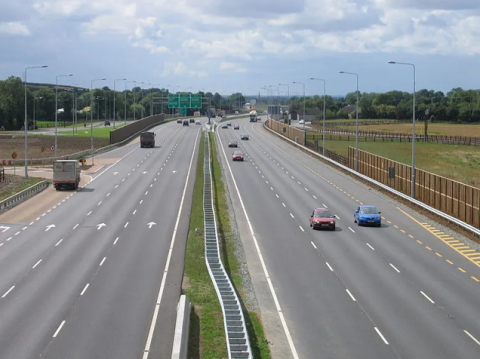
If you’ve driven the M50 on a wet Tuesday morning, you’ve probably seen it: cars sitting in the middle lane for miles, overtaking lanes blocked, and traffic bunching up for no obvious reason.
It’s one of the most common motorway frustrations in Ireland.
Despite clear rules, lane discipline on Irish motorways is something many drivers still struggle with. The result? Slower traffic, more congestion, and unnecessary risk on roads that are designed to flow smoothly.
Let’s break down why it happens — and how drivers can get it right.
The Basic Rule Most Drivers Forget
Ireland’s motorway system follows a simple principle:
Keep left unless overtaking.
This means the left hand lane (also called the inside lane or driving lane) should be your default lane unless you're actively passing a slower vehicle.
Once the overtake is complete, you should move back to the left lane when it's safe. This helps maintain the normal traffic flow and prevents lane hogging.
Guidance from organisations like the Road Safety Authority and AA Ireland is very clear on this point.
Yet on Irish motorways, particularly around Dublin, many drivers remain in the middle lane or centre lane even when the left lane is empty.
This behaviour is often called middle-lane hogging and is discouraged because it disrupts traffic flow.
Understanding Motorway Lane Usage
Irish motorways typically have three or more lanes:
- The right hand lane (also called the outer lane or overtaking lane) is reserved strictly for overtaking and faster traffic.
- The middle lane (or centre lane) is primarily for overtaking slower vehicles.
- The left hand lane (or inner lane) is for normal driving and merging traffic.
On a three lane dual carriageway, drivers should only use the outer lane to overtake and then return to the left lane as soon as it is safe.
Commercial vehicles like buses, trucks, and vehicles towing trailers are usually prohibited from using the rightmost lane to ensure smooth traffic flow. This restriction is often indicated by a long vehicle sign and applies to vehicles with a design gross vehicle weight exceeding 3,500 kilograms.
1. It Reduces Motorway Capacity
Motorways are designed to distribute traffic efficiently across lanes.
When drivers sit in the middle lane unnecessarily, the left lane becomes underused, reducing overall capacity.
On busy routes like the M50, this directly contributes to congestion and slower journey times.
2. It Forces Dangerous Undertaking
When the overtaking lane is blocked by slower vehicles, faster drivers often pass on the left, known as undertaking.
While undertaking is generally prohibited, it is tolerated when traffic is moving in queues and the left lane is moving faster.
However, undertaking creates unpredictable traffic flow and increases the risk of collisions, especially side-impact crashes.
3. It Creates Sudden Braking
Blocked lanes cause traffic to stack up, resulting in sudden braking and stop-start traffic.
This is especially dangerous in wet or low visibility conditions, common in Ireland, where stopping distances increase.
Motorway Regulations and Restrictions
- Motorists must observe all traffic signs, including the traffic sign opposite and traffic lights such as traffic lights red light, traffic light showing green, flashing amber light, and lighted green arrow signals.
- The traffic lane nearest the right edge (right hand lane) is reserved for overtaking only.
- Motorists must not drive on or across any part of the motorway which is not a lane carriageway.
- Driving must be only in the direction of traffic flow; stopping or parking on motorways is prohibited except in emergencies.
- The ordinary maximum speed limit on Irish motorways is generally 120 km/h for cars, while commercial vehicles like trucks have a lower limit, often 90 km/h.
- Vehicles incapable of speeds of at least 50 km/h are prohibited.
- Motorways may not be used by vehicles with an engine capacity of 50cc or less, invalid carriages, pedal cyclists, and animals.
- Only drivers with a full driving licence for their vehicle category are permitted to drive on motorways; learner drivers are prohibited.
Joining and Exiting the Motorway
Joining the Motorway
When merging onto the motorway via a slip road, always give way to traffic already on the motorway.
Match your speed to the traffic flow and check your blind spot before merging.
Use the Mirror-Signal-Mirror-Manoeuvre routine to ensure your intentions are clear and safe.
Exiting the Motorway
Plan your exit in advance.
Signal early with a left hand lane signalling or left turn signal and move to the left hand lane or deceleration lane well before your exit.
Reduce your speed gradually, especially if the exit has sharp bends.
If you miss your exit, do not brake suddenly; continue to the next junction and exit safely.
Maintaining Safe Distance and Speed
Maintaining a safe following distance is crucial.
Use the Two-Second Rule under normal conditions, increasing to four seconds in wet or poor visibility.
Drive at such a speed that you can stop within the distance you can see to be clear.
Handling Breakdowns and Emergencies
If your vehicle breaks down on the motorway:
- When rejoining traffic, build up speed on the hard shoulder and merge when safe.
- Use roadside phones or your mobile phone to contact emergency services.
- Do not cross or walk along the carriageway.
- If possible, place a warning triangle.
- Activate your hazard warning lights.
- Move off the carriageway to the hard shoulder.
Motorway Driving and Car Choice
Comfort and visibility are important for motorway driving.
Compact SUVs like the Suzuki Vitara and Suzuki S-Cross offer:
- Lower running costs compared to larger SUVs.
- Advanced safety technology, including adaptive cruise control and lane support systems.
- Efficient hybrid engines for fuel economy.
- Higher driving position for better road view.
These features help drivers maintain good lane discipline and safer motorway journeys.
Final Thought
Better lane discipline isn’t about policing other drivers — it’s about making the road safer and more efficient for all road users.
A simple habit like returning to the left lane after overtaking can dramatically improve traffic flow on Irish motorways.
Combined with modern safety technology, good lane discipline makes motorway journeys safer and more relaxed.
Thinking about upgrading your car?
If you’re considering a new or quality used Suzuki, visit Gerry Caffrey Motors in Terenure, Dublin 6W.