How to Spot Uneven Tyre Wear When Viewing a Premium Used Car
Buying a premium used car is exciting, but it’s important to look beyond the polished paintwork and spotless interior. One of the easiest things to overlook is the condition of the tyres, particularly signs of uneven tyre wear used car buyers should never ignore.
Uneven tyre wear can reveal more than how much life is left in a set of tyres. It may point to incorrect tyre pressure, misaligned wheels, unbalanced tyres, worn suspension components, or previous damage.
If you're shopping for premium used cars in Dublin, knowing what to look for can help you avoid unexpected repair costs and save money by making a more confident buying decision.
Why Uneven Tyre Wear Matters When Buying a Used Car
Tyres are the only part of your car that makes direct contact with the road. Their condition affects braking performance, steering, grip, and overall handling and driving comfort.
On Irish roads, where potholes, uneven surfaces, and frequent rain are part of everyday driving, tyre condition deserves particular attention.
A car might look immaculate on the forecourt, but unusual uneven tyre wear patterns could suggest that something underneath needs investigating.
In our experience, buyers often focus on mileage, service records, and bodywork before checking the tyres. Yet a quick first inspection can tell you a surprising amount about how a vehicle has been maintained.
Uneven wear doesn't automatically mean a car is a bad purchase. It does, however, give you a sure sign to ask questions before committing.
How to Spot Uneven Tyre Wear When Viewing a Premium Used Car
You don't need to be a qualified mechanic to carry out a basic used car tyre inspection. A few simple checks can help you identify potential issues before taking the vehicle for a test drive.
Check the Tyre Tread Across the Full Width
Start by looking closely at the tread on each tyre.
Ideally, tyres should wear evenly across their surface. If one section appears noticeably more worn than another, there may be an underlying issue.
Pay particular attention to the inside and outside tyre edges, the central part of the tread, and any unusual patches. Excessive tyre wear in certain areas can indicate incorrect tyre pressure, misaligned wheels, camber geometry problems, or worn components.
Turn the steering wheel, where safe and with permission, to get a clearer view of the front tyres. Don't forget to inspect the rear tyres too.
Compare All Four Tyres
One tyre wearing faster than the others can be a warning sign.
Check whether the tyres are the correct size and specification for the vehicle. It's also worth noting whether they have similar tread depths, matching brands, and comparable ages.
Different tyre brands aren't necessarily a problem, but significant differences in wear deserve a closer look.
On models such as the Suzuki Vitara, Swift, and S-Cross, checking the correct tyre specification is particularly important. Tyre sizes can vary depending on the model, trim level, and wheel option.
Look for Feathering and Uneven Tread Blocks
Run your hand gently across the tread surface, provided the vehicle is stationary and it's safe to do so.
If the tread blocks feel smoother in one direction and sharper in the other, this is known as feathering.
It's one of several possible wheel alignment symptoms and may indicate that the wheels aren't tracking correctly.
Feathering can also be influenced by suspension condition and driving habits, such as aggressive driving that leads to rapid tyre wear.
Inspect the Inner Tyre Edges
This is one of the most commonly missed checks when viewing a second-hand car.
The outer edge of a tyre might look perfectly healthy while the inner shoulder is badly worn.
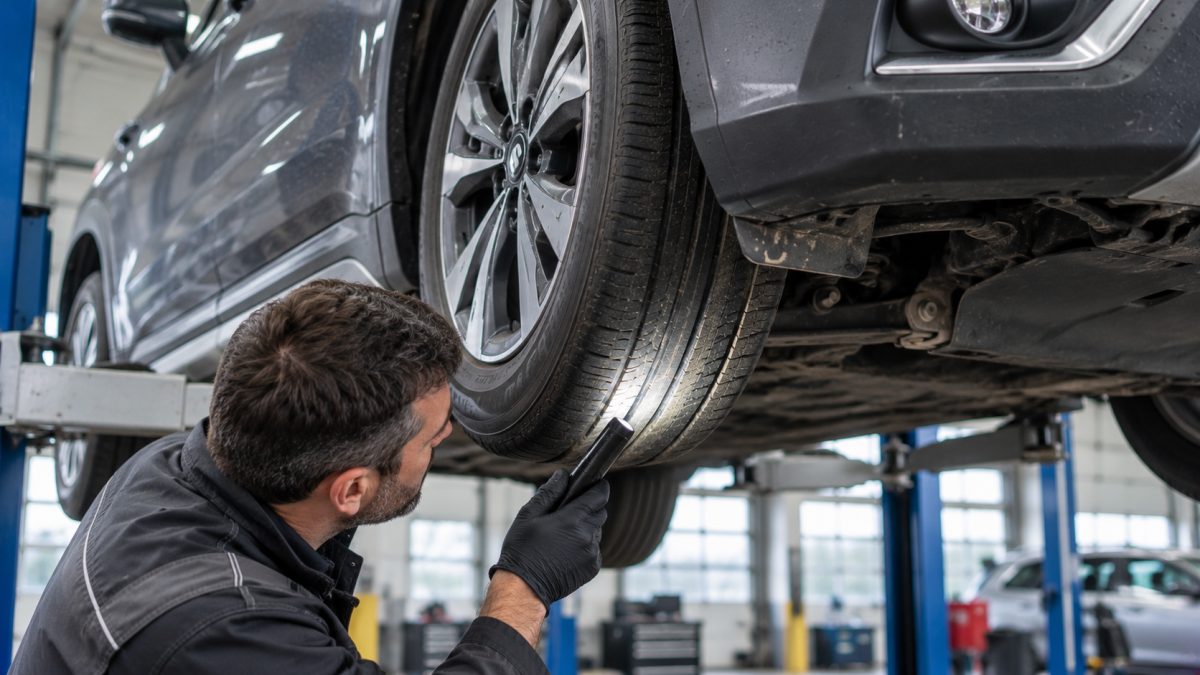
Because the inside edge can be difficult to see, particularly on cars with larger alloy wheels, use a torch and inspect from a safe position.
Never crawl underneath a vehicle or reach into unsafe areas during a forecourt inspection. Ask the dealer to arrange a professional check if visibility is limited.
Check for Cracks, Bulges, and Damage
Uneven wear isn't the only issue to watch for.
Inspect the sidewalls for cracking, cuts, bulges, or signs of impact damage. A bulge can indicate internal tyre damage and should be treated seriously.
Dublin's potholes and raised kerbs can take their toll on wheels and tyres, particularly where a car has been driven regularly on busy urban routes.
If you spot visible structural damage or unroadworthy tyres, ask for the tyre to be professionally assessed before driving the car.
Understanding Common Tyre Wear Patterns
Different uneven tyre wear patterns can provide useful clues about a vehicle's condition. Recognising these patterns can help you decide whether further inspection is needed.
Inner Edge Tyre Wear
Excessive wear along the inside edge of a tyre often points towards incorrect wheel alignment or suspension geometry.
It can be particularly difficult to spot without looking carefully behind the wheel.
If the inner shoulder is significantly more worn than the rest of the tread, ask whether the vehicle has undergone a recent alignment check.
Outer Edge Tyre Wear
Wear concentrated on the outside tyre shoulder can be associated with incorrect alignment, underinflated tyres, or frequent hard cornering.
It doesn't necessarily indicate a major mechanical problem, but it shouldn't be ignored.
Centre Tyre Wear
If the middle of the tyre is wearing faster than the edges, overinflation may be contributing to the problem.
Incorrect tyre pressure changes how the tyre contacts the road, potentially affecting grip, rolling resistance, and tyre life.
Wear on Both Tyre Shoulders
When both outer edges wear more quickly than the centre, underinflation is a common possible cause.
Driving with insufficient tyre pressure can also increase fuel consumption and generate excessive heat within the tyre.
Cupping or Scalloped Tyre Wear
Cupping appears as irregular dips or patches around the tread surface.
It can be associated with worn shock absorbers, wheel imbalance, or suspension problems.
We often see buyers overlook these irregular patterns because they're less obvious than a tyre with a visibly worn edge.
If you notice scalloping, it's worth requesting a professional assessment before purchasing.
Wheel Alignment Symptoms to Watch for During a Test Drive
A visual tyre inspection is a good starting point, but a test drive can reveal additional warning signs.
Pay attention to how the car behaves on a suitable, level road.
The Car Pulls to One Side
If the car consistently drifts left or right, misaligned wheels could be a factor.
However, road camber, uneven tyre pressures, and braking issues can produce similar symptoms.
Some Dublin roads naturally slope towards the kerb for drainage, so a small amount of lead to one side isn't always a fault.
The Steering Wheel Isn't Centred
When travelling straight, the steering wheel should generally sit in its normal centred position.
A noticeably off-centre steering wheel may suggest an alignment issue or an incorrectly adjusted steering setup.
You Notice Steering Wheel Vibration
Vibration at certain speeds can indicate wheel imbalance, tyre damage, or other steering and suspension problems.
It isn't necessarily caused by wheel alignment, but it deserves investigation.
The Car Feels Unstable
A well-maintained vehicle should feel predictable and controlled.
If the steering feels vague, the car wanders excessively, or the ride seems unusually unsettled, ask for a mechanical inspection.
Warning Lights on the Dashboard
During your test drive, watch for warning lights related to the engine, electronic stability control, or braking systems.
Illuminated lights can indicate worn components or other issues affecting vehicle safety and performance.
When viewing a premium used car, don't dismiss these signs simply because the vehicle has low mileage or a recent NCT certificate.
How Irish Roads and Weather Affect Tyre Wear
Driving conditions in Ireland can be demanding on tyres.
Frequent rainfall, potholes, narrow suburban streets, and repeated stop-start driving all influence tyre performance and wear.
For motorists travelling through South Dublin, areas such as Terenure, Rathfarnham, Templeogue, and Dundrum bring a mixture of residential streets, busy junctions, and uneven road surfaces.
An unexpected pothole impact can alter wheel alignment or damage a tyre, even when the driver doesn't immediately notice a change.
Wet weather makes tyre condition particularly important.
A worn tyre has less capacity to disperse standing water, increasing the risk of aquaplaning. This is why tread depth and even wear matter when choosing a used car for Irish driving conditions.
What Is the Legal Tyre Tread Depth in Ireland?
For ordinary passenger cars in Ireland, the legal minimum tyre tread depth is 1.6mm across the central three-quarters of the tread, around the entire circumference of the tyre.
However, meeting the legal minimum doesn't necessarily mean a tyre offers optimal wet-weather performance.
Many tyre and road safety specialists recommend considering replacement before tyres reach the legal limit, particularly for drivers who regularly travel in heavy rain.
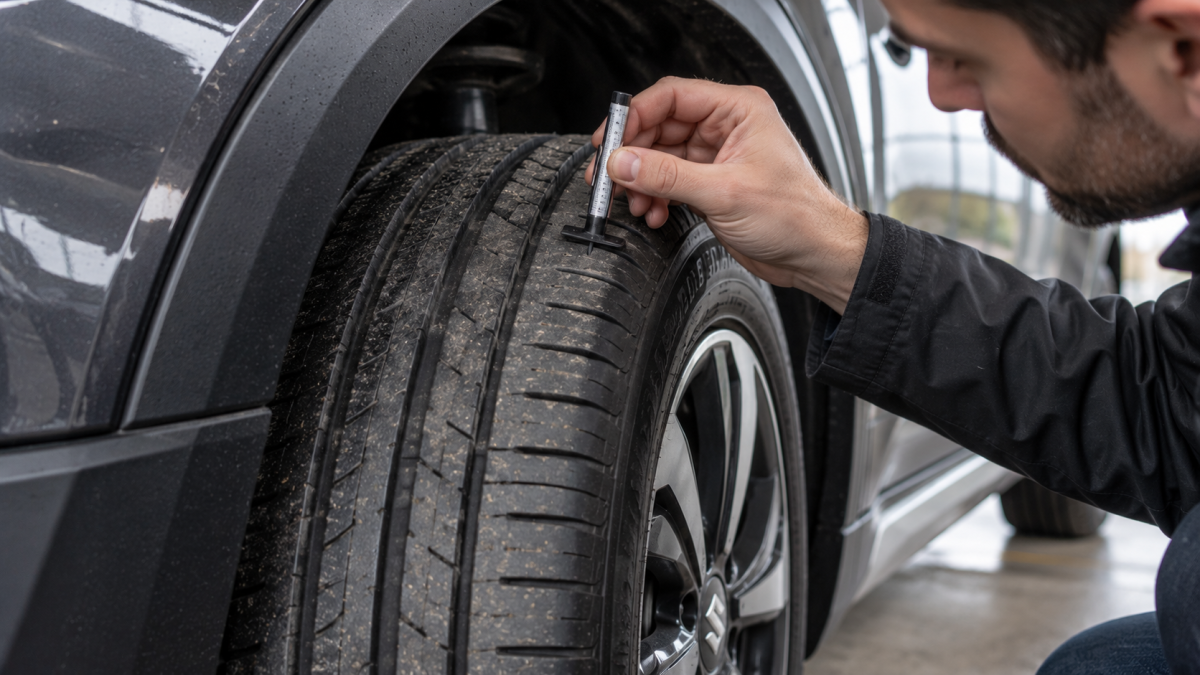
Checking tread depth is one of the simplest second hand car checks you can carry out. A tyre tread depth gauge is inexpensive and can provide a more accurate measurement than relying on appearance alone.
Tyre Rotation and Replacement
To help tyres wear evenly and extend their lifespan, tyres should be rotated regularly, typically every 6,000 to 10,000 miles.
Tyres generally should be replaced every 12-18 months on average, depending on use and condition.
Does an NCT Certificate Guarantee Good Tyres?
Not necessarily.
An NCT assesses a vehicle against specific roadworthiness requirements at the time of testing. It doesn't guarantee that the tyres will remain in full working order or that every developing mechanical issue has been identified.
A valid NCT is reassuring, but it shouldn't replace your own checks or an independent mechanical inspection.
When carrying out second hand car checks, always examine the current condition of the vehicle rather than relying solely on paperwork such as the vehicle registration certificate.
Should You Walk Away From a Used Car With Uneven Tyre Wear?
Not always.
Uneven tyre wear can sometimes be resolved with new tyres, correct inflation pressures, and professional wheel alignment. In other cases, the problem may involve worn suspension components or damage that requires more extensive repairs.
The important thing is to understand the cause before buying.
Ask the seller whether the vehicle has recently had new tyres fitted, undergone wheel alignment, or received suspension repairs.
If the tyres have been replaced recently, check whether any underlying issue was also addressed. Fresh tyres can temporarily hide a previous uneven wear pattern.
A reputable dealer should be happy to discuss the vehicle's condition and help you understand any concerns.
Other Essential Second Hand Car Checks Before Buying
Tyres are only one part of a thorough inspection.
Before purchasing a premium used vehicle, take time to check its overall mechanical condition and documentation.
Check the Service History and NCT Records
Review the service history for regular maintenance, tyre replacements, and any steering or suspension work.
Check the vehicle's NCT status and consider whether previous test reports highlight recurring issues.
A consistent maintenance record can provide useful reassurance, particularly when purchasing a higher-value used vehicle.
Confirm the Vehicle's History
Check the registration details, recorded mileage, ownership history, and whether any outstanding finance has been declared.
For an imported vehicle, confirm that the appropriate Vehicle Registration Tax (VRT) obligations have been addressed and that the vehicle is correctly registered in Ireland.
Revenue rules apply to vehicles brought into Ireland, so it's important to understand the registration and tax position before purchasing an imported car.
Ask for an Independent Inspection
If you're unsure about the tyres, suspension, or overall condition, arranging an independent inspection can provide valuable reassurance.
This is especially worthwhile when purchasing a higher-value used car.
A qualified mechanic can assess components that aren't easily visible during a standard forecourt inspection.
Choosing a Premium Used Suzuki in Dublin
If you're considering a Suzuki Swift, Vitara, or S-Cross, tyre condition should be part of your overall buying decision.
Each model appeals to different types of Irish motorists.
The Suzuki Swift is a practical choice for city driving, commuting, and navigating tighter Dublin streets.
The Suzuki Vitara offers SUV practicality and a higher driving position, making it an appealing option for families and drivers who regularly travel beyond the city.
The Suzuki S-Cross provides additional space and versatility for everyday journeys, motorway driving, and longer trips.
Regardless of which model you're considering, properly maintained tyres and suspension help deliver the driving experience you'd expect.
At Gerry Caffrey Motors in Terenure, Dublin 6W, customers can explore Suzuki models and compare new and used vehicle options featuring the latest technology.
When shopping for premium used cars in Dublin, it's worth choosing a dealership where you can discuss vehicle condition, service history, and maintenance requirements before making your decision.
New vs Used Suzuki: Which Is Right for You?
A premium used Suzuki can offer excellent value, particularly if you're looking for a well-equipped vehicle at a lower initial purchase price.
A new Suzuki, meanwhile, may appeal if you want the latest specification, manufacturer warranty benefits, and access to eligible new-car finance promotions.
The right choice depends on your budget, driving habits, and how long you intend to keep the vehicle.
For some Dublin motorists, a used Suzuki Swift offers an affordable and practical route into ownership. Others may prefer the space and flexibility of a new or nearly new Vitara or S-Cross.
It's worth comparing more than the initial purchase price. Consider insurance, fuel efficiency, maintenance, warranty coverage, and expected running costs.
Finance can also influence your decision.
Gerry Caffrey Motors offers car finance options that can help eligible customers spread the cost of their next vehicle, subject to approval and applicable terms.
If you're upgrading from your current car, a trade-in may help reduce the amount you need to finance.
Find Your Next Suzuki at Gerry Caffrey Motors in Terenure
Spotting uneven tyre wear is a small but important part of buying a premium used car.
By checking the tread, recognising unusual wear patterns, and paying attention during a test drive, you'll be better equipped to make an informed decision.
Whether you're looking for a practical Suzuki Swift, a versatile Vitara, or a spacious S-Cross, choosing a well-maintained vehicle in full working order makes all the difference.
Thinking about upgrading to a Suzuki? Visit Gerry Caffrey Motors in Terenure, Dublin 6W, to explore our selection of new and premium used cars. Our team will be happy to help you compare models, discuss finance options, and consider a trade-in for your current vehicle.