How Does a Guaranteed Minimum Future Value Work on PCP?
Buying a new or used car is exciting, but understanding how your finance agreement works is just as important as choosing the ideal car. If you're considering a personal contract purchase (PCP), a popular form of car finance in Ireland, you've probably come across the term guaranteed minimum future value (GMFV).
It might sound complicated, but GMFV is one of the key features that makes PCP car finance an attractive and flexible finance plan for many Irish motorists.
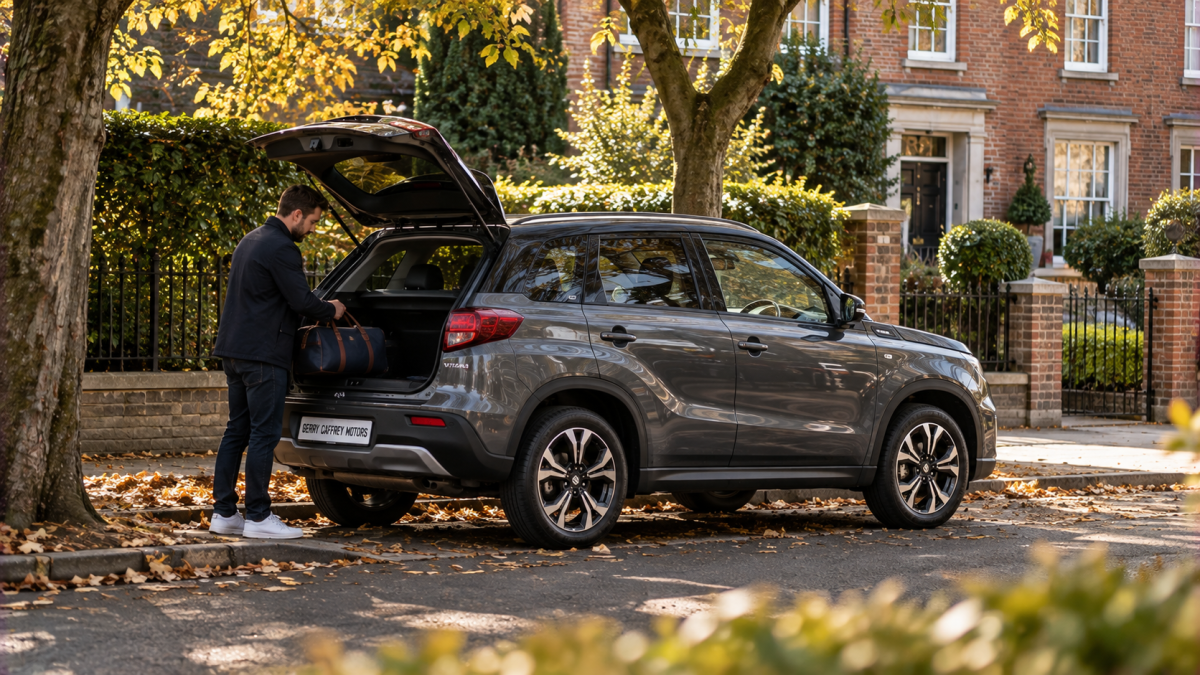
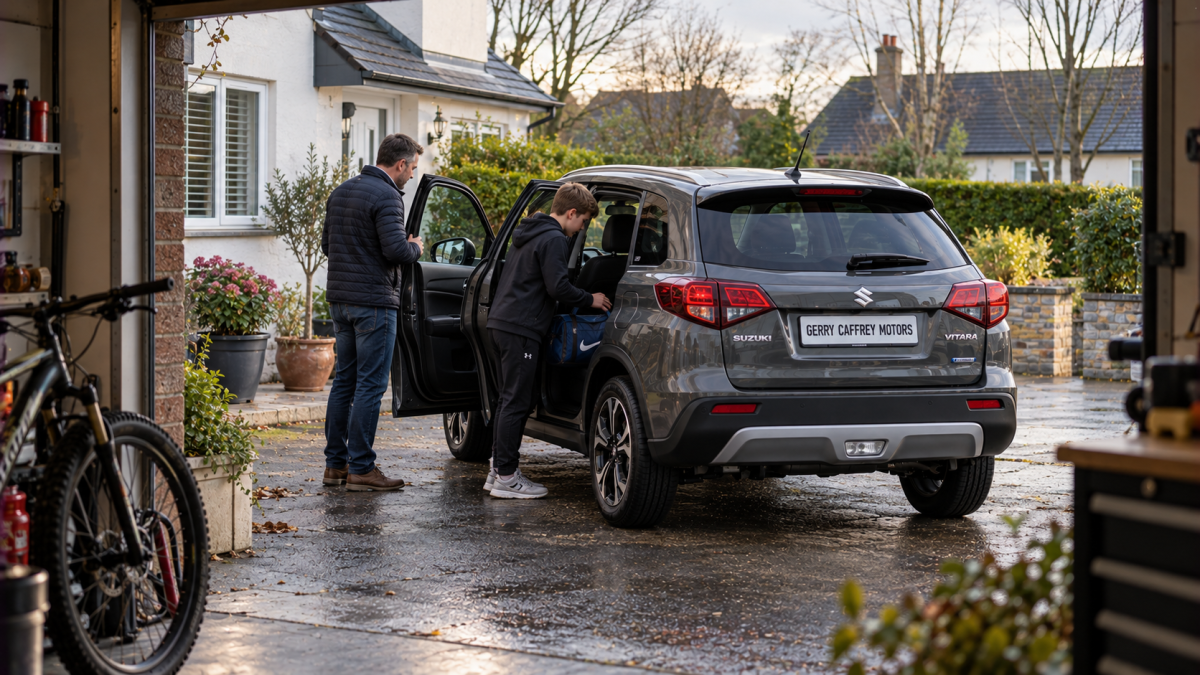
Whether you're upgrading your family car in South Dublin, considering a new Suzuki Vitara, or looking for manageable fixed monthly payments and lower monthly payments, understanding guaranteed minimum future value Ireland can help you make a more informed decision.
At Gerry Caffrey Motors in Terenure, Dublin 6W, we believe choosing the right finance arrangement should be just as straightforward as finding your next car.
What Is Guaranteed Minimum Future Value (GMFV) on PCP?
Guaranteed Minimum Future Value, commonly known as GMFV, is the exact amount your finance company guarantees your vehicle will be worth at the end of a PCP agreement, provided you meet the contract's terms and conditions.
It's also commonly referred to as the final balloon payment or optional final payment.
When you arrange a PCP finance agreement in Ireland, the finance company calculates the GMFV based on the vehicle's purchase price, expected depreciation, agreement length, agreed mileage limit, and anticipated condition.
This figure is agreed at the beginning of your PCP contract and remains fixed throughout the finance term.
However, GMFV isn't a guarantee of what your car will be worth on the open market. It's the contractual figure used to determine your final instalment and end-of-agreement options.
Investment products similar to GMFV can be found in capital-protected investment products, although GMFV itself is not considered a traditional investment product.
How Does a Guaranteed Minimum Future Value Work on PCP?
A PCP contract divides the cost of your car into an initial deposit contribution, fixed monthly payments, and an optional final balloon payment.
Unlike traditional hire purchase (HP) finance, PCP doesn't normally require you to repay the entire vehicle price through monthly instalments during the agreement.
Instead, a portion of the vehicle's cost is deferred until the end of the contract.
Your Initial Deposit
When arranging PCP finance, you'll usually begin with a deposit, often between 10-30% of the car's value. This can come from your savings, the equity in your existing vehicle via part exchange, or a combination of both.
If you're trading in your current car, its agreed trade-in value can contribute towards the deposit on your next Suzuki once any outstanding finance has been settled.
Your Monthly PCP Repayments
After paying your deposit, you'll make fixed monthly payments over the agreed finance period, typically three to five years.
These payments cover the relevant portion of the financed amount, together with applicable interest, expressed as an annual percentage rate (APR), and any charges.
Because the GMFV is deferred until the end, monthly PCP repayments can be lower than those on a comparable hire purchase agreement.
However, lower monthly repayments don't necessarily mean lower overall finance costs.
Your Guaranteed Minimum Future Value
At the end of your agreement, the GMFV becomes particularly important.
You'll have the option to pay the final instalment and keep the vehicle outright, return it under the finance company's conditions, or explore trading it in for another car.
This flexibility is one of the main reasons PCP finance appeals to many drivers who enjoy upgrading their vehicles regularly.
PCP GMFV Explained With a Practical Example
Imagine you're purchasing a new Suzuki Vitara through a three-year PCP agreement.
You pay an initial deposit, leaving the remainder financed. Your agreement includes a guaranteed minimum future value.
This means a portion of the vehicle's price is deferred until the end of the agreement, while the remaining principal is repaid through instalments alongside interest and any applicable charges.
If you decide to keep your Suzuki Vitara after the agreement, you'll need to pay the optional final payment, together with any applicable purchase fee.
Now imagine your Vitara has an agreed trade-in value at the end of the agreement.
If your outstanding finance settlement is less than this, you could potentially have positive equity to put towards your next vehicle.
This is one of the advantages of PCP when your car retains its value well.
Of course, positive equity isn't guaranteed. Your vehicle's actual value will depend on market demand, mileage, condition, service history, and any excessive wear.
These figures are illustrative only and don't represent a current Suzuki PCP deal offer. Actual repayments and costs will depend on the lender, APR, fees, and agreement terms.
What Happens at the End of a PCP Agreement?
When your PCP agreement finishes, you'll generally have three main options.
Understanding these choices before signing your agreement can help you plan your finances and decide whether PCP suits your driving habits.
Pay the PCP Final Payment and Keep Your Car Outright
If you're happy with your Suzuki and want to continue driving it, you can pay the agreed GMFV and keep the vehicle outright.
Once you've completed the required payments and satisfied the agreement's conditions, ownership transfers to you, making you the legal owner.
Some drivers choose this option because they know their car's history, have maintained it carefully, and don't feel the need to upgrade.
If you can't afford the final payment in one lump sum, you may be able to arrange separate finance through a new agreement, subject to approval by the finance company. However, additional borrowing can increase the total cost of ownership.
Return the Vehicle to the Finance Provider
Another option is to return your vehicle at the end of the PCP agreement.
Provided you've complied with the agreed mileage allowance, vehicle condition requirements, and other contractual terms, you can generally return the car without paying the GMFV.
However, excess mileage, damage beyond fair wear and tear, or other contractual breaches may result in additional charges.
For motorists commuting around Dublin, travelling along the M50, or regularly driving between counties, it's important to estimate annual mileage accurately before entering a PCP agreement.
Trade In Your PCP Car and Upgrade
Many Irish drivers choose to trade in their PCP vehicle towards another car.
If your vehicle's trade-in value is higher than the outstanding finance settlement, the difference may be used as equity towards your next deposit.
For example, you might upgrade from a Suzuki Swift to a Suzuki S-Cross if you need additional space for family journeys.
Alternatively, you might decide to move into a newer Suzuki Vitara with updated technology and safety features.
At Gerry Caffrey Motors, our team can help you explore available part exchange options and understand how your current finance agreement may affect your next purchase.
How Is GMFV Calculated on Suzuki PCP Finance?
The guaranteed minimum future value is calculated by the finance company using several factors that influence the expected future value of your vehicle.
Vehicle Depreciation
Depreciation is the reduction in a car's value over time.
Different vehicles depreciate at different rates depending on their popularity, specification, condition, and demand in the used-car market.
A Suzuki Swift, Vitara, and S-Cross may each have different projected residual values, which can influence the GMFV offered by the finance provider.
Annual Mileage
Your agreed annual mileage is another important factor.
Someone commuting a short distance between Terenure and Dublin city centre may cover considerably fewer kilometres than a driver travelling daily from South Dublin to Kildare.
Higher annual mileage generally means greater expected depreciation, which can reduce the GMFV and potentially increase monthly repayments.
Choosing an unrealistically low mileage allowance simply to reduce your monthly payments could lead to additional costs when your agreement ends.
Vehicle Condition and Maintenance
Keeping your Suzuki in good condition can help preserve its actual trade-in value.
Regular servicing, tyre maintenance, and addressing minor damage promptly are particularly important given Ireland's wet weather and demanding road conditions.
If you plan to return your vehicle, you'll also need to meet the finance provider's fair wear and tear requirements.
Length of the PCP Agreement
Most PCP agreements run for three to five years.
The length of your agreement affects the projected future value of your vehicle, monthly repayments, and overall interest costs.
A longer agreement may reduce monthly repayments, but it's important to compare the total amount payable before making a decision.
Is GMFV the Same as Your Car's Trade-In Value?
No. Your guaranteed minimum future value and your vehicle's trade-in value are two different figures.
The GMFV is established when your PCP agreement begins, while the trade-in value is assessed when you're ready to change your car.
Your actual trade-in valuation depends on current market conditions, mileage, service history, mechanical condition, and demand for your particular model.
In our experience, it's important to view GMFV as an agreed contractual figure rather than a guaranteed dealership trade-in offer.
If your vehicle is worth more than the outstanding settlement, you may have positive equity.
If it's worth less, you can generally use the contractual return option, provided you've met the finance agreement's conditions.
Is PCP Finance Better Than Hire Purchase in Ireland?
Both PCP and Hire Purchase are popular car finance options in Ireland, but they work differently.
PCP typically offers lower monthly repayments because a significant portion of the vehicle's price is deferred until the final balloon payment.
It also provides flexibility at the end of the agreement, allowing you to keep the vehicle, return it, or potentially trade it in.
Hire Purchase generally involves higher monthly repayments because you're paying off the vehicle's full financed price over the agreement term.
However, once you've completed all required payments and satisfied the agreement's conditions, the car becomes yours without a large optional balloon payment.
Hire Purchase also generally doesn't include the mileage restrictions associated with PCP returns.
For drivers who enjoy upgrading every few years, PCP may be worth considering.
If you plan to keep your vehicle for a long time or cover particularly high annual mileage, Hire Purchase could be a more suitable option.
HP is straightforward but one of the least flexible forms of car finance, making it a good choice for those who prefer a simple, predictable finance plan without the complexities of balloon payments or mileage limits.
The right choice depends on your budget, driving habits, and long-term plans.
Can You Get Suzuki PCP Finance in Dublin?
If you're considering a new Suzuki, PCP may be one of the flexible forms of finance arrangements available to help spread the cost.
At Gerry Caffrey Motors in Terenure, Dublin 6W, you can enquire about finance options for popular Suzuki models, subject to availability, lender criteria, and approval.
Suzuki Swift PCP Finance
The Suzuki Swift is a practical choice for many drivers who spend much of their time navigating Dublin traffic.
Its compact dimensions make it particularly convenient for city parking, while its everyday usability appeals to commuters and motorists looking for a smaller hatchback.
For drivers who prefer changing cars every few years, PCP may provide a way to manage monthly repayments while retaining flexibility at the end of the agreement.
Suzuki Vitara PCP Finance
The Suzuki Vitara is a popular option for drivers looking for SUV practicality and a higher driving position.
It's well suited to a mixture of Dublin commuting, family journeys, and longer trips around Ireland.
With a suitable PCP arrangement, drivers can enjoy a newer Vitara while planning ahead for their next vehicle upgrade.
Suzuki S-Cross PCP Finance
The Suzuki S-Cross offers additional space and versatility for families and motorists who regularly travel beyond the city.
Whether you're managing school runs in South Dublin or heading away for the weekend, the S-Cross is worth considering if you need a practical crossover.
PCP finance may offer an alternative to paying the full purchase price outright, depending on the available finance arrangements.
Can You Get PCP Finance on a Used Suzuki?
PCP isn't always limited to brand-new vehicles.
Some finance companies offer PCP agreements on qualifying used cars, although eligibility depends on the vehicle's age, mileage, value, and lender requirements.
If you're considering a premium used Suzuki or another quality pre-owned vehicle, it's worth comparing the available finance arrangements.
We often see many drivers concentrate on the monthly repayment, but it's equally important to understand the total amount payable, interest rate, and any final payment.
A used car may have a lower purchase price than a new model, but that doesn't automatically mean its finance arrangement will be more suitable.
What Happens if Your Car Is Worth Less Than the GMFV?
One of the main benefits of GMFV is the protection provided by the contractual return option if your car's market value falls below expectations.
Imagine your Suzuki has a GMFV, but its market value at the end of the agreement is lower.
If you've met the agreement's return conditions, you can generally hand the car back instead of paying the GMFV to purchase it.
This doesn't mean the finance company will pay you the difference.
It means you can use the agreed return option without having to fund the optional final payment, subject to the contract's conditions and any applicable charges.
Your original deposit and monthly repayments also won't be refunded simply because you return the vehicle.
How Can You Protect Your Suzuki's Future Value?
Although your GMFV is fixed at the beginning of the agreement, looking after your vehicle can help maintain its actual market value.
Following the manufacturer's recommended servicing schedule is a good starting point. Keeping a complete service history can also support your car's appeal when it's time to trade in.
It's worth monitoring your mileage throughout the PCP agreement, particularly if your commuting habits change.
For drivers regularly travelling around Dublin and Leinster, additional journeys can quickly increase annual mileage beyond the original estimate.
Irish weather can also affect vehicle condition. Wet roads, potholes, road salt, and winter driving make regular maintenance particularly important.
Keeping your tyres in good condition, repairing bodywork damage, and maintaining your vehicle properly can help protect its value.
For older vehicles, having an up-to-date NCT certificate can also be useful when selling or trading in. NCT costs should be factored into your vehicle maintenance budget.
New private cars in Ireland generally require their first NCT when they reach four years of age, so this may not apply during a typical three-year new-car PCP agreement.
If you're comparing an Irish-registered Suzuki with an imported vehicle, remember that Vehicle Registration Tax (VRT) and Revenue registration requirements can affect the overall purchase cost.
Selling your vehicle before new model releases or registration plate changes can help maximise its resale value, as demand and prices often dip after these events.
Choosing popular car models like the Suzuki Swift, Vitara, or S-Cross also helps retain resale value, making PCP agreements more attractive with better equity potential.
Understanding Your PCP Agreement and Consumer Rights
It's important to know that PCP agreements in Ireland are regulated under the Consumer Credit Act, which provides protections for consumers entering into credit agreements.
If you need to end a PCP agreement early, there are options available, but you should be aware of potential costs such as a rescheduling fee.
PCP agreements are among the least flexible forms of car finance, so understanding the terms before signing is crucial.
For further information about your rights and obligations under a PCP agreement, you should consult your finance provider or seek independent advice.
Frequently Asked Questions About PCP and GMFV
Is the Guaranteed Minimum Future Value Really Guaranteed?
Yes. The GMFV is fixed in your PCP agreement, subject to the contract's terms and conditions.
However, it isn't a guarantee that a dealership will offer that amount as a trade-in valuation.
Do I Have to Pay the GMFV at the End of PCP?
No, not necessarily.
You'll generally need to pay the GMFV if you want to own the vehicle outright. Otherwise, you can explore returning it under the agreement's conditions or trading it in and settling the outstanding finance.
Can I Trade In My PCP Car Before the Agreement Ends?
Yes, early trade-ins may be possible.
You'll need an up-to-date settlement quotation from your finance company to determine how much is outstanding.
Your vehicle's trade-in value can then be compared with the settlement amount to establish whether you have positive or negative equity.
What Happens if I Exceed My PCP Mileage Limit?
If you exceed your agreed mileage allowance and return the vehicle, additional charges may apply.
Higher mileage can also reduce your car's trade-in value, potentially leaving you with less equity towards your next purchase.
Can I Negotiate the GMFV on My PCP Agreement?
The GMFV is generally calculated by the finance company rather than negotiated independently.
However, changing your contract length or agreed annual mileage may affect the GMFV quoted before you sign.
Does a Higher GMFV Mean Lower Monthly PCP Payments?
Generally, yes.
A higher GMFV means a larger portion of the vehicle's cost is deferred, which can reduce monthly repayments.
However, it also means a larger final balloon payment if you decide to keep the car.
Is Suzuki PCP Finance Suitable for High-Mileage Drivers?
PCP can work for some higher-mileage drivers, but it's important to choose an appropriate mileage allowance.
If you regularly cover long distances, hire purchase or another finance arrangement may offer greater flexibility.
Can I Use My Current Car as a Deposit on a New Suzuki?
Yes. Your existing vehicle's agreed trade-in value can often contribute towards the deposit on your next car.
If you still owe money on your current vehicle, the outstanding finance must be accounted for before any remaining equity can be used.
Thinking About Your Next Suzuki? Visit Gerry Caffrey Motors in Terenure
Understanding how guaranteed minimum future value Ireland works can help you make a more confident decision when choosing your next car.
Whether you're comparing PCP and hire purchase, approaching your final PCP payment, or thinking about trading in your current vehicle, it's important to consider the full cost of finance and your options at the end of the agreement.
At Gerry Caffrey Motors in Terenure, Dublin 6W, you can explore new Suzuki models, quality used cars, and available finance solutions to find a vehicle that suits your lifestyle and budget.
If you're considering upgrading to a Suzuki Swift, Vitara, or S-Cross, drop by Gerry Caffrey Motors in Terenure, Dublin 6W. Chat with our team about your next vehicle, trade-in possibilities, and flexible financing options.