Driving Through Floods
How to keep yourself safe driving through floods and flooded streets.
Heavy rain has hit hard across the east and south east of Ireland today with the arrival of Storm Chandra, causing severe flooding that has left many roads impassable and drivers stranded. If you’re planning to travel in Dublin, Wicklow, Waterford or Tipperary, you need to know what’s happening right now and how to stay safe.
This guide provides an urgent situational update on today’s flood conditions, followed by practical advice drawn from the Road Safety Authority (RSA), AA Ireland and An Garda Síochána. Stay up to date by following the social media accounts of An Garda and The AA
More insights can be found across various news site such as RTE, here is some of the coverage of the flooding on Nutgrove Ave today.
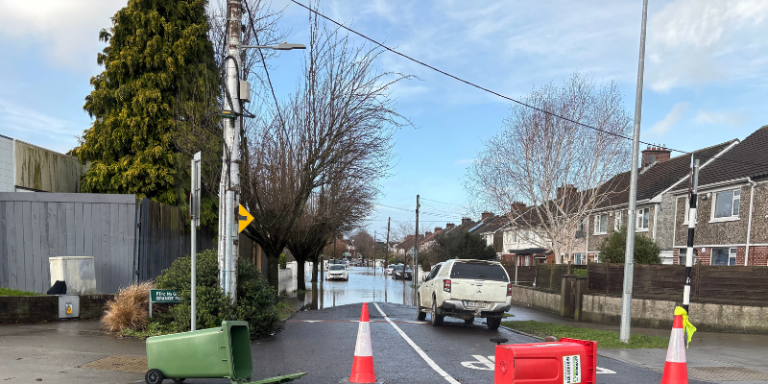
Urgent update: Today’s flooding in Dublin, Wicklow, Waterford & Tipperary
Intense and significant rainfall through the early hours and morning has caused serious flooding across multiple counties. Drainage systems have been overwhelmed by the sheer volume of water, and flooding occurs in areas where roads normally remain passable. Here is what we know about conditions right now.
Dublin has experienced widespread flooding on key routes. The M50, particularly south of Junction 13, has standing water on multiple lanes. Local roads in Terenure, Rathfarnham, Templeogue and areas along the River Dodder and Poddle are badly affected, with surface flooding reported at several junctions. Dublin Fire Brigade has already attended multiple incidents involving vehicles stranded in flood water.
In Wicklow, the N11 and M11 corridor has flooded sections, especially near the Dargle and Vartry rivers. Low-lying bends and village approaches have deep water pooling, and local authorities have closed several secondary roads. The River Slaney catchment is also seeing elevated levels.
Waterford is experiencing significant flooding near the River Suir and River Blackwater catchments. Roads approaching Waterford City and low-lying regional routes in the south east have stranded vehicles, with emergency services attending rescue calls.
Tipperary has high river levels on the Suir and its tributaries. Approach roads into Clonmel and Carriare impassable in places, and local reports indicate many cars have turned back at flooded fords where saturated ground has added to runoff.
Met Éireann has active weather warning notices in place, and Transport Infrastructure Ireland is monitoring national routes. An Garda Síochána have advised motorists not to attempt to drive through flooded underpasses, fords or any section marked “Road Closed.” Emergency services in all four counties have already carried out vehicle rescues from floodwater and are urging people to avoid driving unless absolutely necessary.
Why flooding makes Irish roads so dangerous
Even when flood water looks shallow, it can hide serious hazards. Potholes, lifted manhole covers, and washed-out tarmac are invisible beneath murky water. In wet weather like today, you simply cannot tell what the road ahead looks like beneath the surface.
The physics are stark: as little as 30cm of fast flowing water can float a typical family car. Less than that can knock a person off their feet. This is why the RSA and Gardaí consistently warn against any attempt to drive through flowing water of unknown depth.
Irish roads present particular challenges during flood events:
Narrow rural roads in Wicklow, Waterford and Tipperary are often cambered and tree-lined, causing water to pool unpredictably after heavy rainfall
Rivers rising suddenly near the Suir, Slaney, Liffey, Dodder and Dargle can back up drains and overflow onto roads with no warning
Urban surfaces like those covering over 40% of Dublin amplify surface flooding because water cannot soak into concrete and tarmac
Vehicle air intake systems on petrol and hybrid cars are often mounted low, meaning even relatively shallow water can be sucked into the engine, causing serious damage in seconds
Hidden currents near bridges and fords can sweep vehicles off course, especially where flood damage has undermined the road edge
Electrical system failure occurs quickly when water enters modern vehicles, disabling power steering, brakes and door locks
The flood risk is real regardless of your vehicle type. SUVs and 4x4s offer slightly higher ground clearance, but tests show they lose traction in just 40cm of moving water. Do not assume your car can handle conditions that have stranded others.
Official Irish guidance: What RSA, AA Ireland and Gardaí say about flood driving
The following advice comes directly from Ireland’s road safety authorities. When bad weather hits, their guidance could save your life.
Road Safety Authority (RSA) guidance:
Avoid driving through flooded areas if at all possible
If you must travel, drive slowly, increase your following distance, and use dipped headlights
Never assume a flooded road is safe just because other road users have passed through
Remember that 30cm of flowing water can float a car, and stopping distances increase dramatically on wet roads
Check Met Éireann for the latest weather warning before setting out
The RSA “Flooded Roads Kill” campaign notes that 15% of Irish road fatalities are linked to wet conditions
AA Ireland advice:
Do not drive into water if you are unsure of the water depth
If water is deeper than roughly the centre of your wheels, turn back immediately
If your engine stalls in water, do not try to restart it—this greatly increases the risk of catastrophic engine damage
Check AA Roadwatch for real-time road closures and flood reports
AA data shows 70% of their winter callouts involve flood-stranded drivers, with many cars written off
An Garda Síochána messaging:
Obey all “Road Closed,” “Flooding” and diversion signs without exception
Do not ignore barriers, cones or tape placed by local authorities or emergency services
Fines of up to €120 apply for ignoring diversions under Road Traffic Acts
Emergency services are put at significant risk when they must rescue motorists who knowingly drove into floodwater
If your vehicle becomes stuck, phone 999 or 112—do not attempt to wade through flood water
Dublin Airport and other airports may experience disruption to flight operations; check before travelling
All three bodies stress the importance of planning your intended route before you leave. Check Met Éireann warnings, AA Roadwatch updates, and local authority social media channels. If there is any flood risk on your route, delay your journey or find an alternative.
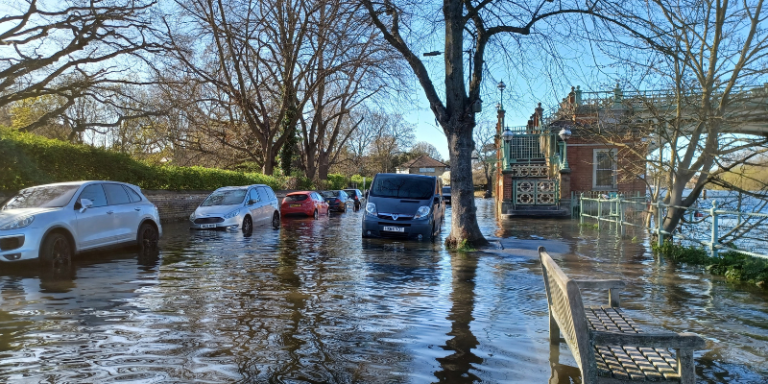
Practical step-by-step: How to approach a flooded road in Ireland
The safest option is not to drive into floodwater at all. If you encounter flooding and have any doubt about conditions, turn around and find another route. However, if you must assess a flooded section, here is how to do it safely.
Slow down well before the water. Reduce your speed as soon as you see standing water or signs of flooding ahead. This gives you time to assess and allows other road users behind you to see your brake lights.
Stop in a safe position. Pull over where you can observe the flooded section without blocking traffic. Keep your engine running and hazard lights on if visibility is poor.
Assess the water depth. Look for kerbs, road markings, or depth gauges (sometimes present at known flood underpasses). Watch if other vehicles pass through and note how high the water reaches on their wheels. If you cannot see the road surface, assume it is too deep.
Check for flow and debris. Ripples, strong current, muddy colour, or floating debris indicate moving water that poses a significant risk. Fast flowing water near bridges, fords or river embankments can sweep a car off the road in seconds.
Decide whether to proceed. Avoid water deeper than 10cm where possible. If water is above the centre of your wheels, or if it is flowing rather than still, do not proceed. The risk of water damage to your engine, loss of control, or being swept away is too high.
If in doubt, turn around. There is no shame in finding an alternative route. Many drivers have been stranded or worse because they underestimated flood conditions. Your safety matters more than your schedule.
Never copy what other vehicles do without assessing conditions yourself. A larger vehicle may pass where yours cannot, and conditions can change within minutes during storm events.
Safe driving techniques if you must cross shallow standing water
This advice applies only to clearly shallow, still water where the road surface is visible and there is genuinely no safer alternative. If you cannot confirm these conditions, do not proceed.
Use first or second gear with higher engine revs and low speed. This keeps exhaust pressure up and reduces the chance of water entering the exhaust system.
Maintain a steady, slow pace. Driving too fast creates a bow wave that can push water up into the engine bay and swamp the air intake. Keep your speed below 5-10 km/h.
Enter and exit slowly. Do not accelerate or brake harshly. Sudden movements can cause loss of traction or force water into vulnerable areas.
Keep your distance. Wait until the vehicle ahead has cleared the water before you enter. You need space to drive through in one continuous, controlled movement without stopping mid-way.
Never drive through standing water at speed. Aquaplaning can begin at speeds as low as 50 km/h in just 5cm of water. Splashing pedestrians or oncoming traffic can also result in careless driving charges from Gardaí.
Dry your brakes afterwards. Once you are through and on dry road, lightly apply the brake pedal several times while driving slowly. This generates heat to dry the brake discs and restore full braking power.
If at any point you feel the vehicle losing traction, the steering becoming light, or water splashing higher than expected, stop accelerating and reassess. Conditions may be worse than they appeared.
What to do if your car stalls or becomes stuck in floodwater
Driver and passenger safety are the absolute priority. The vehicle is secondary and can be replaced.
Do NOT restart your engine. If your engine cuts out in water, attempting to restart can draw floodwater into the cylinders. This causes hydrolock, which destroys the engine instantly. The repair cost typically exceeds the vehicle’s value.
If the water is shallow, stable and not rising:
f the water is shallow, stable and not rising:
Stay in the vehicle with seatbelts on
Switch on hazard lights immediately
Call emergency services on 999 or 112, or your breakdown provider
Wait for assistance—do not attempt to push the car or wade through water
If water is rising quickly or entering the cabin:
Exit the vehicle as soon as it is safe to do so
Move carefully to higher ground away from the flood water
Call 999 or 112 immediately
Do not return to the vehicle under any circumstances
An Garda Síochána and Dublin Fire Brigade have repeatedly warned that conditions at bridges, fords and river crossings can change within minutes. What looks passable can become lethal as upstream rain arrives. In coastal areas, high tide can compound river flooding without warning.
Once everyone is safe, contact AA Ireland or your breakdown provider for recovery. Notify your insurer promptly—flood claims require professional assessment, and driving a water-damaged vehicle can void your cover.
After the floods: Checking and repairing your vehicle
Once roads have reopened and lower water levels allow travel, any car that has driven through floodwater or been exposed to flooding should be professionally inspected before normal use.
Even if your vehicle appears to run normally, water ingress can cause delayed failures in braking systems, electrical components and drivetrain parts. The damage caused by flood water is often invisible until a critical component fails.
Post-flood inspection checklist:
Brakes: Check pads, discs and brake fluid for contamination
Engine oil: Look for milky discolouration indicating water mixing with oil
Air intake and filter: Inspect for water ingress or debris
Electrical systems: Test all lights, sensors, window motors and control units
Underbody: Check for corrosion, trapped debris and damage to exhaust and fuel lines
Wheel bearings: Listen for grinding or roughness that indicates water contamination
Cabin: Check for damp smells, wet carpets or mould growth under seats
Hybrid and petrol Suzuki models like the Swift, Vitara and S-Cross have sensitive low-mounted components including sensors, wiring looms and control units. These are particularly vulnerable to water ingress during flood events. If you drive a hybrid, ensure your mechanic checks the high-voltage battery housing and associated systems.
Any warning lights, unusual noises, poor braking performance or persistent damp smells after driving through water are signals to stop using the car immediately and arrange a professional inspection. Insurers in Ireland typically require a detailed assessment report before approving repairs or processing a write-off claim for flood damage.
How Gerry Caffrey Motors can help local drivers after flooding
If you are a Dublin motorist affected by today’s serious flooding, Gerry Caffrey Motors in Terenure is here to help. As an established Suzuki franchise dealership since 1987, we support local drivers with honest, transparent service when they need it most.
Our experienced technicians can inspect flood-affected vehicles—both Suzuki and other makes—for:
- Brake system performance and contamination
- Engine integrity and oil condition
- Hybrid system diagnostics and battery housing checks
- Exhaust and underbody damage
- Electrical system function and sensor calibration
- Air intake inspection and filter replacement
We can advise whether your vehicle is safe to drive or should be recovered to our workshop for further assessment. For Suzuki owners, our diagnostics equipment provides manufacturer-level insight into your car’s condition.
Remember, if in doubt check it out. Be safe, do not take risks and please slow down coming up to puddles, no one wants a walk home in miserable conditions with the added misery of a passing car driving fast through puddles and soaking them. Not only is a miserable thing to do but it is also a fineable offence under the Road Traffic Act - Section 51A/Section 52. Its considered driving without due care and attention and lead not only to a fine but possible penalty points and probable prosecution. So slow down, avoid puddles and do not drive through floods without knowing their depth, your cars suitability for driving in those conditions and what lies beyond. You do not know whats in flood water and may do more damage than you think.
Stay safe out there.