Do You Need All-Wheel Drive for an Irish Autumn—or Better Tyres?
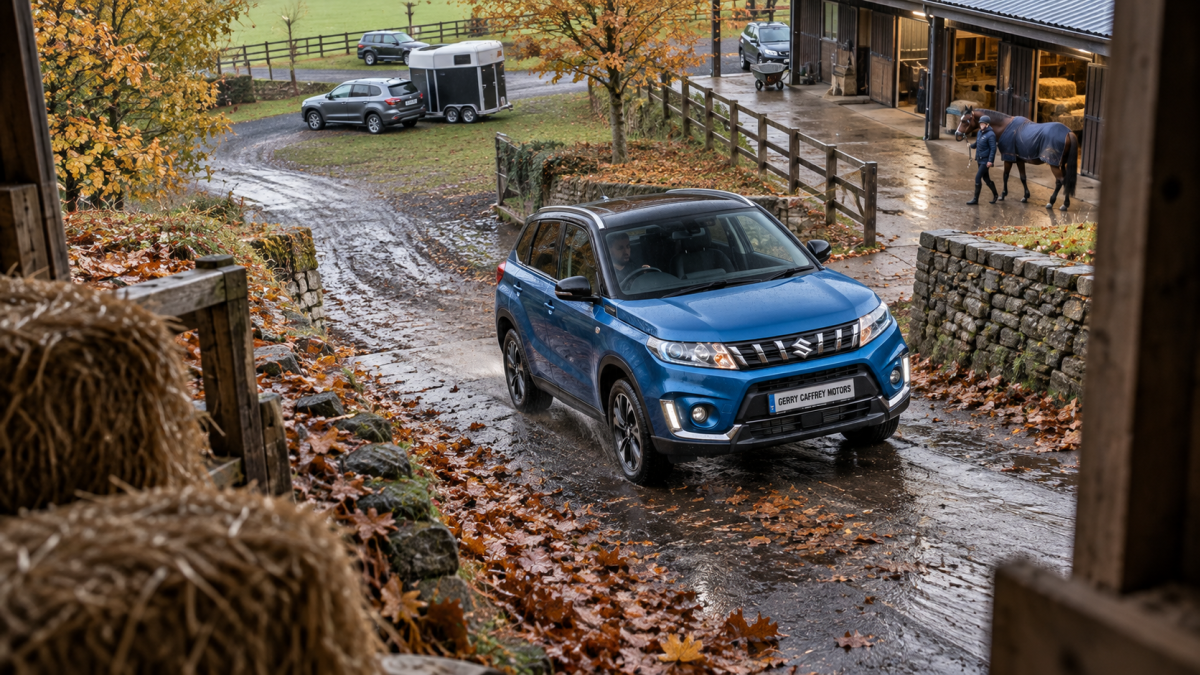
Irish autumn driving can be deceptively challenging.
One minute, the roads around Dublin are dry. The next, you’re dealing with standing water, fallen leaves and a greasy roundabout on the school run.
Add darker evenings and rural roads with poor drainage, and it’s easy to see why buyers start looking at all-wheel-drive SUVs.
But do you genuinely need AWD in Ireland, or would a better set of tyres make a bigger difference? This article explores the all wheel drive vs tyres question, helping you understand when AWD or quality tyres offer the most grip and stability.
The short answer is simple: for most Dublin and South Dublin motorists, good tyres should come first. All-wheel drive can add useful traction by distributing torque to all four wheels, but it can’t compensate for worn, underinflated or unsuitable tyres.
What Does All-Wheel Drive Actually Do?
An all-wheel-drive system can send power to more than one axle, often varying torque allocation between front and rear wheels or even between left and right wheels to improve handling and traction control intervention.
That can be useful on a wet incline, a muddy driveway, a loose gravel road or a waterlogged grass car park. It can also give drivers more confidence on poorly surfaced rural routes and winding roads.
Suzuki’s ALLGRIP technology is a prime example. On selected Vitara and S-Cross models, ALLGRIP SELECT offers Auto, Sport, Snow and Lock driving modes, allowing the system to adapt to different road surfaces and weather conditions.
In Auto mode, the system prioritises fuel economy by using primarily front wheel drive car operation, switching torque to the rear wheels automatically when front wheel losing grip or wheel slippage is detected. This is the ALLGRIP Auto system, which enhances efficient driving by minimizing unnecessary power to the rear wheels until needed.
Sport mode optimises the system for sporty driving, improving acceleration response and cornering by prioritising torque to wheels with the most grip.
Snow mode maximises stability on snowy surfaces and other slippery conditions by maintaining a permanent 50/50 torque split and enhanced traction control intervention.
Lock mode distributes torque evenly to all four wheels for tough surfaces and off road situations, applying braking to spinning wheels and prioritising grip. This mode disengages automatically above a certain speed to protect the drivetrain.
These system switches allow AWD to adapt to changing road conditions, providing greater stability and control.
However, AWD primarily helps a car accelerate without losing traction. It doesn’t magically shorten the braking distance, and it can’t create grip where the tyres have none. Traction control system and tyre quality remain critical.
Why Tyres Matter More Than Many Irish Drivers Realise
Your tyres are the only parts of the car touching the road — all four wheels must have adequate tread depth, proper inflation, and the right compound to ensure better grip and stability.
That sounds obvious, but we often see drivers focus on SUV styling, engine power or four-wheel drive while overlooking tyre condition. On a wet Irish road, tyre quality can have a greater effect on stopping and steering than the number of driven wheels.
The Road Safety Authority states that tyres must be the correct size and standard, properly inflated, free from defects and have at least 1.6mm of tread. Deep tread grooves help prevent aquaplaning on slippery roads.
The 1.6mm figure is a legal minimum, not necessarily the point at which a tyre still feels at its best during a Dublin downpour. In our experience, drivers often notice reduced confidence well before reaching that limit, particularly when crossing standing water or braking on a slick surface.
Tyre compound and tread pattern significantly affect braking traction and acceleration response, especially on slippery surfaces.
It’s also important to replace tyres as a complete set on AWD vehicles to avoid imbalances that could affect how the system operates.
Tyres’ total contact patch with the road is roughly the size of a postcard, illustrating the limited area available for grip.
Wet Weather Grip: The Real Priority for an Irish Autumn
For typical autumn driving in Ireland, prioritise tyres with a strong EU wet-grip rating.
The tyre label grades wet braking from A to E, with A offering the best performance. This gives buyers a far more useful comparison than choosing a tyre purely by price or brand recognition.
A good autumn tyre check should cover:
- Matching tyre sizes and suitable load and speed ratings
- The EU wet-grip rating on replacement tyres
- The age and general condition of the rubber
- Cracks, bulges, cuts or uneven wear
- Correct pressures when the tyres are cold
- Tread depth across the full width of each tyre
Don’t forget the rear wheels. A car with two new tyres at the front and badly worn tyres at the back can become unstable in wet bends, especially under front wheel slippage conditions.
Correct wheel alignment matters too. Dublin potholes, raised kerbs and repeated contact with traffic-calming ramps can cause uneven wear, reducing both tyre life and wet weather grip.
Can Good Tyres Be Better Than AWD?
In many everyday driving situations, yes.
A front-wheel-drive Suzuki Swift on high-quality tyres may offer more predictable braking and cornering than an AWD vehicle fitted with cheap or badly worn rubber.
AWD can help the second car move off by sending torque to all four wheels, but all four tyres still have to stop and steer it.
That’s the key point in any honest SUV buying advice: AWD and good tyres do different jobs.
If your budget forces you to choose between an AWD badge and a properly maintained set of quality tyres, tyres are usually the more important safety investment for normal urban and motorway driving.
Winter tyres perform better than all-season tyres below 7°C, and a front wheel drive car fitted with winter tyres can equal a 4WD in snow, highlighting how tyre choice can outweigh drivetrain.
When Suzuki ALLGRIP Is Worth Considering
There are Irish drivers for whom AWD makes excellent sense.
You Regularly Drive on Rural Roads
Narrow roads can collect mud, leaves and standing water, particularly after heavy rain.
If your daily journey includes unsurfaced lanes, steep approaches or poorly drained back roads, Suzuki ALLGRIP can provide useful extra traction and stability.
You Live on or Frequently Use Steep Roads
A wet hill can expose the limits of a two-wheel-drive car, especially when pulling away from a junction.
ALLGRIP may make those starts smoother and more controlled by automatically distributing torque to rear wheels when front wheel losing grip.
You Use Grass, Gravel or Muddy Parking Areas
Sports clubs, equestrian centres, festivals and rural workplaces aren’t always served by tarmac car parks.
AWD can help you get moving without excessive wheelspin or wheel slippage.
You Tow Within the Vehicle’s Approved Limits
Drivers towing a suitable trailer may appreciate the additional traction when starting on a wet surface.
Always check the exact model’s towing capacity and ensure the trailer, licence and loading arrangement are compliant.
You Want Added Capability Without a Very Large SUV
This is where Suzuki tends to make sense.
The Vitara and S-Cross deliver useful SUV practicality without the bulk of some larger four-wheel-drive vehicles.
Which Suzuki Suits Your Driving?
Suzuki Vitara
The Suzuki Vitara is a strong option for motorists who want compact SUV dimensions, a raised driving position and the availability of ALLGRIP on selected versions.
It feels well suited to mixed Irish use: commuting through Terenure during the week, followed by motorway or country-road driving at the weekend.
For buyers comparing AWD in Ireland, the Vitara is worth considering because it offers added traction in a manageable, city-friendly package.
Suzuki S-Cross
The Suzuki S-Cross provides more cabin and luggage flexibility, making it an appealing family SUV.
It’s a sensible choice if your driving combines Dublin traffic, longer motorway journeys and regular trips onto rural roads.
Selected versions with ALLGRIP add another layer of capability for difficult surfaces and changeable weather.
Suzuki Swift
Not everyone needs an SUV.
For urban commuting, school runs and everyday South Dublin driving, the Suzuki Swift can be the smarter purchase. It’s compact, easy to place on busy streets and economical to run.
Fit it with quality tyres, check the pressures regularly and drive to the conditions, and it can be a very capable Irish autumn car.
New AWD SUV or Used Car With Better Tyres?
Buying new may give you a wider choice of specification, current safety technology, warranty cover and tailored finance options.
A premium used Suzuki can offer excellent value, but condition matters more than an AWD badge. Check the service history, tyre brand, tread depth and whether all four tyres match in size and specification.
This is particularly important on an AWD vehicle. Large differences in tyre circumference or wear can affect how some four-wheel-drive systems operate.
If you’re considering an imported used car, check the registration details carefully. A particular AWD version may have different CO₂ or NOx figures from its two-wheel-drive equivalent, which can affect VRT and Revenue charges.
Don’t rely on the specification of a similar model. Verify the exact vehicle before agreeing to buy.
What About the NCT?
An NCT pass shouldn’t be treated as proof that a tyre is ideal for heavy rain.
The test checks whether a vehicle meets roadworthiness requirements at that point in time. A tyre can be above the legal tread-depth limit and still offer less wet-weather confidence than a newer, higher-quality replacement.
Before autumn, it’s sensible to inspect your tyres even if the NCT isn’t due for months.
Pay particular attention if the car pulls to one side, the steering wheel vibrates, the tyre-pressure warning appears or one edge of a tyre is wearing faster than the other.
Does AWD Cost More to Run?
It can.
An AWD version may cost more to buy and can use slightly more fuel consumption than an equivalent two-wheel-drive model. There may also be additional drivetrain components to maintain over the life of the vehicle.
Suzuki has been developing four-wheel-drive vehicles since 1970, reflecting decades of expertise in balancing capability and efficiency.
That doesn’t make AWD poor value. It simply means you should buy it because it suits your driving requirements, not because Irish weather occasionally produces a dramatic forecast.
For a driver who spends most of the week between Rathfarnham, Dundrum and Dublin city centre, quality tyres may deliver more day-to-day benefit.
For someone commuting from a rural area with steep lanes and loose surfaces, ALLGRIP may be well worth the additional cost.
Our Advice: Start With the Tyres, Then Assess Your Roads
In our experience, the best decision starts with an honest look at where you drive.
If your journeys are mainly on treated urban roads, dual carriageways and motorways, prioritise premium tyres with a strong wet-grip rating. Keep them correctly inflated and replace them before their performance becomes questionable.
If you regularly face steep hills, muddy entrances, gravel tracks or challenging rural routes, combine quality tyres with Suzuki ALLGRIP. That gives you improved traction without pretending AWD is a substitute for proper maintenance or sensible driving.
Whichever drivetrain you choose, slow down in heavy rain, increase the gap to the car ahead and avoid abrupt steering or braking. No system can overcome standing water or excessive speed.
Thinking about upgrading to a Suzuki? Visit Gerry Caffrey Motors at 106–112 Terenure Road North, Dublin 6W, to compare the Vitara models, S-Cross, and Swift, discuss finance or arrange a trade-in valuation.
The team can help you choose the car—and the level of traction—that genuinely suits your driving. Book a test drive today to experience the benefits of ALLGRIP technology firsthand and stay safe on Irish roads.