Dense Fog in Ireland Reduces Visibility: Travel Warnings for Drivers
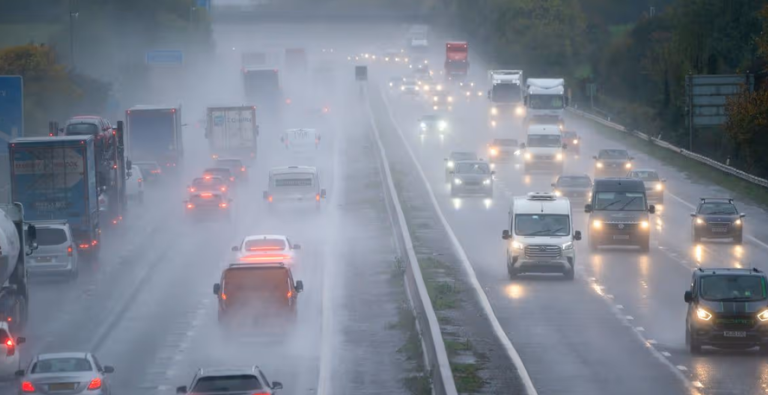
Dense fog in Ireland has settled across the country this week, bringing hazardous travelling conditions from Dublin to Cork and right across the Midlands. Visibility has dropped dramatically in parts of South Dublin and along rural roads, with travel warnings urging road users to slow down and stay alert.
Met Éireann, Ireland's meteorological service and national forecaster, has issued a fog warning for a rare four-day dense fog event across Ireland. As Ireland's National Meteorological Service, Met Éireann is responsible for issuing weather warnings and advisories whenever weather conditions meeting specific thresholds are anticipated within a 60-hour period.
If you’re commuting through Terenure, Templeogue, or heading out the N7 or M50 early in the morning, you’ll have noticed it already — thick patches of fog developing that seem to appear out of nowhere.
Let’s look at what this means for drivers and how you can stay safe on Irish roads during this strange phenomenon.
Why Dense Fog Is So Dangerous on Irish Roads
Fog isn’t just inconvenient. It significantly reduces visibility, distorts depth perception, and makes braking distances harder to judge.
On Irish roads, especially:
- Areas near rivers and low-lying land
- Motorways like the M50
- Poorly lit back roads
- Narrow rural routes
Fog can develop quickly and linger longer than expected, particularly during clear nights with mostly light variable breezes.
In our experience, we often see minor collisions spike during foggy mornings—particularly low-speed rear-end bumps in heavy commuter traffic around Dublin.
Meteorological Causes of Dense Fog in Ireland
Dense fog in Ireland typically forms under specific weather conditions, especially during the colder months between October and February. Met Éireann explains that light southeasterly or variable winds combined with calm, clear nights create ideal conditions for fog developing and persisting overnight and into the early mornings.
This strange phenomenon occurs when moisture settles near the ground as temperatures drop to the lowest temperatures of the night, leading to impaired visibility and hazardous travelling conditions. The persistence of dense fog for several days is rare but can happen when these atmospheric conditions remain steady.
Radiation fog occurs on clear, calm nights when the ground loses heat, causing condensation in the air near the surface. Freezing fog, which can occur during the coldest mornings, poses an additional risk as fog droplets freeze on contact with cold surfaces, creating icy patches on roads and reducing tyre grip.
Fog Types and Effects
Not all fog is created equal, and understanding the different types can help drivers better prepare for what they might encounter on Irish roads. The most common type in Ireland is radiation fog, which forms overnight during clear nights with light variable breezes. This type of dense fog often develops in low-lying areas and valleys, especially after a cold, still night, and can linger well into the morning commute, causing impaired visibility and hazardous travelling conditions.
Another variety, advection fog, occurs when mild, moist air moves over colder ground or water surfaces. This can bring sudden patches of fog developing along coastal routes or riverbanks, sometimes catching drivers off guard during what started as bright or sunny spells.
During colder snaps, freezing fog can occur. This is a particularly dangerous phenomenon where fog droplets freeze on contact with cold surfaces, creating a thin layer of ice on roads, windscreens, and mirrors. Freezing fog is most likely to appear during the lowest temperatures of the week, especially overnight or in the early morning hours, and can make even short journeys treacherous.
Each type of fog reduces visibility in its own way, but all require extra caution from road users. Whether you’re navigating through just occasional showers or a thick blanket of fog, always be prepared for rapidly changing conditions—especially in the week ahead as forecast by Met Éireann.
Weather Forecast and Outlook: What to Expect This Week
Met Éireann provides a detailed day-by-day breakdown of expected weather conditions to assist with planning.
Met Éireann has issued a Status Yellow fog warning for 16 counties, including Carlow, Kildare, Kilkenny, Laois, Longford, Meath, Offaly, Westmeath, Cavan, Clare, Limerick, Tipperary, Waterford, Galway, Leitrim, and Roscommon.
The forecast predicts a largely dry Saturday night with a few showers primarily in the east and southeast. Light southeasterly or variable breezes will enable dense fog to form in some areas, with temperatures dropping to between -1°C and 4°C.
Fog will gradually clear from most places Sunday morning, leaving a dry day for many with bright or sunny spells and just occasional showers during daylight hours. Daytime temperatures are struggling to reach higher values, which can influence fog persistence. The highest temperatures will range from 5°C to 9°C, accompanied by moderate southerly winds that will freshen in the west as the evening progresses.
Turning cloudy Sunday night as drizzle gradually extends eastwards, with temperatures dropping to between 1°C and 5°C in occasionally fresh south or southeast winds that will ease later in the night.
Monday morning will begin mostly cloudy with rain and drizzle, which will become largely confined to the north and east by early afternoon as drier and brighter conditions extend from the west. Temperatures will peak between 5°C and 9°C, with mostly light variable breezes.
Cloud Monday night along with rain and drizzle in the north will clear to largely dry, clear, and cold conditions for a time, allowing fog to develop again in light southeasterly or variable breezes. Temperatures will fall to between -2°C and 3°C. By Tuesday morning, rain will start in the southwest with freshening winds.
Fog is expected to clear through Tuesday morning as conditions become breezier, with heavy rain and gusty southeasterly winds spreading northeastward, although northern areas may remain dry until evening. Temperatures will reach highs of 6°C to 9°C.
Current indications suggest a breezy or windy day Wednesday with outbreaks of heavy rain. Temperatures will rise to between 7°C and 10°C, accompanied by fresh to strong and gusty southeasterly winds.
In January 2026, Dublin Airport experienced over 50 inbound and 50 outbound cancellations due to dense fog in Ireland.
Article continues.
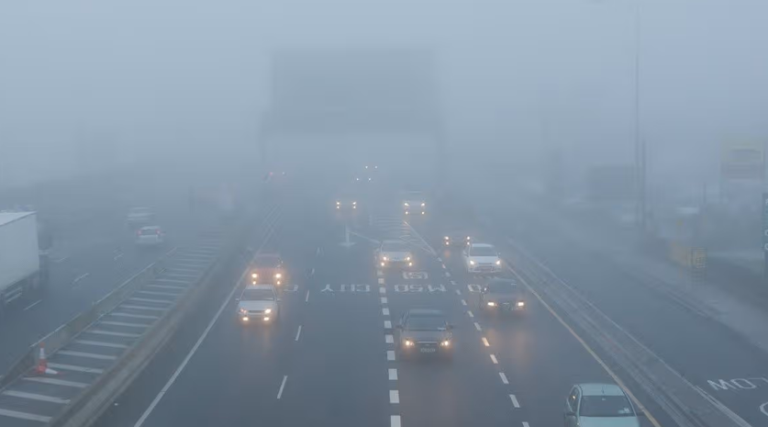
Travel Warnings for Drivers in Dublin and Beyond
Authorities regularly issue fog warnings during colder months. According to AA Ireland, reduced visibility is one of the leading contributors to winter road incidents.
When dense fog hits:
- Keep windows and mirrors clear
- Slow down gradually — avoid sudden braking
- Increase following distance
- Use dipped headlights (never full beams) and fog lights only when visibility drops significantly
It’s simple advice, but many drivers still forget to switch off fog lights once visibility improves, which can dazzle others.
Practical Winter Driving Tips for Dense Fog
Here’s a quick checklist we recommend to customers this time of year:
1. Check Your Lights
Foggy mornings expose faulty bulbs quickly. Make sure headlights, brake lights and fog lights are working properly.
2. Inspect Tyres
Irish wet roads demand strong tread depth. Minimum legal tread is 1.6mm, but we recommend more for winter driving.
3. Replace Wipers
Streaky windscreens reduce visibility even further in fog.
4. Keep Your NCT Up to Date
Your NCT ensures your car meets Irish road safety standards. You can review official requirements via Revenue.ie if you're importing or changing vehicles under VRT rules.
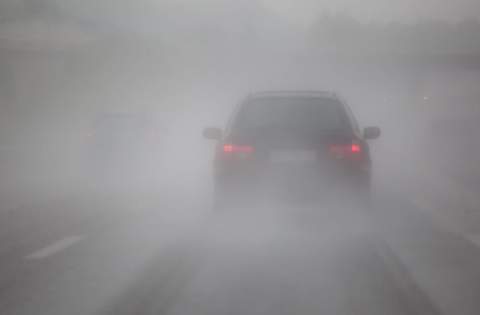
How Irish Weather Impacts Your Vehicle
Ireland’s damp climate is tough on cars.
Fog, moisture and cold temperatures can affect:
- Windscreen visibility
- Battery health
- Tyre grip
- Brake performance
We often see older vehicles struggle more during heavy fog spells, especially if tyres are worn or wipers haven’t been replaced in a while.
That’s where modern safety features really make a difference.
Why Modern Suzuki Models Perform Better in Low Visibility
If you’re driving a newer Suzuki Vitara, Swift, or S-Cross, you’ll benefit from advanced safety systems designed for unpredictable Irish weather.
Features like:
- High-performance LED lighting
- Lane Departure Warning
- Radar Brake Support
- Adaptive Cruise Control
These systems can’t replace careful driving, but they do add an extra layer of reassurance — particularly on dark winter mornings in Dublin.
The elevated driving position in the Suzuki Vitara and S-Cross also gives better road visibility compared to smaller hatchbacks.
Used vs New Cars: Which Is Safer in Winter Conditions?
Many drivers ask whether upgrading is worth it before winter.
In our experience, newer vehicles offer:
- More efficient heating and demisting systems
- Enhanced traction control
- Improved braking systems
- Better safety tech
That said, a well-maintained used car with a fresh NCT and good tyres can still perform safely in foggy conditions.
Dense Fog and Commuting in South Dublin
If you’re travelling through Terenure, Rathfarnham, Templeogue or along the Dodder valley, fog tends to settle heavily in low-lying areas.
Morning school runs and rush hour traffic become particularly tricky.
We often advise customers to allow extra time during fog alerts and avoid relying solely on sat-nav estimates. Conditions can slow traffic considerably.
Advertising and Awareness
Staying safe during periods of dense fog isn’t just about individual driver habits—it’s also about timely information and community awareness. Ireland's meteorological service, Met Éireann, plays a crucial role by issuing weather warnings and fog alerts, helping road users plan their journeys and avoid hazardous conditions. These warnings are often shared across radio, social media, and digital platforms, ensuring that even those on the move are kept informed.
At Gerry Caffrey Motors, our services represents a commitment to customer safety and satisfaction. We go beyond just selling cars by regularly sharing practical advice on winter driving, fog lights usage, and vehicle maintenance through our website, social channels, and in-person consultations. We also support public safety campaigns and encourage all drivers—especially vulnerable road users like cyclists and pedestrians—to stay alert during foggy spells.
Modern advertising tools allow us to deliver personalised advertising messages based on your consent preferences and browser specific information collected, ensuring you receive relevant updates about weather conditions, service reminders, and special offers on Suzuki models like the Swift, Vitara, and S-Cross. By combining expert advice with the latest technology, we help keep our community informed and prepared—whether it’s a breezy or windy day, or a morning when fog is slow to clear.
Remember, awareness is your first line of defence. Stay tuned to local forecasts, heed fog warnings issued by the national forecaster, and trust that Gerry Caffrey Motors is here to support you with reliable vehicles and expert guidance—whatever the Irish weather brings.
Is It Time to Upgrade Before Winter Properly Sets In?
If your current car struggles with demisting, lighting, or braking confidence, winter might highlight issues you’ve been putting off.
Modern Suzuki models are built for Irish conditions — efficient, practical, and packed with smart safety tech.
And if you’re trading in, we make the process straightforward with competitive valuations and finance packages designed for Dublin motorists.
Additional Tips for Vulnerable Road Users During Fog
Foggy conditions are especially dangerous for vulnerable road users such as pedestrians and cyclists. Wearing reflective clothing and using lights can significantly increase visibility. If you’re walking or cycling during fog, make sure to:
- Stay aware of your surroundings and listen carefully for vehicles
- Avoid busy roads if possible during dense fog periods
- Carry a flashlight or wear a headlamp
- Use high-visibility jackets or accessories
By taking these precautions, vulnerable road users can reduce the risk of accidents in low-visibility conditions.
Stay Safe on Ireland’s Roads
Dense fog across Ireland is a reminder of how quickly driving conditions can change.
Slow down. Leave space. Stay alert.
And if you’re thinking about upgrading to a safer, more modern vehicle before winter fully arrives, visit Gerry Caffrey Motors in Terenure, Dublin 6W or browse our latest stock online.
Thinking about upgrading to a Suzuki? Visit Gerry Caffrey Motors in Terenure, Dublin 6W — we’ll help you drive with confidence, whatever the Irish weather throws at you.