Cam Belt Guide for Suzuki Drivers in Dublin
If you drive a car, no matter the make and model, there is one engine component you really need to know about. The cam belt, also called a timing belt, keeps your vehicle’s engine running smoothly by linking the crankshaft and camshaft together in perfect harmony. When this toothed belt does its job, you will not even notice it. When it fails, however, the results can be expensive and sometimes catastrophic.
What Is a Cam Belt and Why It Matters
A cam belt is essentially a reinforced rubber belt with small teeth along its inner surface. These teeth interlock with cogwheels on the crankshaft and the camshaft, ensuring that the rotation of the crankshaft stays perfectly synchronised with the camshaft. Think of it a bit like a bicycle chain keeping your pedals and back wheel turning together. If that chain slipped or snapped, you would lose all your pedalling power instantly. The cam belt does much the same thing for your car’s engine, making sure the engine’s valves open and close at precisely the correct time during each combustion process.
When everything works as it should, air and fuel enter the cylinder’s intake at exactly the right moment, the pistons compress the mixture, and the exhaust strokes push spent gases out cleanly. If the timing belt snaps or even slips by a single tooth, this careful sync falls apart. In many modern engines, the pistons and valves occupy the same space at different times. When timing goes wrong, they can collide, causing bent valves, camshaft damage, or worse.
Most modern Suzuki petrol engines found in models like the Swift, Vitara, Jimny and S-Cross use either a timing chain or a long-life belt. Both approaches have their merits, but both still need regular servicing to stay reliable. At Gerry Caffrey Motors in Terenure, Dublin, technicians check timing components during scheduled services, helping local drivers avoid sudden and expensive failures. Whether you are commuting through Rathfarnham or heading out of the city for the weekend, knowing your timing system is in good shape gives real peace of mind.
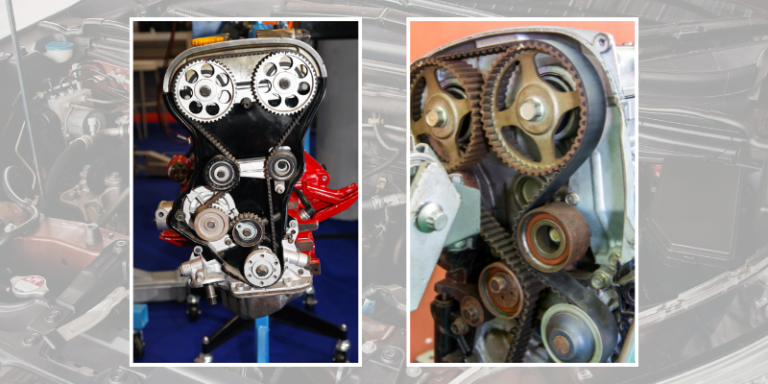
Cam Belt vs Timing Chain – What Is the Difference
Every internal combustion engine needs something to keep its valve timing accurate, and that something is either a rubber belt or a metal chain. Both do broadly the same job, but they are made from very different material and require different maintenance approaches.
A cam belt is typically made from reinforced rubber or synthetic compounds, often with embedded metal wires or fibres for added strength. It runs on the outside of the engine, meaning it is not lubricated by engine oil. Cam belts tend to run quieter than chains, which is one reason manufacturers use them. The trade-off is that rubber degrades over time from heat, age and wear, so a timing belt typically needs to be replaced at set mileage or age intervals. Ignoring these intervals can lead to cam belt failure without much warning.
A timing chain, on the other hand, is a metal chain running inside the engine block, constantly lubricated by oil. Because it is made from metal rather than rubber, a timing chain is generally designed to last much longer. Some chains are engineered to go the life of the engine without replacement. That said, a worn timing chain can stretch over time, especially if oil changes are missed or poor quality oil is used. When a chain stretches, it throws off the engine’s timing, causing rough running, engine misfires and reduced engine performance.
Guidance from motoring bodies like AA Ireland and the RSA emphasises that regular maintenance is essential regardless of whether your vehicle uses a belt or chain. Some newer engines even use wet belts that run inside the engine and are lubricated by oil, which have their own specific service needs. The safest approach is always to follow your Suzuki handbook and ask your dealer if you are unsure about your engine type.
What Does a Cam Belt Actually Do
Put simply, the cam belt keeps everything inside your engine working in step. The engine’s crankshaft converts the up-and-down motion of the pistons into rotational power that eventually drives your wheels. Meanwhile, the camshaft controls the opening and closing of the engine’s valves, letting fresh air and fuel in and pushing exhaust gases out. The cam belt connects these two vital parts so that valves open and close at exactly the right moment relative to where the pistons are in their cycle.
This synchronisation is crucial. If the timing is even slightly off, the engine can run roughly, use more fuel and produce higher emissions. You might notice sluggish acceleration, difficulty starting or a general drop in power. Over time, poor timing also puts extra wear and tear on other engine components, potentially leading to bigger repair bills down the line.
In interference engines, which are common in modern vehicles, the pistons and valves share the same space at different points in the cycle. If the timing belt breaks while the engine is running, the pistons can smash into the open valves, causing catastrophic damage. This is why keeping on top of belt condition and replacement is not just good practice but genuinely vital for protecting your vehicle’s engine.
When Should You Replace a Cam Belt
The general rule from trusted sources like the AA and vehicle manufacturers is that cambelts need to be replaced somewhere between 60,000 and 100,000 miles, or every five to six years, whichever comes first. However, the exact interval depends on your specific engine, so checking your Suzuki handbook or service schedule is always the best starting point. If you are unsure whether your make and model uses a belt or chain, a quick question to your Suzuki dealer will clear things up.
Even low-mileage cars can need earlier replacement. Drivers in Dublin who mostly do short city trips put their engines through frequent cold starts and stop-start driving, which can be harder on belts than steady motorway cruising. Age also plays a role because rubber degrades over time regardless of how many miles you cover. A belt that has been sitting in an engine for eight years may look fine but could be brittle and ready to break.
Many garages, including Gerry Caffrey Motors, recommend replacing the water pump and tensioners at the same time as the cam belt if they share the same drive system. These components have similar lifespans, and replacing them together saves on labour costs later. You are essentially paying once for access to the same area of the engine rather than twice.
A simple habit that helps is to make a note of the date and mileage of your last cam belt change. Ask for this to be recorded clearly on your invoice and service book. That way, whether you keep the car or sell it, there is a clear record showing when the work was done.
Warning Signs Your Cam Belt May Need Attention
Cam belts can fail with frustratingly little warning, which is why sticking to recommended intervals matters so much. Prevention is always better than waiting for symptoms. That said, there are a few warning signs drivers should never ignore.
Unusual noises from the front of the engine are often the first clue. A ticking, whirring or whining sound, especially on cold start, can point to worn belts, pulleys or tensioners. You might also hear a rattling sound if the belt has stretched or if a tensioner is failing. These noises tend to get worse over time, so if you notice something new, it is worth having it checked sooner rather than later.
Performance changes are another indicator. Rough running, engine misfires, difficulty starting or a sudden loss of power can all be linked to timing problems. If the belt has slipped even by a tooth, the engine’s timing will be off and you will feel it in the way the car drives. In some cases, modern engine management systems will detect the problem and put the car into a reduced power mode to prevent further engine damage.
Visual clues are harder for the average driver to spot because the belt is usually hidden behind plastic covers. However, during a service, a mechanic might find cracks in the belt, frayed edges, missing teeth or oil contamination around the belt cover area. Any of these signs suggest the belt is reaching the end of its useful life.
If your engine cuts out suddenly while driving or makes a loud snap or clattering noise, pull over safely and switch off immediately. Do not try to restart the engine. Arrange recovery instead, because attempting to turn over a damaged engine can make things much worse. At Gerry Caffrey Motors, technicians can carry out a visual inspection and, if required, a full diagnostic check to confirm whether the belt, chain or another component is at fault.
Cam Belts, Timing Chains and Suzuki Models
Different Suzuki models use different timing set-ups, and understanding what your car has affects the sort of maintenance it needs. The good news is that many popular Suzuki engines are designed with longevity in mind.
Models like the Suzuki Swift, Vitara, Jimny and S-Cross have engines where many versions use timing chains engineered for long life. These chains are designed to last, but they still rely on regular oil changes to stay properly lubricated and protected. Skipping oil services or using poor quality oil can cause a chain to stretch prematurely, leading to timing issues and that telltale rattling sound from the engine bay.
Owners of older or imported Suzukis should ask a dealer to confirm whether their specific engine uses a belt, a chain or a wet belt. This can vary by model year and engine code, so it is worth checking rather than assuming. During scheduled servicing at Gerry Caffrey Motors, technicians routinely listen for timing-related noises, check for oil leaks around the timing cover, and review service history for any gaps that might suggest a belt or chain needs closer inspection.
If you are buying a used Suzuki in Dublin, look carefully for invoices confirming any past cam belt changes. A car with no proof of belt replacement might need one soon, and you should factor that cost into your purchase price. A reputable dealer will be upfront about what work has been done and what might be due.
Costs, Risks and Why Professional Fitting Matters
Cambelt replacement costs vary depending on the engine design and the parts needed, but you can generally expect the job to run into several hundred euro once parts and labour are included. While that might sound like a lot, it is a fraction of what you would pay if the belt failed and caused major engine damage. Repair bills for bent valves, cracked cylinder heads or piston damage can easily reach two to five thousand euro.
Replacing the belt, tensioners and water pump together is usually the most cost-effective approach. These components have similar lifespans, and bundling the work means you only pay for the complex job of accessing the timing system once. It is a sensible investment that can save real money over the life of the car.
Fitting a cam belt or timing chain is a precise and complex job. It requires specialist locking tools, factory timing data and careful attention to detail. Getting it wrong by even a single tooth can cause poor running, increased fuel consumption or outright engine damage. This is not a task suited to DIY unless you have genuine expertise and the right equipment.
For most drivers, the smart choice is to book with a qualified workshop where the work is guaranteed and recorded in the service history. At Gerry Caffrey Motors, Suzuki-approved parts are used where appropriate and manufacturer procedures are followed, giving customers extra confidence on Dublin’s busy roads.
If you are unsure about the current state of your cam belt or timing chain, the team at Gerry Caffrey Motors in Terenure is always happy to help. Whether you need advice, a timing component inspection or a full service booking, getting in touch is the first step towards keeping your Suzuki running smoothly for years to come.