Automatic cars: Are more Irish Drivers Ditching The Clutch?
Is it time to move to an automatic car?
If you’ve ever white-knuckled your way around Dublin during rush hour or battled the daily car park also known as the M50, frantically balancing the clutch while someone behind you honks impatiently, you’ll understand why more Irish motorists are making the switch to automatic cars. The days of the hill-start panic are numbered, and frankly, nobody’s going to miss them.
So what are the benefits of moving away from manual:
- Easier in traffic – no more endless clutch work on the M50 or crawling through Dublin city centre
- Smoother for longer commutes – less fatigue on drives to and from work, you left leg will thank you!
- Can improve real-world fuel use – modern automatics, especially those paired with hybrid systems, are designed for efficiency in stop-start driving
- Pairs brilliantly with hybrids – Suzuki models like the Swift and Vitara combine automatic gearboxes with mild hybrid technology for lower running costs and emissions
At Gerry Caffrey Motors in Terenure, most test drives for new Suzuki's are now requested in automatic – a clear sign that South Dublin drivers are changing their habits
Whether you’re tired of nursing a clutch through Templeogue traffic or simply fancy a more relaxed drive, there’s never been a better time to consider your next car in automatic form.
Manual vs automatic: what actually changes when you drive?
In Ireland, the vast majority of us learned to drive in a manual car. It’s practically a rite of passage, mastering the biting point on a quiet Rathfarnham estate while your instructor grips the door handle, The sheer terror of the hill start near the Castle Golf Club. It brings back nightmares and cold sweats! But times are changing. Automatics are increasingly common on Irish roads, especially in cities like Dublin, Cork, and Galway where stop-start traffic makes a manual gearbox feel like hard work.
So what’s actually different when you get behind the steering wheel of an automatic?
Manual driving involves using a clutch pedal and gear stick to change gear yourself. You’re constantly shifting gears as you accelerate, slow down, and navigate junctions. In heavy traffic, this means your left foot gets a serious workout.
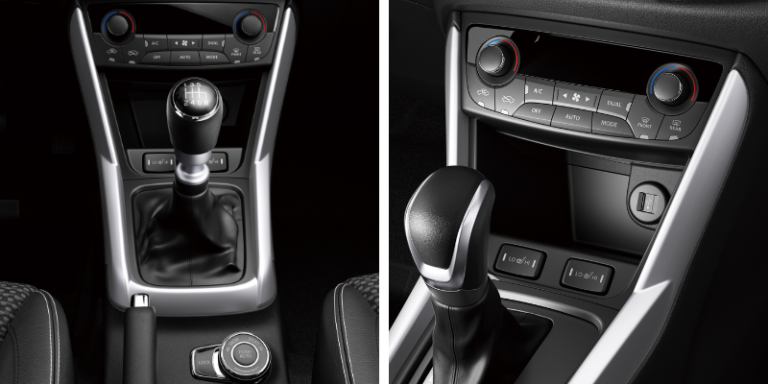
Automatic driving removes the clutch entirely. You have a gear lever with positions like P (park), R (reverse), N (neutral), and D (drive). Select D, and the car sorts the gear shifts for you while you focus on steering, the brake pedal, and acceleration.
Irish driving test licences matter here. If you pass your test in a manual car, you can legally drive both manual and automatic vehicles. Pass in an automatic, and your licence restricts you to automatics only. This is a key decision for learners weighing up their options. Is it a good idea to sit the test in a manual?
Yes and No. Yes, because you never know what your first or next car will be maybe its an automatic car, but it could be a manual. It all depends on your budget and availability. If you go overseas and hire a car on holiday you could be faced with a manual transmission car and where does that leave you travelling the hills and mountains of Lanzarote?
No, because it can add a level of stress to your lessons and test. Automatic take away some of the pressure you have but it doesn't stop Thomas or Jessica behind you in traffic from flashing you when you are doing the limit anyway because you have the L plate on your car.
But in an automatic never again will you do the dreaded “kangaroo hop” away from traffic lights. That jerky, embarrassing stall-and-lurch moment? It simply doesn’t happen in an automatic car. Select D, press the accelerator gently, and off you glide. And if it's a hybrid that movement and acceleration away from the lights is not only smooth but it is quiet too
Manual vs automatic: what actually changes when you drive?
In Ireland, the vast majority of us learned to drive in a manual car. It’s practically a rite of passage, mastering the biting point on a quiet Rathfarnham estate while your instructor grips the door handle, The sheer terror of the hill start near the Castle Golf Club. It brings back nightmares and cold sweats! But times are changing. Automatics are increasingly common on Irish roads, especially in cities like Dublin, Cork, and Galway where stop-start traffic makes a manual gearbox feel like hard work.
So what’s actually different when you get behind the steering wheel of an automatic?
Manual driving involves using a clutch pedal and gear stick to change gear yourself. You’re constantly shifting gears as you accelerate, slow down, and navigate junctions. In heavy traffic, this means your left foot gets a serious workout.
Automatic driving removes the clutch entirely. You have a gear lever with positions like P (park), R (reverse), N (neutral), and D (drive). Select D, and the car sorts the gear shifts for you while you focus on steering, the brake pedal, and acceleration.
Irish driving test licences matter here. If you pass your test in a manual car, you can legally drive both manual and automatic vehicles. Pass in an automatic, and your licence restricts you to automatics only. This is a key decision for learners weighing up their options. Is it a good idea to sit the test in a manual?
Yes and No. Yes, because you never know what your first or next car will be maybe its an automatic car, but it could be a manual. It all depends on your budget and availability. If you go overseas and hire a car on holiday you could be faced with a manual transmission car and where does that leave you travelling the hills and mountains of Lanzarote?
No, because it can add a level of stress to your lessons and test. Automatic take away some of the pressure you have but it doesn't stop Thomas or Jessica behind you in traffic from flashing you when you are doing the limit anyway because you have the L plate on your car.
But in an automatic never again will you do the dreaded “kangaroo hop” away from traffic lights. That jerky, embarrassing stall-and-lurch moment? It simply doesn’t happen in an automatic car. Select D, press the accelerator gently, and off you glide. And if it's a hybrid that movement and acceleration away from the lights is not only smooth but it is quiet too!
How automatic gearboxes work (without going full mechanic)
You don’t need an engineering degree to understand automatic gearboxes – just a quick rundown of what’s happening under the bonnet of modern Suzuki models sold in Ireland.
Torque converter automatics are the traditional type. They use a fluid coupling to transfer the engine’s torque to the wheels, allowing smooth gear changes without any driver input. Many family vehicles still use this system, and modern versions are far more fuel efficient than the thirsty three speed transmission units of decades past.
CVT (Continuously Variable Transmission) is used by Suzuki on Irish models like the Swift and S-Cross. Instead of fixed gear ratios, a CVT uses two pulleys and a belt to constantly adjust ratios for smooth, seamless progress. This planetary gearsets-free design is particularly effective in urban driving, keeping the engine speed in its most efficient range.
Hybrid and mild hybrid systems – such as Suzuki’s 12V and 48V systems available in Ireland – work particularly well with automatics. The gearbox can coordinate the engine, electric motor, and start-stop systems automatically, optimising power delivery and fuel economy without you lifting a finger.
For the driver, all this clever engineering just feels like “select D and go.” The complex design operates entirely in the background. You don’t need to think about gear ratios or torque – the transmission does that work for you.
Fuel efficiency: are modern automatics still “gas guzzlers”?
There’s an old Irish saying that automatics drink petrol like a builder drinks tea. Twenty years ago, that might have been true. But if you’re still operating under that assumption, it’s time to adjust your thinking.
Modern automatics, especially CVTs in compact cars like the Suzuki Swift and S-Cross, are engineered to keep the engine running at its most fuel efficient rev range. In real-world Irish urban traffic, this can translate to better economy than you’d achieve with a manual gearbox.
Think about typical Irish driving conditions: the slow crawl of the M50, stop-start progress on the N7, and navigating Dublin’s endless roundabouts. In these scenarios, an automatic with hybrid assistance can often match or beat manual equivalents on combined fuel consumption.
For many small and mid-size petrol hybrids in Ireland, official WLTP figures now show automatic versions performing on par with – or slightly ahead of – their manual counterparts. The difference is particularly noticeable in urban cycles.
Irish motor tax is based on CO2 emissions. The latest automatic Suzuki hybrids are tuned to keep emissions low enough to qualify for competitive tax bands, which is good news for running costs.
Here’s the reality: you’ll use less fuel when you’re inching along to a Saturday match in Terenure than you would doing rally stages through the Wicklow Mountains. Automatics are designed for exactly the kind of driving most of us actually do.
Everyday Irish driving: where automatics really shine
Let’s talk about real life in Dublin and the surrounding areas – Terenure, Rathfarnham, Templeogue, and beyond. School runs, work commutes, weekend trips to Dundrum or out to Bray. This is where automatic cars truly come into their own.
City traffic – Crawling along the M50, navigating the N81, or sitting in a queue at Christchurch during rush hour is significantly less tiring in an automatic. No constant clutch control, no gear stick gymnastics. Just brake and go.
Parking in tight spaces – Dublin’s residential streets aren’t exactly designed for modern car sizes. Automatics offer smoother low-speed control, making parallel parking and manoeuvring through tight estates and car parks noticeably easier.
Hill starts and Irish back roads – Automatics with hill-hold systems (which typically engage the parking brake automatically) take the stress out of steep starts. No more rolling backwards on Howth Hill or white-knuckling it up to the Sally Gap.
Driver comfort – For anyone with knee, hip, or ankle issues, removing the clutch pedal from the equation can make driving far more comfortable and sustainable. Your left foot can simply rest.
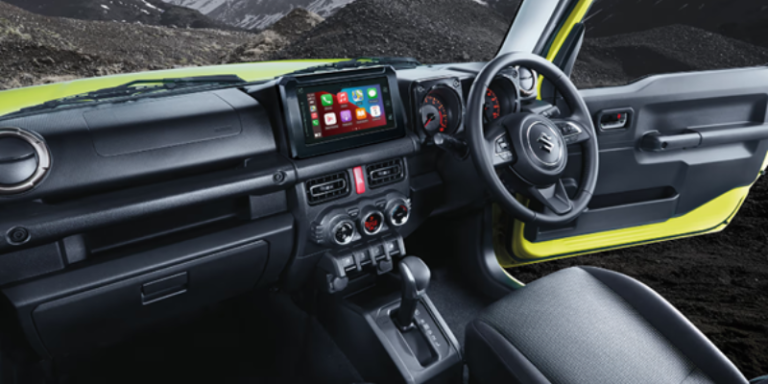
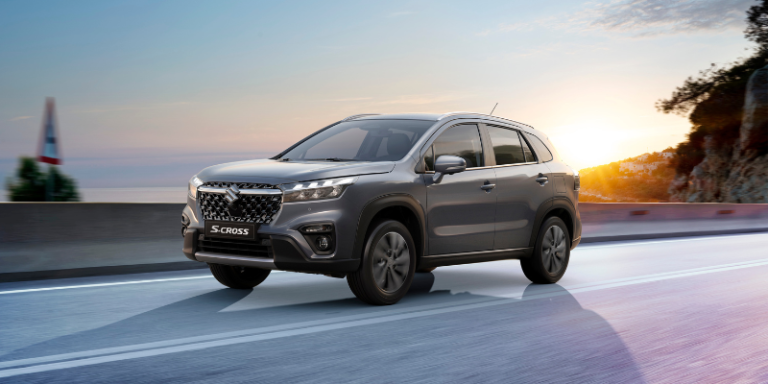
Practical Suzuki examples – An automatic Swift is ideal for urban commuting around South Dublin, while an automatic Vitara or S-Cross suits family life with occasional motorway trips to visit relatives in Cork or Galway. Both are available through Gerry Caffrey Motors and come with Suzuki’s hybrid technology.
Learning to drive and licensing in Ireland: manual vs automatic
If you’re just starting your driving journey or helping someone who is, the choice between manual and automatic matters from day one. Here’s how Irish licensing works and what it means for your options.
The licensing rule is straightforward: Pass your Category B driving test in a manual car, and you can legally drive both manual and automatic vehicles in Ireland. Pass in an automatic, and your licence restricts you to automatics only.
Think about your long-term plans. If you only ever intend to drive modern automatics and hybrid cars (and the Irish market is heading firmly in that direction), an automatic test may be perfectly sensible. You’ll focus your lessons on the type of car you’ll actually own.
Automatic driving lessons are increasingly available. Many driving instructors in Dublin and other cities now offer lessons in automatic cars due to growing demand. This can be particularly helpful for nervous learners or those returning to driving later in life.
Easier initial learning curve. Without the added complexity of clutch and gear timing, learners in automatics can concentrate on observation, mirrors, and hazard perception – arguably the skills that matter most for safe driving.
Automatic gearboxes and hybrid Suzuki's in Ireland
Automatic transmissions and hybrid technology go together like a Sunday roast and a nap afterwards – they just work. At Gerry Caffrey Motors, we’ve been a Suzuki franchise dealer in Terenure since 1987, and we’ve watched this technology evolve from novelty to normal.
How Suzuki’s mild hybrids work with automatics: The hybrid system assists acceleration, smooths out stop-start driving, and reduces fuel use on Irish roads. The automatic gearbox coordinates with the electric motor to respond seamlessly to changing conditions – all without any extra effort from the driver.
Models available in Ireland: The Swift and Vitara automatics with hybrid assistance are available through Suzuki Ireland dealers. They’re designed for low running costs, low emissions, and the kind of urban driving that dominates life in Dublin and beyond.
Tuned for Irish conditions: These automatics are set up for everyday use – short hops to the shops, occasional motorway runs, and plenty of roundabouts and traffic lights. They switch between power sources automatically, maximising economy without you needing to switch modes or control anything manually.
Our role at Gerry Caffrey Motors: We offer test drives of automatic Suzuki's, help customers compare against manual versions, and have transparent conversations about running costs including fuel, motor tax, and service requirements. No pressure, just honest information.
Running costs, reliability and servicing for automatics in Ireland
One concern we hear regularly is that automatics are more expensive to own. In the past, there was some truth to this. Modern designs and sensible servicing have narrowed the gap considerably.
Servicing is straightforward. Modern automatic and CVT units in Suzuki cars are designed with long service intervals. Routine maintenance is uncomplicated when carried out by trained technicians at a Suzuki dealer.
Repair costs can be higher – but good maintenance reduces risk. While major automatic gearbox repairs can cost more than clutch replacements, proper maintenance and regular fluid changes significantly reduce the likelihood of problems. For low- to medium-mileage drivers around Dublin, this is rarely an issue.
No clutch to replace. Many Irish drivers have experienced the joy of a €800-1,200 clutch replacement bill. Automatics eliminate this entirely – no clutch disc wear, no flywheel issues, no nasty surprises.
Our aftersales team can help. At Gerry Caffrey Motors, our service department in Terenure advises on schedules, diagnostics, and warranty cover for all automatic Suzuki's sold in Ireland. Regular servicing is the key to reliable, long-term ownership.
Choosing your next automatic: new and used options at Gerry Caffrey Motors
Moving to an automatic doesn’t mean starting from scratch or limiting your choices. Whether you’re after a brand new car or a quality used model, there are options to suit most budgets.
| Option | What’s Available | Benefits |
|---|---|---|
| New Suzuki Automatics | Swift, Vitara, and S-Cross with hybrid technology | Latest tech, full warranty, lowest emissions |
| Approved Used Automatics | Suzuki and selected other-make automatics | History checked, serviced, warranty options |
| Finance Options | HP, PCP, and other arrangements | Spread the cost, potentially comparable to manual monthly payments |
| Trade-In | Bring your current manual for valuation | Transparent, no-pressure approach to upgrading |
New Suzuki choices: The Swift automatic is perfect for urban commuting, while the Vitara and S-Cross suit families needing more space. All come with Suzuki’s hybrid technology and competitive fuel economy figures.
Approved used cars: We source and prepare used Suzuki and selected other-make automatics with full history checks, servicing, and warranty options. Buying used doesn’t mean compromising on peace of mind.
Finance made simple: Monthly payments for an automatic can be comparable to a manual once you factor in fuel savings and strong resale values for popular hybrid models.
Trade-in your manual: Bring in your existing car for valuation towards an automatic upgrade. We take a no-pressure, transparent approach – no haggling games, just a fair offer.
Test drive tips: trying an automatic for the first time
If you’ve only ever driven a manual in Ireland, the idea of an automatic might feel strange. The good news? It typically takes just a few minutes to adapt. Here’s how to make your first test drive a success.
Call into Gerry Caffrey Motors. We will take you out for a spin, if you want us to drive to somewhere quieter before you take over, that's not a problem. We want you to be comfortable and we know that making the change can be daunting and we want it to be as comfortable and as enjoyable as possible.
Keep your left foot on the footrest. This is crucial. Only use your right foot for both the brake pedal and accelerator. Using your left foot to brake is a recipe for jerky stops and confused reactions. Your left leg is now unemployed, it has no job in your driving anymore. Give it a well deserved retirement.
Start somewhere quiet. Begin in a residential area. Get used to the car’s creep (the gentle forward movement when you release the brake), gentle acceleration, and smooth braking before tackling busier roads.
Pay attention to how you feel. Notice how relaxed you are in traffic, at junctions, and on hills compared with your usual manual experience, lift your foot and the car does not roll back. Most people find the difference remarkable.
Ask questions during the test drive. At Gerry Caffrey Motors, our team can sit in during your test drive to explain the selector positions (P, R, N, D, and any manual mode or paddle shifters), answer questions about fuel use, and discuss servicing requirements.
The main risk? You might not want to give the keys back once you’ve glided through Dublin traffic without touching a clutch. Consider yourself warned.
The future of driving in Ireland: why automatics are becoming the norm
The shift away from manual transmission isn’t just a Dublin trend – it’s a European and global movement driven by technology and environmental policy.
Electric and hybrid vehicles are typically automatic. Most EVs and many hybrids sold in Ireland operate without a traditional manual gearbox. New drivers are naturally becoming accustomed to two-pedal driving from the outset.
Fleet and private buyer trends are clear. As vehicles in Irish cities shift towards low-emission options, the proportion of manuals on our roads is likely to fall steadily over the next decade. Commercial vehicles are also increasingly available with automated manual or full automatic options.
Manual fans will still find cars to enjoy. The clutch pedal isn’t disappearing overnight, and enthusiasts will continue to seek out models where driver control and engagement are paramount. For a Sunday blast through the mountains, a model with a proper gear lever and manual mode still has its place.
For everyday life, automatics make sense. Commuting, school runs, shopping trips, motorway cruises, these are the journeys that fill most Irish drivers’ weeks. Automatics and hybrids are designed precisely for this kind of use.
The hardest part of driving an automatic may soon be explaining to younger drivers what a clutch pedal was for. “You see, there was this third pedal, and if you didn’t use it properly, the car made a terrible grinding noise and you looked like an eejit and we would say, "If you can't find it grind it"
At Gerry Caffrey Motors, we’ve seen the evolution first hand, from a time when automatics were rare curiosities to today, where they’re the preferred choice for test drives. Whether you’re ready to make the switch now or just curious about what’s available, drop into our Terenure showroom for a chat and a test drive. There’s no pressure, just straightforward advice from a team that’s been helping Dublin drivers find the right car since 1987.
Your next car might just be your most relaxing one yet.