Alternatives to Petrol:
What Are My Options Amidst Rising Costs?
With fuel costs rising it seems by the hour we have a quick look at some alternatives to petrol and diesel available to car buyers in Ireland.
With the government announcing a reduction in excise duty of 17c for petrol and 22c for diesel it will go some small way into reducing the cost at the pump, but for how long? With so much uncertainty about the future cost of petrol and diesel people are looking for alternatives.
So here we take a look at some different types of engines for those who were looking into changing their car in the near future.
What are the top alternatives?
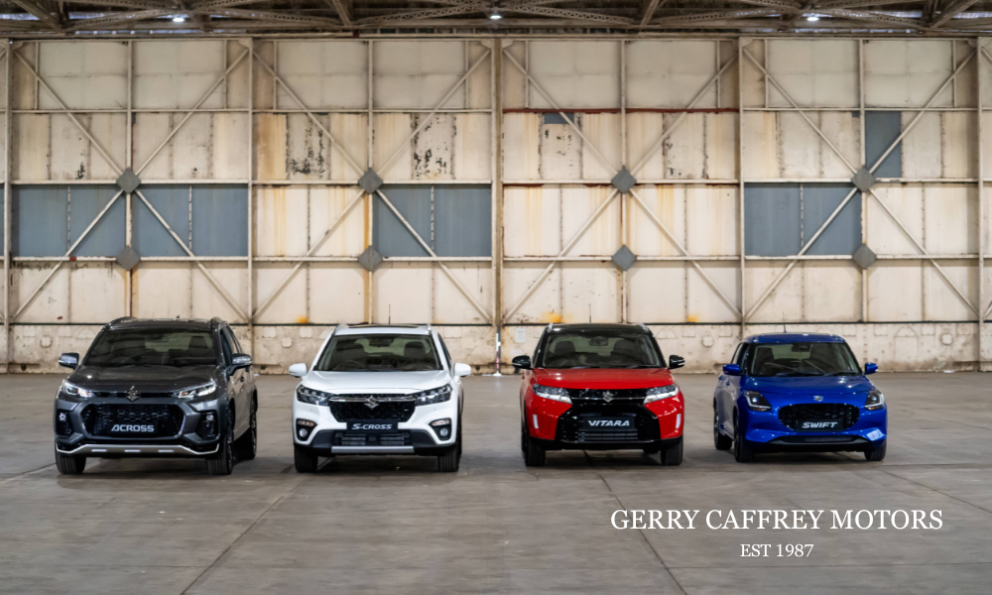
Hybrid - Standard Across the Suzuki Range.
Hybrid vehicles combine an internal combustion engine with an electric motor to improve fuel economy and reduce emissions. These systems rely on both electric power and the petrol engine, depending on driving conditions and battery charge. Mild hybrids use a small battery and electric motor to assist the engine, while full hybrids can operate in electric mode at lower speeds. Hybrid vehicles can generate battery power through regenerative braking, which captures energy that would otherwise be lost during braking and stores it in the batteries. Hybrids can fill up their batteries automatically through energy from the petrol engine and regenerative braking. Coasting, a driving technique where the vehicle moves forward without applying throttle, is often used in hybrids to maximize energy recovery and fuel efficiency. Hybrids are typically more expensive upfront compared to traditional combustion engine cars but cheaper than fully electric vehicles. They are well-suited for urban driving due to their ability to operate in electric mode at lower speeds, reducing emissions in traffic. Hybrid vehicles can operate in zero-emissions electric mode at lower speeds, which is beneficial for urban driving. Range anxiety is not an issue for hybrid vehicles since they do not require plugging in to charge their batteries, so drivers do not need to worry about battery range. Hybrid vehicles are suitable for a variety of road types, including city streets and motorways, and their performance may vary depending on the road and driving conditions.
So in summary - Hybrid - A Fuel efficient, self charging option that converts the energy from braking into charging the battery. A lower emission option to the conventional car.
Plug In Hybrid - PHEV
Plug-In Hybrid Electric Vehicles (PHEVs) use both an internal combustion engine and an electric battery as power sources. A PHEV is a combination of a petrol engine and a cable-rechargeable battery, offering enhanced power and flexibility. The battery in a PHEV is typically larger than that in a traditional hybrid, allowing for a longer electric-only range, often referred to as electric range. PHEVs can travel further on exclusively battery power compared to traditional hybrids, and the major distinction between PHEVs and pure hybrids is that PHEVs can travel further on exclusively battery power. PHEVs are similar to hybrids and EVs in how they operate on a combination of electric and combustion power, especially during long-distance driving. The battery in a PHEV needs to be charged from an external source, like a home or public charge point, using electricity. The plug-in hybrid battery is mainly charged by plugging into a home wallbox or public charging point, and PHEVs can be charged at home or public charging points, unlike traditional hybrids which do not require plugging in. PHEVs can operate in electric-only mode at low and high speeds for significant distances, and on a full charge, a PHEV typically allows you to drive somewhere between 30 and 80 kilometres on battery power alone. PHEVs combine the benefits of electric power for short trips with a petrol engine for longer journeys, providing optimal fuel economy and better overall driving range for every kind of journey. PHEVs offer potential savings on fuel and help reduce emissions compared to traditional petrol vehicles. Volvo plug-in hybrids are designed to travel long distances without worrying about battery range due to the dual power of the combustion engine and electric motor.
The purchase of a hybrid or electric vehicle can be influenced by factors such as upfront cost, running costs, and available incentives.
Summary - Provides a zero emission alternative to conventional cars on short trips running on battery alone but offering a petrol engine for longer journeys.
Electric Vehicles - EVs
Electric vehicles (EVs), also known as electric cars, are powered exclusively by one or more large batteries and do not utilize an internal combustion engine. Fully electric vehicles can travel between 300 and 600 kilometers when fully charged, offering a substantial electric range. Charging an EV is done by inserting a charging cable into a port on the exterior of the vehicle, using electricity from home or public charging stations. Many users prefer to charge their EVs overnight at home. The range of an electric vehicle is determined by factors such as battery size, weather conditions, and driving style. Electric vehicles typically have lower running costs compared to traditional cars due to their simpler engine design. Energy management is important for charging electric vehicles and optimizing fuel and battery use to improve overall vehicle performance and eco-friendliness. Electric vehicles contribute to a zero emissions future, which is a major selling point for fully electric vehicles.
Summary - The distance you travel can be curtailed by the battery range but the roll out of high speed charging stations is reducing 'range anxiety'. A zero emission journey both locally and further.
Suzuki launch their first all electric car in Ireland mid 2026, with the Vitara being the first in the range to be offered as an EV.
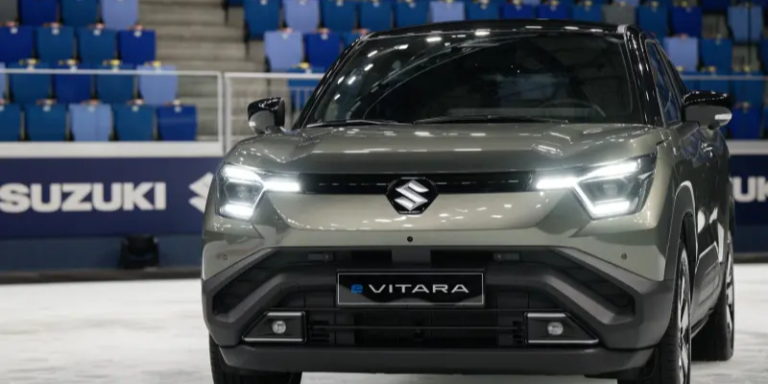
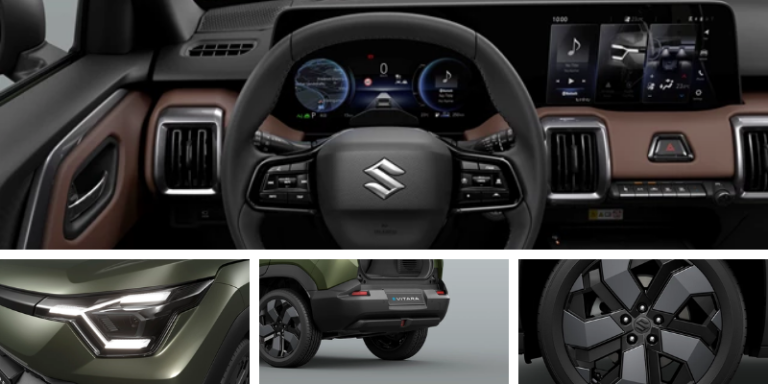
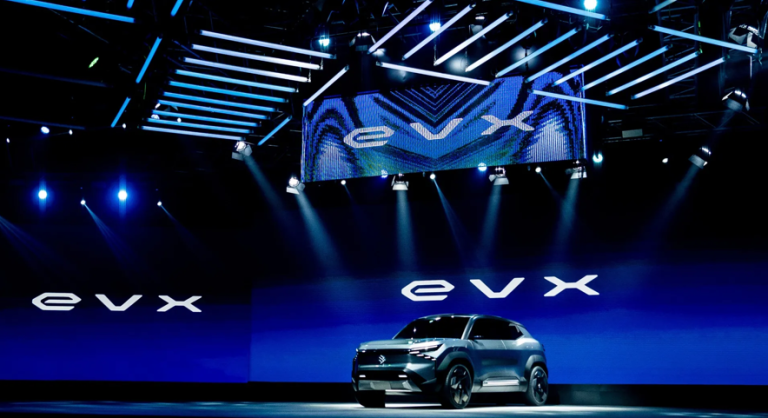
Switching to hybrid and electric vehicles can significantly reduce greenhouse gas emissions compared to traditional petrol vehicles and help reduce emissions overall. The use of hybrid and electric vehicles is encouraged as part of national climate action plans in various countries.
Excise Duty
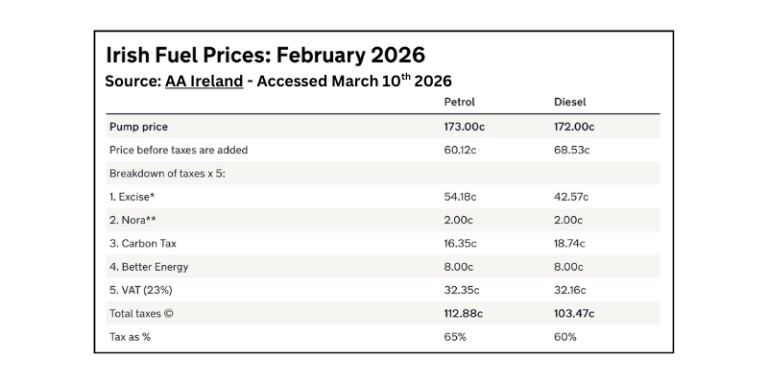
Much of the cost at the pump is made significantly higher with various forms of VAT, Excise Duty being one. Below we have a table with the breakdown to show you where your (2) Euro per litre goes.
But on March 24th 2026 the Irish Government announced a reduction in the cost of Excise Duty of 17c for petrol and 22c for diesel. This change will come into effect from midnight on March 24th and will stay in place (at time of writing) until the end of May 2026. You can read more about this here.
Along with the reduction in excise duty there will also be a 2 month pause on the NORA levy (National Oil Reserves Agency) levy for both petrol and diesel. This will also impact the cost of home heating oil.
There are also changes to the VAT on green diesel. But this does not impact motorists.
Vehicle Range and Models
Today’s car market offers an impressive range of vehicles designed to suit every type of driver, from city commuters to those who regularly travel long distances. If you’re looking to reduce your fuel consumption and emissions, there’s never been a better time to explore the latest options in electric vehicles, hybrid cars, and plug-in hybrid vehicles.
Hybrid electric vehicles combine a traditional combustion engine—either petrol or diesel—with an electric motor, allowing you to enjoy the best of both worlds. These hybrid cars are especially popular for their ability to switch seamlessly between petrol power and electric power, making them highly fuel efficient and ideal for both short distances in city traffic and longer journeys on the motorway. Mild hybrids, another variant, use a smaller battery and electric motor to support the petrol or diesel engine, often utilizing regenerative braking to recharge the battery while you drive, further improving efficiency.
Plug-in hybrid cars take things a step further by offering a larger battery that can be charged at home or at a public charging point. This means you can drive in pure electric mode for everyday trips—often up to 70 km or more—before the petrol engine takes over for longer journeys, eliminating range anxiety. The key difference between plug-in hybrids and standard hybrids is this ability to run on battery power alone for extended periods, making them a flexible choice for drivers who want to reduce emissions without worrying about running out of charge on longer trips.
Most hybrid and plug-in hybrid vehicles come equipped with automatic transmission, making them easy to drive in stop-start traffic. As technology advances, more models are being introduced to the market, each designed to operate efficiently and adapt to a variety of driving needs. Whether you’re interested in a compact hybrid for city driving or a plug-in hybrid SUV for family adventures, there’s a model out there to suit your lifestyle.
By exploring the growing selection of electric, hybrid, and plug-in hybrid vehicles, drivers can discover new ways to save on fuel, reduce their environmental impact, and enjoy a smooth, efficient driving experience. With options built to handle everything from daily commutes to longer journeys, it’s easier than ever to find a car that fits your needs and helps you adapt to the changing world of motoring.
If you are thinking of upgrading your car in 2026 and are looking for some fuel efficient models drop into us in our Terenure Showroom or visit us online. You can contact us by phone, WhatsApp or email to discuss your options both for cars and competitive finance terms * (subject to approval)